
A serious discussion is going on to see whether BC Ferries could sell alcohol onboard its ferries.
Non-drinkers worry about the impact of impaired drivers on the roads.
A serious discussion is going on to see whether BC Ferries could sell alcohol onboard its ferries.
Non-drinkers worry about the impact of impaired drivers on the roads.
According to a Euro2day article (in Greek), the Attica Group is in the process of concluding a 5-year bond loan from the domestic market within July. The goal is to raise funds from EUR 100 to 170 million. The 100 million of that loan will be used to repay existing bank loans (pp. Fortress’s loans were repaid at the end of last year) and therefore high-value pre-payments will be removed. Another EUR 25 million will be made available for investments to ship scrubbers in order to meet the new EU stricter standards. If additional funds are raised (up to EUR 45 million), they will be used for general business purposes.

BC Ferries’ report of the fiscal year ending on 31 March 2019, sees the following highlights:
BC Ferries invested:
BC Ferries now has five vessels operating on LNG, and is looking at all possible “green” solutions. It currently has two Island Class electric battery hybrid ships under construction. When electric technology matures and electricity is available in the quantities required, BC Ferries plans to operate them as fully electric ferries.
BC Ferries also continues to focus on fare affordability.

Damen Launches Two Road Ferries For BC Ferries
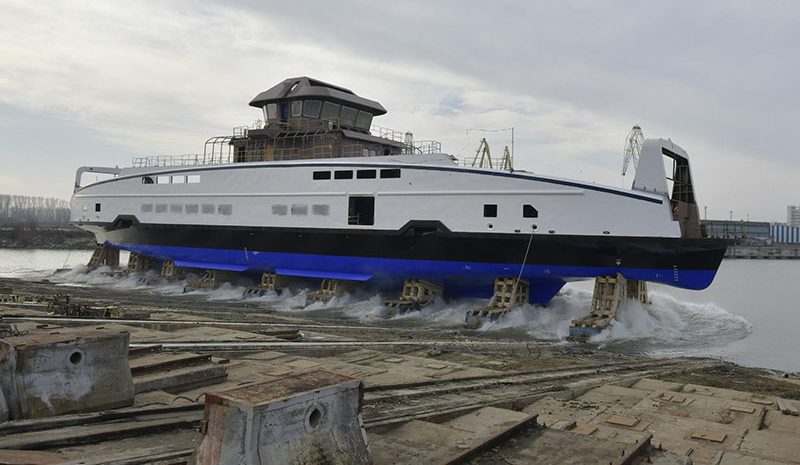
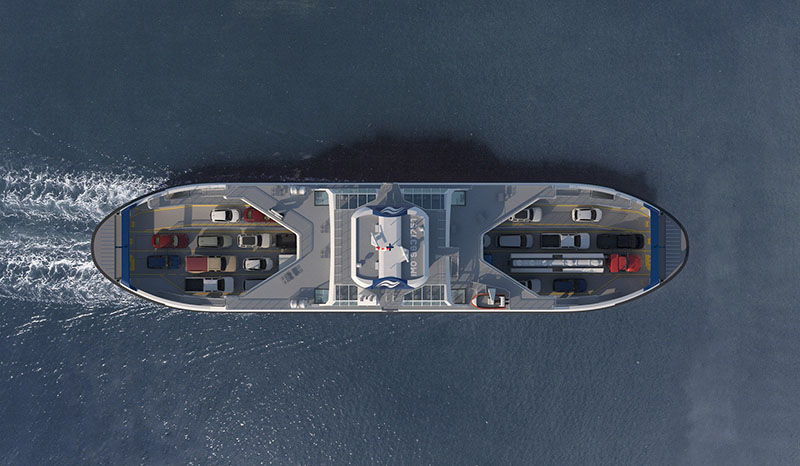
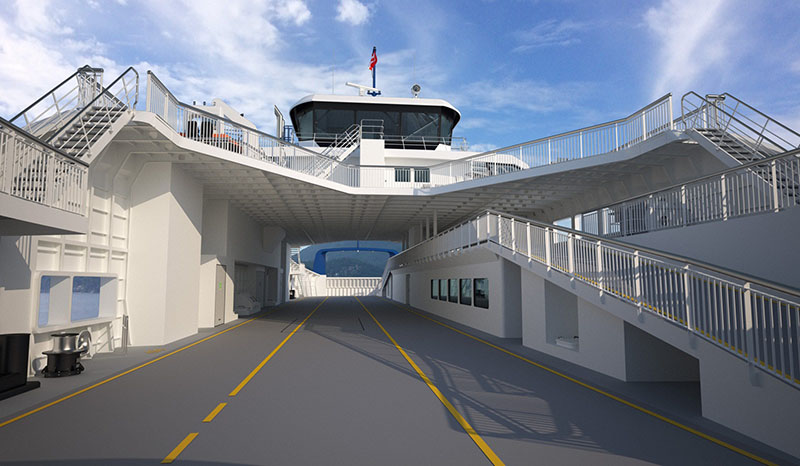
In the space of just a few weeks, two, 81m road ferries for BC Ferries have been launched at Damen Shipyards Galati and are now being fitted out. Once operational they will be capable of carrying up to 300 passengers and crew, and 47 vehicles.
The ferries have been built to Damen’s Road Ferry 8117E3 design and the order was secured following an extensive, multi-phased, international tender process. BC Ferries is currently undertaking a fleet renewal programme. The twin Damen Road Ferry 8117E3 will serve the Northern Gulf Islands off the coast of Vancouver, replacing vessels that are now over fifty years old
BC Ferries will be building up to five new ferries to replace four existing vessels and
invites customers and communities to join conversations about the new vessels and to provide input
that will help shape their future onboard experience.
The new ships are being specified to deliver enhanced environmental sustainability and offer flexibility to meet
changing travel demands into the future.
BC Ferries expects the new ferries to enter service in the mid2020s.
The Review of Coastal Ferry Services confirms that the coastal ferry service is a vital part of the provincial economy and critical to both those who use ferry services and for the province as a whole.
BC Ferries President and CEO Mark Collins appreciates the review concluding that “BC Ferries is on the whole a well-run company.”
The review also recognizes that “employees and managers are committed to providing a safe, reliable service for the coast and work hard at it every day of the week” and “Board of Directors take seriously its obligation to provide good strategic direction and oversight.”
BC Ferries acknowledges and appreciates the financial contribution the Province made over the past year, along with contributions from BC Ferries, to fare affordability and helping to keep fares flat and lower fares on some routes.

BC Ferries: Highest Number Of Vehicles Ever
BC Ferries released its third quarter results today for the fiscal year ending March 31, 2019.
Due to the seasonality of ferry travel, BC Ferries generates higher net earnings in the first and second quarters – the spring and summer months – which are typically reduced by net losses in the third and fourth quarters, when fewer discretionary customers are travelling.
Last fall, BC Ferries submitted a 12-Year Capital Plan, which details plans to invest more than $3.9 billion. This will be the largest capital plan in BC Ferries’ history. The capital plan emphasizes more system capacity, operational efficiency, resiliency and travel certainty.
BC Ferries’ president and CEO, Mark Collins travelled to Prince Rupert on 29 January, to speak to the business community about where his company is heading, and to listen to feedback.
BC Ferries Is Anticipating An Electric Future But It’s Still A Ways Off
“While the QUEEN OF CAPILANO will likely be diesel-powered for the rest of its operating life, Bowen’s next ferry, in just over 20 years, could be all electric,” writes Vancouver is Awesome.

Kwakiutl First Nation’s Richard Hunt and Nuxalk Nation’s Danika Naccarella designed the artwork that will adorn the NORTHERN SEA WOLF (the former Greek ferry AQUA SPIRIT).
The artwork will be displayed on the interior and exterior of the vessel for customers to view, along with profiles of the artists.
BC Ferries and community stakeholders named the NORTHERN SEA WOLF in honour of a
First Nations’ legend in which the Sea Wolf is a manifestation of the Orca. The designs depict the beauty of the majestic animal, with The Sea Wolf the symbol of family, loyalty and the protector of those travelling their waters.