Tallinn Terminal D Works Commenced
On Monday, 25 June construction works commenced in Tallinn Old City Harbour’s Terminal D where Tallink ferries are served.
Tallinn Terminal D Works Commenced
On Monday, 25 June construction works commenced in Tallinn Old City Harbour’s Terminal D where Tallink ferries are served.
U.N. Ro-Ro, now a DFDS company, has made its first call to Port of Patras. The first vessel was the UN PENDIK, coming from Istanbul, and going to Trieste.
Initially, four weekly calls have been scheduled for Patras, two per direction.
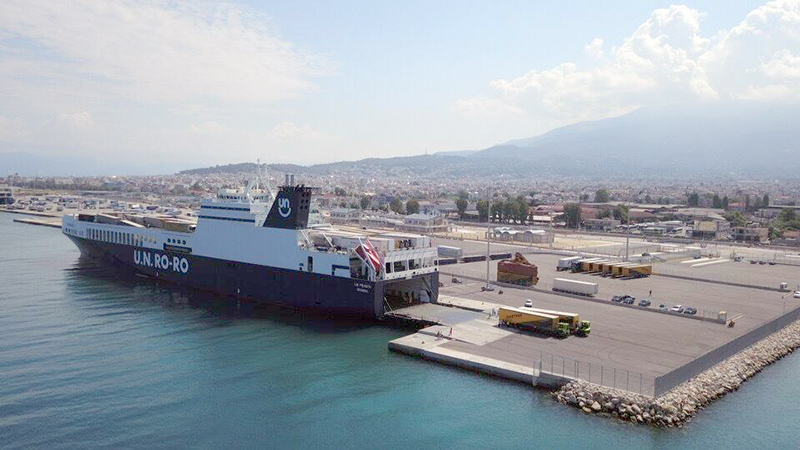
Photo: U.N. Ro-Ro
On 8 June, Volvo announced that the last of its successful V60 models had been assembled at Volvo Cars’ assembly line in Ghent. Over the last 18 months DFDS transported the supply of V60 bodies from Volvo Cars’ factories in Gothenburg to the assembly line in Ghent; some 325 trailer loads a week. The production of the new Volvo V60 SPA model will begin in a few months. DFDS has a new contract for the transportation of 250 trailer loads per week.
In Ghent, the DFDS ships are nicknamed “The Volvo Boats”
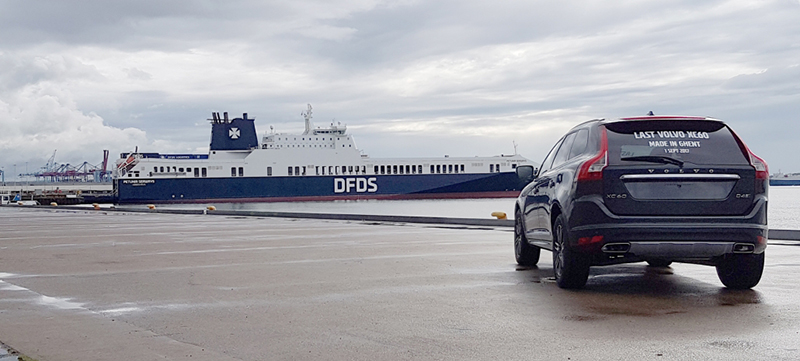
Photo: DFDS
VIZZANOVA Inaugurates New Route And New Terminal
Corsica Linea has inaugurated a new weekly ferry line to the Algerian port of Bejaïa. This port is located 200km east of the capital.
The first call of ro-pax VIZZAVONA on 20 June coincided with opening of a new ferry terminal. The aim is to attract more ro-pax ferry services.
Bay Ferries has been saying a return to Bar Harbor for ferry service between Nova Scotia and Maine is something it is has been exploring.
The ferry MARIA LIBRE of the State-owned company Conferry, has been paralyzed at the pier of Punta de Piedras since May 2016. It was the only ship that made the crossing between the islands of Margarita and the island of Coche, Venezuela
The Mayor of the island of Coche denounced the deteriorating situation.
At the request of Trasmediterránea some modifications are being done on ferry VILLA DEL TEROR, delaying the delivery with a couple of weeks.
The 139m ship originally ordered by Viking Line was transferred on 22 June from the Vulcan shipyard to the dry dock of Metalships & Docks for its painting.
Meanwhile, the future of the shipyard is being questioned.
The twin-island republic suffers from the absence of a purchased ferry. Their normal-speed ro-pax catamaran GALLEONS PASSAGE is in Cuba for repairs, before being delivered. However, since some countries still have an embargo on Cuba it seems difficult to get spare parts from Australia.
The works have been delayed and now the ferry is only expected back on 16 July.
The vessel is being sold by Sealease Ltd of Hong Kong to Nidco (National Infrastructure Development Company). She was originally built by Guangdong Bonny Fair for Venezuela, with the construction starting in 2016.
Two weeks after Prime Minister Dr Keith Rowley announced plans to purchase two new ferries for the inter island seabridge, as well as a navy patrol vessel, both Incat and Austal have submitted proposals to Government.
Proposals for new vessels have been received too from Austal and INCAT
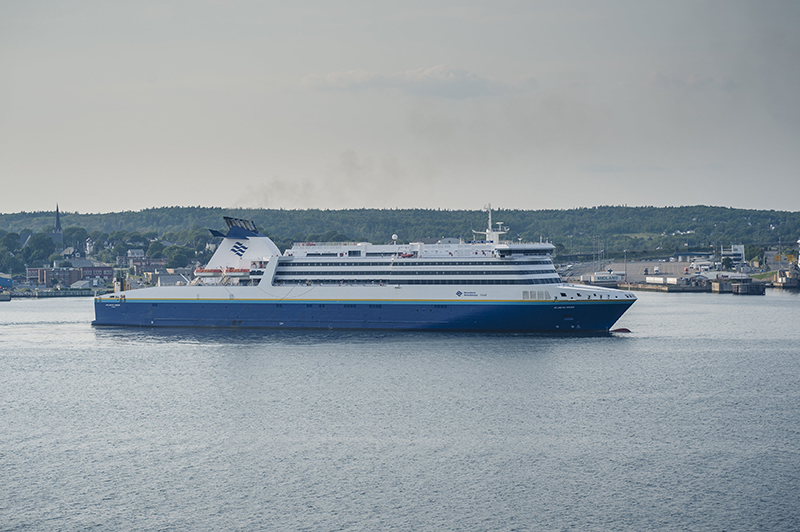
Marine Atlantic, a Canadian Crown corporation, provides ferry services between the Island of Newfoundland and the Province of Nova Scotia. One of their ferries is the Tallink Grupp owned ATLANTIC VISION, which is on charter. The charter will be extended until November 2019. The company said it will continue to work with the Government of Canada regarding future fleet configuration.