Piraeus Port Authority Accelerates Investment – Resilient Revenues

By 2026 Newsletter week 40

Piraeus Port Authority (PPA) reported revenue of €111.9 million for the first half of 2026, down 8.9%, while net profit fell 24.4% to €35.4 million. Investment in infrastructure and equipment reached €106.7 million.

The decline mainly reflected lower throughput at container Pier I, following unusually strong domestic cargo volumes in H1 2025. Ongoing works also temporarily reduced storage and handling capacity.

Revenues from Piers II and III increased, supported by improving throughput. PPA said this recovery strengthened from July, with the benefits expected to be reflected in its third-quarter results.

The authority is also advancing its planned Logistics Centre alongside its wider investment programme.
https://www.olp.gr/en/news/press-releases/ppa-s-a-presentation-of-1h-2026-financial-results-resilient-revenues-acceleration-of-the-investment-program

Dutch seaports call for funding and clarity on EU Ports Strategy

By 2026 Newsletter week 40

North Sea Port, Amsterdam, Groningen Seaports, Moerdijk and Rotterdam have urged EU policymakers to translate the European Ports Strategy into practical, adequately funded measures.

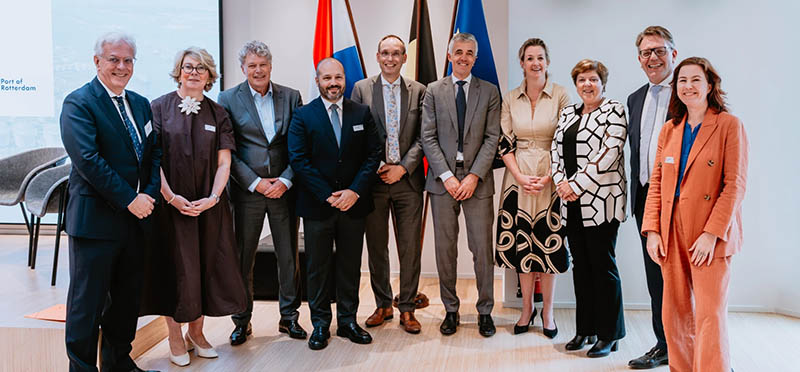
Presenting their joint position paper, Full Steam Ahead, in Brussels on 29 September, the five port authorities identified three priorities: investment certainty, clear responsibilities for strategic port infrastructure and stronger cross-border cooperation.

The ports say predictable regulation and financing are essential for investment in quays, energy infrastructure and hinterland connections. They also want clarity on who should develop, secure and fund infrastructure serving both civilian and military needs.

The group argues that European funding and rules must reflect transport and industrial networks that cross national borders. New security requirements should strengthen resilience without unnecessarily delaying investment.

Isabelle Ryckbost, Secretary General of the European Sea Ports Organisation (ESPO), summed up the message at the close of the meeting: “Investing in ports is investing in Europe.”

Source: https://www.northseaport.com/nl/nieuws/north-sea-port-en-nederlandse-zeehavens-vragen-europa-om-duidelijkheid-over-uitvoering

Portsmouth calls for VAT removal on shore power

By 2026 Newsletter week 40

Portsmouth International Port is urging the UK government to extend the proposed removal of VAT from household electricity bills to shore power supplied to ships.

Responding to the Prime Minister’s Labour Party Conference speech, port director Mike Sellers said high electricity costs were hampering maritime electrification. He called for shoreside electricity to be recognised as a marine fuel and exempted from VAT.

Despite Portsmouth’s investment in shore power, Sellers said operators were taking a financial hit to use it, with electricity costing millions of pounds more than their usual diesel-based fuel.

The council-owned port argues that reducing these costs would support maritime decarbonisation, improve air quality for nearby residents and strengthen its financial contribution to city services.

Armateurs de France targets European top-five position by 2040

By 2026 Newsletter week 40

Armateurs de France has launched a campaign to put shipping and maritime sovereignty on the agenda ahead of France’s presidential election, under the slogan “Sovereignty begins at sea”.

The association wants France to rank among Europe’s five largest shipowning nations by 2040. According to its figures, France currently ranks sixth, with 1,257 vessels under French control, just a few dozen behind Denmark. A further 137 vessels are on order, potentially creating almost 2,300 direct jobs.

For ferry and RoRo operators, the campaign’s priorities include a stable, competitive tax and regulatory framework, access to finance, support for decarbonisation, skilled seafarers and an attractive French flag.

Armateurs de France will present detailed proposals in the coming weeks and engage with presidential contenders on the future of French shipping.

Discover Ferries appoints Adrian White as chair

By 2026 Newsletter week 40

Discover Ferries has appointed Adrian White, Marketing and Communications Director at Uber Boat by Thames Clippers, as its new chair.

He succeeds Peter Griffiths, Head of Brand Marketing at Caledonian MacBrayne, who handed over at the organisation’s quarterly member meeting in London on 17 September. Griffiths had chaired the body since 2023, working alongside Director Abby Penlington to strengthen member collaboration, influencer marketing and consumer engagement.

White brings more than 30 years’ experience in travel and leisure, including roles with InterContinental Hotels Group, Europcar, Hertz and the Cayman Islands Department of Tourism.

Representing 12 domestic and European passenger ferry operators, Discover Ferries promotes ferry travel to UK consumers. White will help shape consumer and trade campaigns as the sector introduces cleaner technology, develops links with travel agents and responds to changing passenger expectations.

CLdN orders two 6,700 lane-metre RoRo vessels for delivery in 2029

By 2026 Newsletter week 38

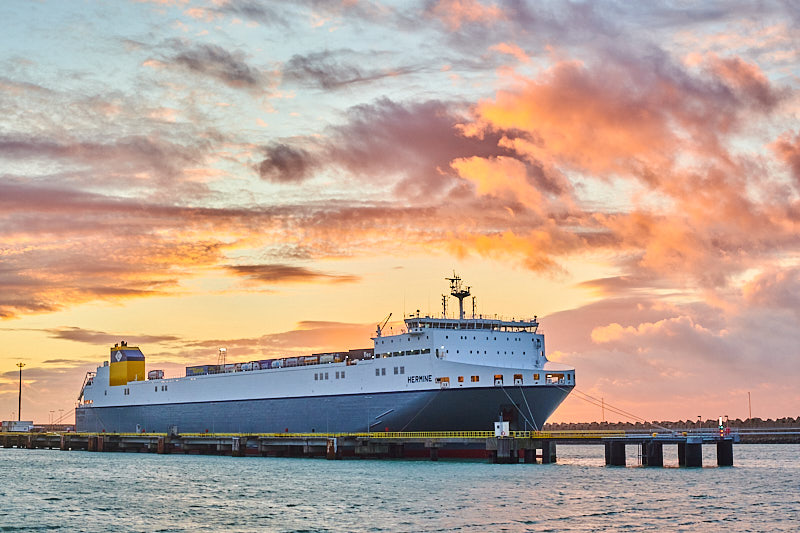
CLdN has ordered two new RoRo vessels from HD Hyundai Heavy Industries. Construction is scheduled to begin in early 2028, with delivery in mid-2029.

The closest existing fleet counterparts are the 5,000 lane-metre H5-class vessels, particularly the LNG-capable FAUSTINE and SERAPHINE. Compared with the H5 class, the newbuildings will have an additional deck and increased deck space, with a configuration specifically adapted for trailers.

Key features include:

  • 6,700 lane metres: 34% more lane capacity than the existing 5,000 lane-metre class.
  • Dual-fuel propulsion: capable of running on marine diesel or LNG.
  • Improved fuel efficiency: CLdN expects similar fuel consumption per vessel to the H5 class, but 30–40% better efficiency per tonne-kilometre of cargo carried.
  • Faster cargo handling: wide ramps with direct access to the upper decks, designed to shorten port turnaround times.
  • Provision for future upgrades: space reserved for larger electric shaft generators and batteries as technology develops.

The ships will be the 15th and 16th vessels ordered by CLdN from the South Korean shipbuilder over the past ten years. CEO Florent Maes said the order would expand fleet capacity and provide greater flexibility to meet customer needs.

Photo Mike Louagie

CLdN reports lower fleet emissions in CSR Report 2026

By 2026 Newsletter week 38

CLdN’s own fleet recorded average emissions of 32g CO₂/tonne-km in 2025, down from 37g in 2024.

According to CLdN, this was:

  • 18% lower than its next-best performing short sea competitor.
  • More than 55% lower than the peer group average.
  • More than twice as carbon-efficient as road transport by heavy goods vehicle.

The company’s new CSR Report 2026 covers its material impacts, risks and opportunities, alongside its approach to environmental, social and governance issues.

Read the report

Stena orders two hybrid E-Flexers for Gothenburg–Frederikshavn

By 2026 Newsletter week 38

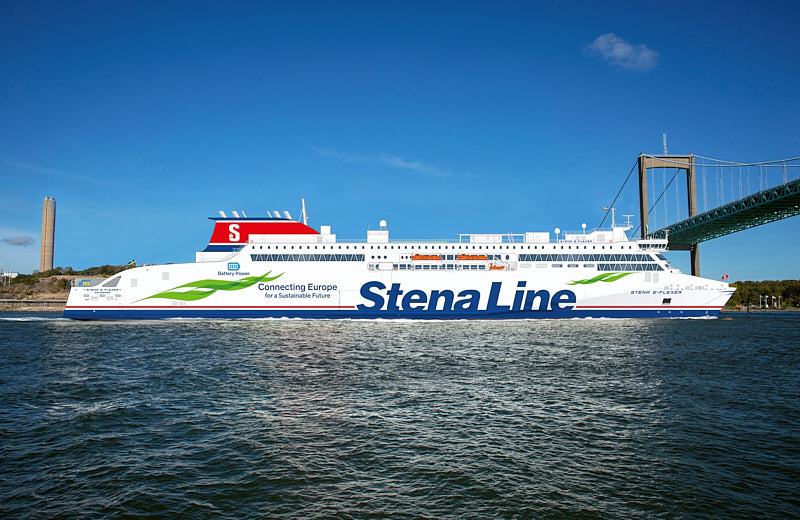
Stena RoRo has ordered two hybrid E-Flexer 2.0 RoPax ferries for the Stena Line Gothenburg–Frederikshavn route, with entry into service scheduled for 2030.

China Merchants Industry Weihai Shipyard will build the vessels. Each will carry 1,500 passengers and offer 2,750 lane metres of freight capacity. The 214.5-metre ferries will have three vehicle decks and 132 cabins for passengers and crew.

The propulsion systems will combine conventional fuel and electricity. Both vessels will be prepared for conversion to 100% electric operation once the necessary charging infrastructure is available.

The investment will renew a route currently served by STENA DANICA and STENA JUTLANDICA, which entered service in 1984 and 1996 respectively. The increased freight capacity will also support Stena Line’s planned move to Arendal, where rail connections offer opportunities for intermodal transport.

The newbuilds will become Stena Line’s sixth and seventh E-Flexers. Although intended for Gothenburg–Frederikshavn, they will also be capable of operating on other daytime routes within its network.

Stena RoRo has confirmed the order for two E-Flexer 2.0 RoPax ferries, plus two options.

Brittany Ferries charters VIZZAVONA for Cherbourg–Rosslare service

By 2026 Newsletter week 38

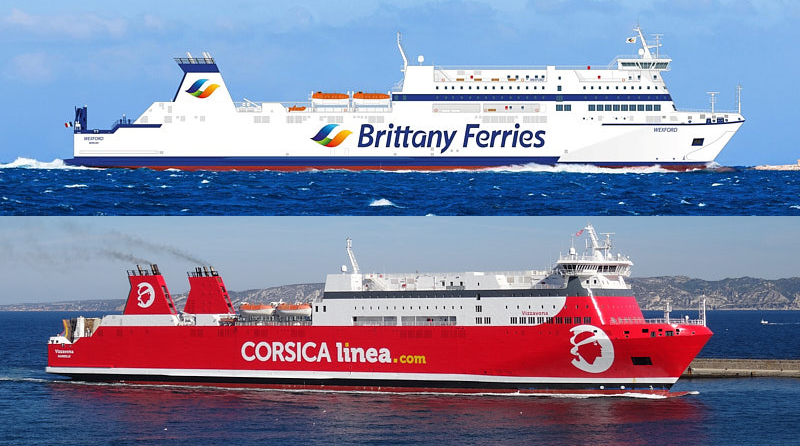
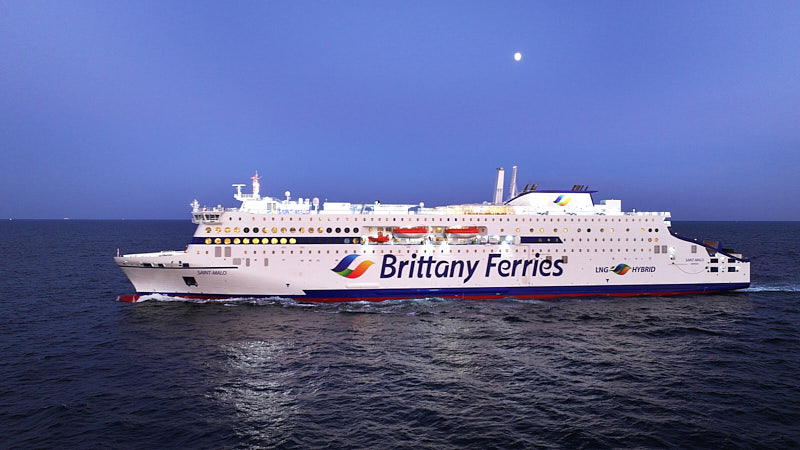
Brittany Ferries has chartered VIZZAVONA, to be renamed WEXFORD, for its Cherbourg–Rosslare route from March 2027. The RoPax will replace NORBAY, currently on temporary charter, and operate under the French flag with French seafarers.

WEXFORD will offer:

  • Three weekly return crossings between Rosslare and Cherbourg, plus one weekly Portsmouth–Cherbourg rotation.
  • Capacity for up to 500 passengers, with 146 cabins.
  • 2,500 lane metres of vehicle capacity and space for around 130 cars.

The charter fulfils Brittany Ferries’ commitment to replace NORBAY with a suitable French-flagged RoPax. NORBAY’s limited cabin capacity has constrained passenger traffic. WEXFORD will allow the operator to expand its holiday offering while maintaining substantial freight capacity.

The ship will join SALAMANCA, CLIPPER, ARMORIQUE and PONT-AVEN on Brittany Ferries’ Irish network. Together, the five vessels will offer up to seven weekly return sailings between Rosslare and Cherbourg, two between Rosslare and Bilbao, and two between Cork and Roscoff.

Photo Jean-Pierre Fabre

Measured methane emissions strengthen case for ship-specific reporting

By 2026 Newsletter week 38

Verified methane measurements from MSC Cruises reinforce Brittany Ferries’ call for emissions reporting based on actual ship performance.

A Wärtsilä case study published on 16 September highlights methane slip of 1.67% on MSC WORLD EUROPA and 1.48% on MSC EURIBIA, against the 3.1% FuelEU Maritime default. Independent verification and flag state recognition allow MSC to use these measured values for reporting.

Brittany Ferries raised the issue in September 2025 after a year-long study recorded 1.57% methane slip on SALAMANCA. CEO Christophe Mathieu argued that regulatory assumptions overstated actual emissions and called for reporting based on measured data.

In March 2026, Bureau Veritas confirmed verification covering SALAMANCA, SANTOÑA, SAINT-MALO and GUILLAUME DE NORMANDIE, enabling measured methane values to replace defaults under MRV and FuelEU Maritime requirements.