

- Q3: Revenue reached EUR 246.7m; net profit amounted to EUR 43.8m.
- Traffic: Passenger numbers rose by 2.8% to 1.82 million; freight volumes increased by 7.8% to nearly 65,000 units.
- January–September: Revenue grew by 4.5% to EUR 603m; EBITDA exceeded EUR 104m (EUR 102m). Net profit was EUR 19.4m.
- Cost pressures: Nine-month fuel costs increased by EUR 18.9m. Dividend-related income tax expenses totalled EUR 12.6m.
- Priorities: Flexible fleet deployment, long-term vessel charters and continued cost control.
- Q3: Revenue rose to EUR 154.9m (EUR 152.5m); operating profit fell to EUR 25.5m (EUR 28.7m).
- January–September: Revenue remained stable at EUR 368.9m; operating profit declined to EUR 13.5m (EUR 17.5m).
- Trading: Summer passenger volumes were stable. Higher energy costs and weaker contributions from associated companies and joint ventures reduced earnings.
- Outlook: Full-year profit before tax is now expected to be significantly below 2025 and lower than previously forecast.
- Priorities: Cost control, energy efficiency and planned cooperation with TT-Line to strengthen the freight business.
Dubai Ferries Holding FZE, the group comprising P&O Ferries and P&O Ferrymasters, reported its 2025 accounts. P&O Ferries is continuing its restructuring programme, focusing on route optimisation, operational efficiency and improvements to the customer experience.
Passenger traffic increased by 1.6% to 4.45 million in 2025, while tourist vehicle volumes rose by 4% to 939,000. Channel services benefited from increased car volumes and market share, alongside stronger onboard sales. Irish Sea operations remained stable, supported by growth in freight and coach traffic.
The North Sea network was reshaped with the closure of the Teesport–Zeebrugge route, concentrating resources on services with stronger commercial potential, including Tilbury–Europoort.
Priorities for 2026 include improving fuel and carbon efficiency, and enhancing retail, food and beverage services. Upgraded IT systems will support further operational and commercial improvements.
The programme also includes closer engagement with freight customers, improved yield management and targeted marketing to stimulate passenger demand outside peak periods.
Türkiye’s Kuzey Star Shipyard is set to acquire a 97.13% stake in Uljanik Brodogradnja 1856 for EUR 12.05m, exceeding the EUR 11.08m asking price. Croatia’s state asset agency CERP accepted the binding offer in September, with foreign investment screening required before signing.
Kuzey Star already cooperates with the Pula shipyard on completing livestock carrier Newbuilding 526.
Uljanik previously secured orders for two 5,500-lane-metre RoRo vessels from CLdN in 2016. Both contracts were cancelled in 2019 as the shipbuilder’s financial crisis escalated, with the second cancellation following the opening of bankruptcy proceedings.
Wasaline has signed a two-year agreement with St1 Biokraft for 42 GWh of liquefied biogas annually, starting in January 2028.
The fuel will be bunkered in Vaasa for AURORA BOTNIA’s Vaasa–Umeå service. Wasaline aims to source most of it from Suomen Lantakaasu’s new plant in Nurmo, around 80 km from Vaasa, strengthening regional energy supply and the use of manure and other organic residues.
CPP Investments and OMERS have agreed to sell their respective 33.9% and 30% stakes in Associated British Ports (ABP) to a fund managed by IFM Investors, giving it a combined 63.9% majority holding. Financial terms were not disclosed.
Completion is expected in the first half of 2027, subject to shareholder and regulatory approvals. CPP Investments acquired its stake in 2015, while OMERS invested in 2006.
ABP handles approximately 25% of UK seaborne trade. IFM, owned by Australian pension funds and the UK’s Nest, plans to support continued investment in the group’s infrastructure and operations.
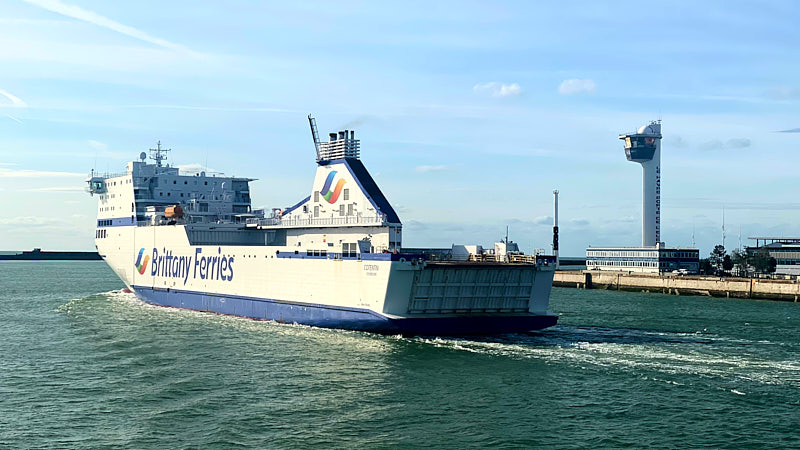
Arab Bridge Maritime acquired Brittany Ferries’ RoPax COTENTIN on 19 October, adding to a fleet expansion that will bring its total to at least 11 vessels. The vessel has received the Jordanian flag and has been renamed NEFERTITI.
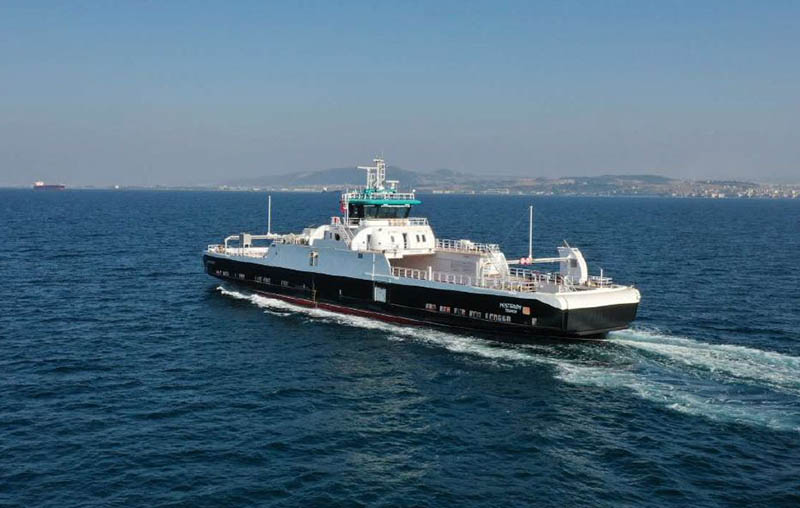
Torghatten has taken delivery of MISTERØY from Özata Shipyard in Türkiye. The new ferry will serve the Festvåg–Misten route, north of Bodø.
Designed by The Norwegian Ship Design Company, the vessel is almost 77 metres long, accommodates 60 cars and has a battery capacity of 1,960 kWh. Charging infrastructure at Festvåg will enable fully electric operation on the route.
The delivery forms part of Torghatten’s fleet modernisation programme, with further electric and hydrogen-powered vessels under construction.
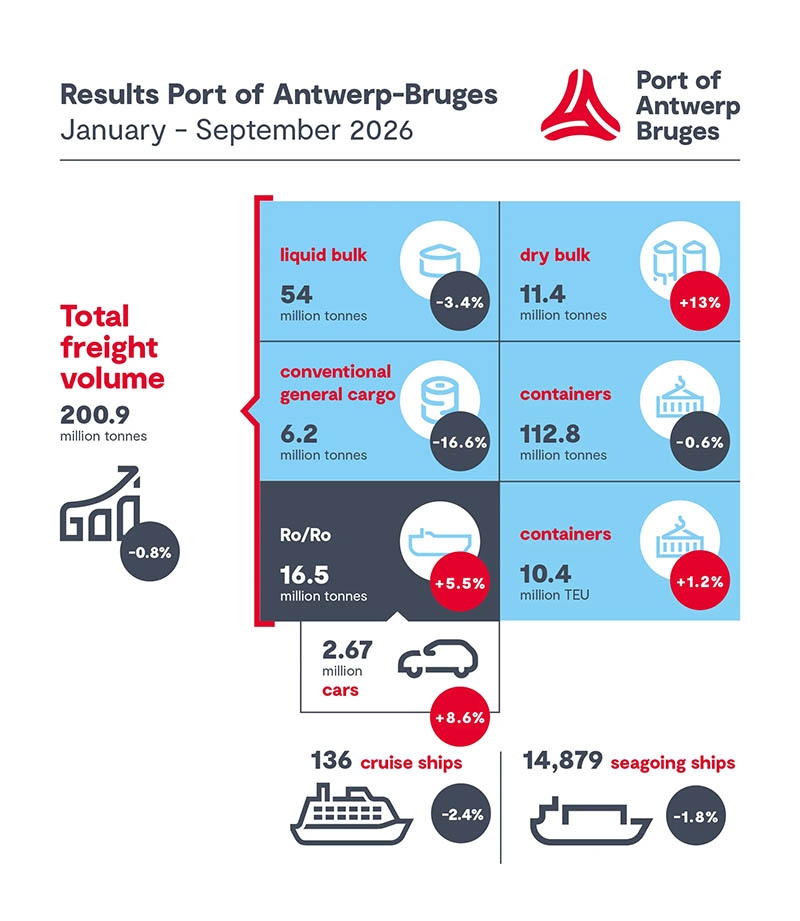
Port of Antwerp-Bruges reported contrasting shortsea trends in the first nine months of 2026, with RoRo cargo flows to and from Ireland and Scandinavia increasing, while volumes with the United Kingdom and the Iberian Peninsula declined.
Overall RoRo throughput rose by 5.5%, driven mainly by a 9.3% increase in new cars, particularly from China and Japan.
Across all cargo segments, total port throughput fell by 0.8%. Container traffic recovered strongly in the third quarter, lifting nine-month volumes by 1.2% in TEU. However, growth came from empty containers, up 11.7%, while laden container volumes declined by 1.3%.
Dry bulk increased by 13%, whereas conventional general cargo fell by 16.6% and liquid bulk remained under pressure. The port highlights trade barriers, high energy prices and weak European industrial demand as continuing challenges.
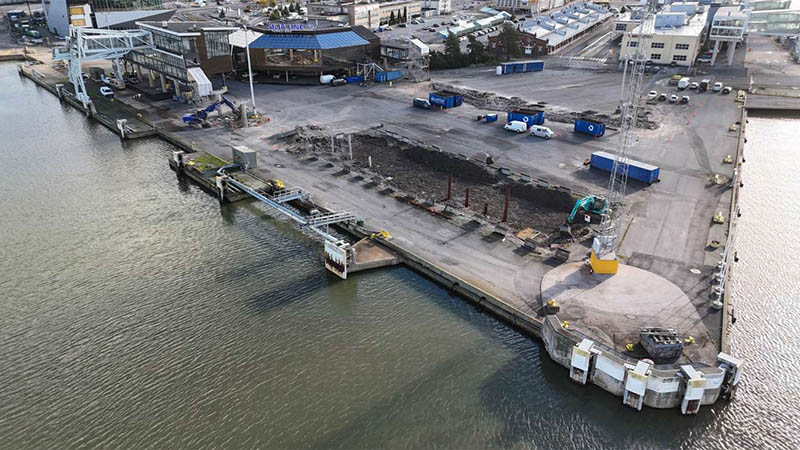
Port of Turku has signed a contract with Oteran Oy to renovate its S2 quay and build associated passenger access infrastructure as part of the Ferry Terminal Turku project.
Currently used by Tallink Silja, the quay will primarily serve Viking Line in future. Work includes rebuilding a 220-metre section, installing automated mooring systems and constructing a passenger access bridge, three boarding bridges and a side ramp.
Construction began in late September and early October, with completion scheduled for 2028. Work will be coordinated with ongoing passenger and freight operations.
The project forms part of the port’s EUR 172 million redevelopment, encompassing a new joint terminal, quays, apron areas and traffic arrangements.