

Tallink Grupp carried 611,913 passengers in August 2026, an increase of 2.8% compared with the same month last year.
Cargo volumes rose by 6.2% to 20,722 units, while the number of passenger vehicles decreased slightly by 0.3% to 83,282.
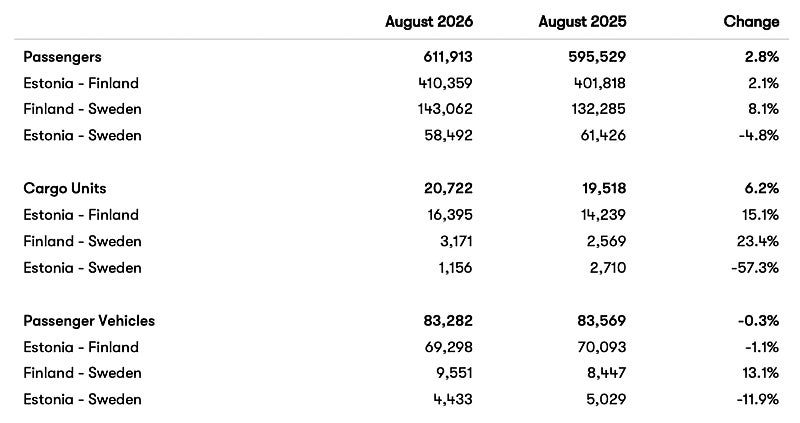

Tallink Grupp carried 611,913 passengers in August 2026, an increase of 2.8% compared with the same month last year.
Cargo volumes rose by 6.2% to 20,722 units, while the number of passenger vehicles decreased slightly by 0.3% to 83,282.
Caledonian Maritime Assets Limited (CMAL) has appointed naValue GmbH to support the concept design of new ferries for the Oban–Craignure route.
The partners will develop and assess different vessel concepts, including low-emission solutions. Stakeholder and community consultation will form part of the process.
naValue is already well known to CMAL. The German consultancy previously supported the New Islay Vessels project and led the concept design for CMAL’s Small Vessel Replacement Programme. Its lead naval architect was also responsible for the design of LOCH SEAFORTH.
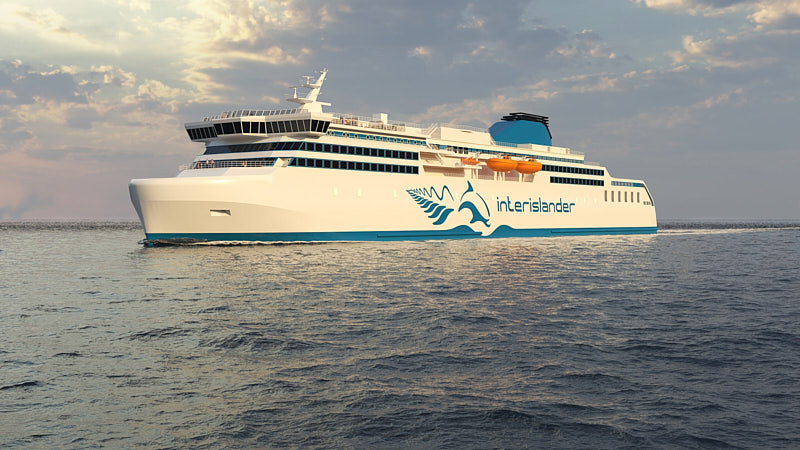
ABB has been selected to supply the power, propulsion and automation systems for New Zealand’s two new rail-enabled RoPax ferries, KUPE and COOK.
The 200-metre vessels will be built by Guangzhou Shipyard International and delivered to government-owned Ferry Holdings Limited in 2029. They will accommodate 1,530 passengers and offer 2,400 lane metres of freight capacity.
Each ferry will feature a fuel-agnostic hybrid-electric power plant, two Azipod propulsion units and an 8.2 MWh battery system. The battery capacity can subsequently be increased to 12.3 MWh and adapted for shore charging. Battery power will support near-zero-emission harbour operations.
The ferries will operate on the 92-kilometre Wellington–Picton route and allow rail freight to be loaded directly aboard. They will provide 63% more passenger capacity and 44% more freight capacity than the vessels they replace.
The Scottish Government will explore creating a single organisation for the Clyde and Western Isles ferry network as part of a wider reform of public bodies.
The quote “Explore the establishment of a single ferries body for the Clyde and Western Isles ferry routes and consider further reform options that best benefit communities.” comes from the 5-year programme of the Government (Section 4: “Delivering a stronger NHS and Public Services”, under “Simplifying and decluttering delivery” in https://www.gov.scot/publications/programme-government-2026-2031/pages/5/ )
Such a move could replace or simplify the current structure, under which responsibilities are divided between Transport Scotland, vessel and port owner CMAL, and operator CalMac.

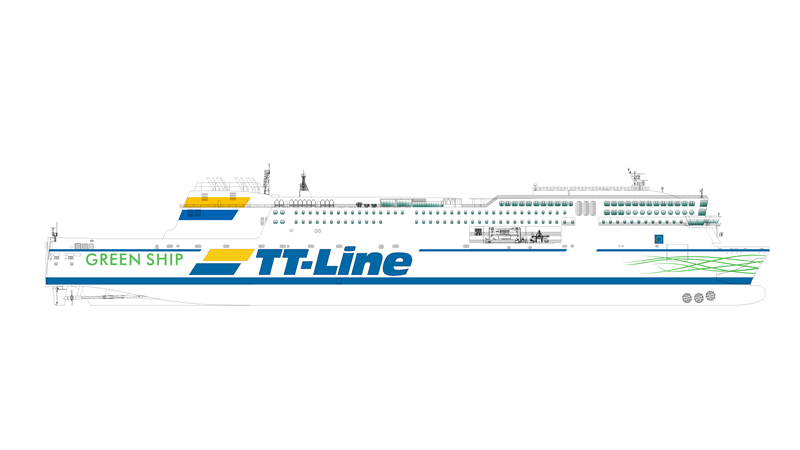
MacGregor has secured contracts with China Merchants Jinling Shipyard to supply an extensive package of RoRo equipment for TT-Line’s two new battery-hybrid LNG-powered RoPax ferries. The order was booked in Q2 2026.
The 240-metre vessels will each offer 5,400 lane metres and accommodate 1,000 people. They are intended for TT-Line’s Baltic Sea network connecting Sweden, Germany, Poland and Lithuania.
MacGregor said the agreement represents one of its most extensive RoPax equipment scopes to date. The project builds on cooperation that began in 2021 and incorporates experience gained from previous TT-Line newbuilds.
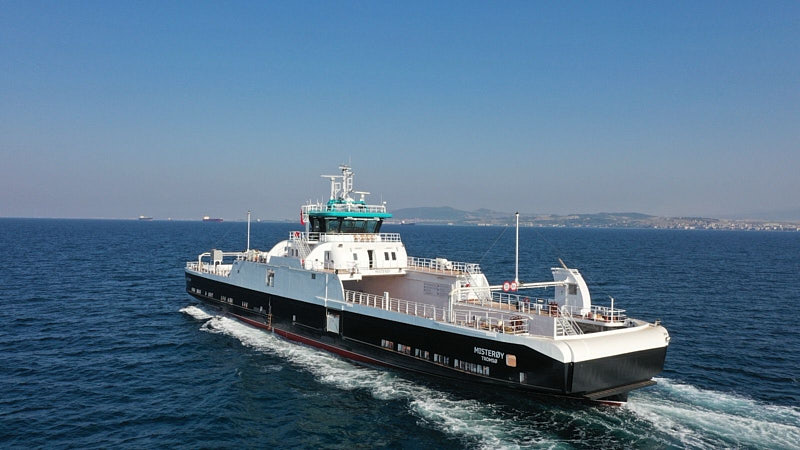
Özata Shipyard has started sea trials of MISTERØY, the first of three fully electric double-ended ferries being built for Torghatten Nord, off Yalova in Türkiye.
The 76.85-metre NSD60CFe-design ferry can carry 202 people and 60 vehicles. Its electric propulsion system includes two 980-kWh battery packs, providing a total capacity of 1,960 kWh.
MISTERØY and sister vessel FLØYTIND will operate on the Festvåg–Misten connection between Bodø and Kjerringøy in Nordland. The first two ferries were ordered in 2024, followed by a third vessel under an option.
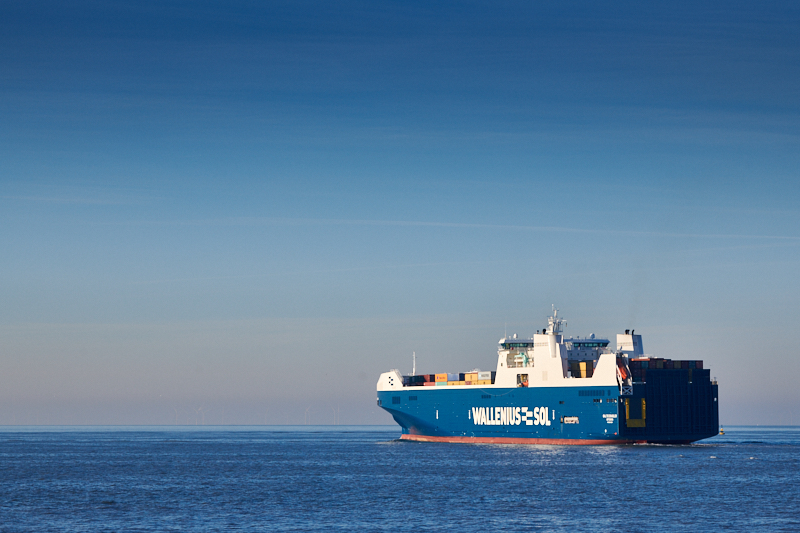
Wallenius SOL has switched one vessel to Advanced FAME B100 biofuel and is extending its use to its B-Class vessels, supported by regular deliveries in Terneuzen.
The move reduces the well-to-wake greenhouse gas intensity of the energy used onboard and creates a FuelEU Maritime compliance surplus. Through pooling, banking and borrowing, this surplus can help other vessels in the fleet meet their regulatory targets.
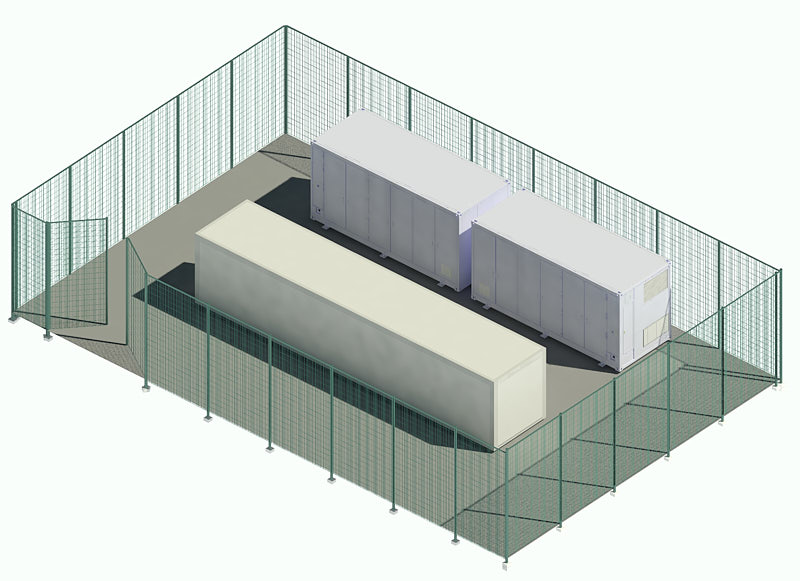
Molslinjen will install a 12-MWh battery energy storage system at Ballen Ferry Port on Samsø. The facility will support the electric ferry TYRFING, operating between Ballen and Kalundborg with up to five daily return crossings.
The battery will store enough electricity for approximately four ferry crossings, providing a more secure and stable energy supply. BOS Power will deliver the system, following consultancy support from Hybrid Greentech.
Besides supporting ferry operations, the battery can absorb surplus electricity when demand is low and release it back into the local grid during peak periods. Samsø Municipality also hopes it could eventually provide emergency power during a prolonged interruption of the island’s submarine cable connections.
Construction is scheduled for autumn and winter 2026/2027, with commissioning expected in March 2027.
Photo: Here is the first sketch of what will be the future BESS facility on Samsø.
Caroline Säfström concluded her role as CEO of Karlshamn Port on 31 August 2026. The port highlighted the company’s strengthened financial position, investments and improved customer offering during her tenure.
Deputy CEO Ida Bärtfors will serve as the point of contact. No permanent successor has yet been announced.
Two companies have submitted bids to provide Gozo Channel’s fourth ferry, replacing the leased NIKOLAOS.
Italian operator Caronte & Tourist submitted an offer of €7.66 million, while Malta-based Ragusa Xpress offered €10.9 million. The bids will now be evaluated as part of the procurement process.
NIKOLAOS has operated for Gozo Channel since 2019 and is the only leased vessel in its four-ferry fleet. The vessel reportedly costs taxpayers €10,000 per day and has faced criticism over accessibility.
The lease will serve as an interim solution until two planned new ferries enter service in 2029.