

Tallink Grupp’s Ropax STAR Returns To Estonia And Starts Service On Paldiski-Kapellskär Route From 9 February 2025

By 2025 Newsletter week 04
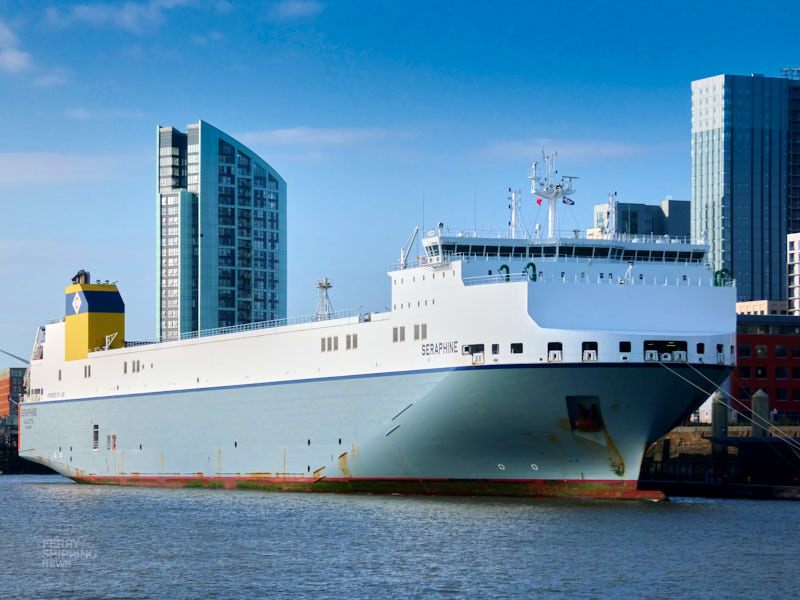
  • STAR, which is returning to Estonia from long term charter to Irish Ferries, starts operating on the Paldiski-Kapellskär route from Sunday, 9 February 2025.
  • Due to port service restrictions, only freight and car passengers.
  • The vessel will operate on an intensified schedule, alternating in the opposite direction to the schedule of the company’s cruise ferry BALTIC QUEEN, which sails between Tallinn and Stockholm. This ensures that ferry travel between Estonia and Sweden is again possible almost daily.
  • Before returning to regular service on the Paldiski-Kapellskär route, STAR will undergo the necessary renewal and preparatory work in dry dock at Naantali, Finland.
  • Will replace the vessels SAILOR and REGAL STAR, which previously operated on the route and will now remain on standby for future company decisions.

PORTS

By 2025 Newsletter week 04

Ferry Terminal Turku: Passenger Terminal Constructor Chosen, Contract Signed

 Port of Turku Ltd and Skanska have signed a contract for the construction of the Ferry Terminal Turku passenger terminal.

  • The construction starts January 2025, completion end of 2026.
  • The main facade materials of the passenger terminal, named ORIGAMI, will be glass and aluminium. The three-story complex will cover over 10,000 square meters.
  • The project aims to achieve three stars in the environmental classification.

Source: Port of Turku

Port of Kiel Records a Satisfactory Result in Challenging Times

By 2025 Newsletter week 04

With 7.6 million tonnes of cargo (-3.8%) and 2.7 million cruise and ferry passengers (-5%) handled, the port is only slightly behind the record results of the previous year.

While volumes on the Scandinavian ferry routes declined, freight volumes to the Baltic region and the Swedish paper business experienced significant growth.

As a consequence of the current economic slowdown in Scandinavia and Germany, volumes fell both on the route to Gothenburg (total cargo 1.97 million tonnes) and to Oslo (total cargo 774,000 tonnes).

The development is different at the Ostuferhafen, which accounts for almost half of the total throughput at the port of Kiel with 3.6 million tonnes handled.

The Baltic route experienced positive growth for the second year in a row and closed with 2.74 million tonnes (+4.5 %). The paper business also developed strongly, particularly at the beginning of the year, and closed with significant growth (total result 744,000 tonnes, + 10 percent).

Intermodal transport in the port of Kiel continued to suffer from the railway infrastructure in need of renovation and the constantly rising track prices in 2024, falling to 13,000 units.

An extension to the existing shore power system is currently under construction at the Ostseekai, one of Kiel’s two large cruise terminals. The port is also planning further investment projects, including the expansion of the port area, additional photovoltaic systems and e-charging stations for cars and lorries.

In total, the Port of Kiel plans to invest 70 million euros over the next five years.

More information: Port of Kiel

Ship Travel Increases in Helsinki in 2024, Cargo Traffic Steady

By 2025 Newsletter week 04
  • The Port of Helsinki Group’s total cargo traffic volume was 14.0 million tonnes (+0.5%).
  • Increase of pax: 9.4 million ferry passengers, 139,000 international cruise passengers.
  • On both Tallinn and Stockholm routes, passenger numbers followed a steady growth curve.
  • Unitised cargo traffic 12.2 million tonnes (+5.9%). Of this amount, 6.7 million tonnes was in export (+5.8%) and 5.5 million tonnes in import (+6.0%).
  • All in all, 672,000 trucks transported a total of 8.8 million tonnes (8.1%) of cargo. A total of 444,000 TEUs (-1.8%) of containers were transported; the amount of container cargo in tonnes was 3.4 million (0.7%).

Outlook

  • Expectations for the current year are cautiously optimistic. The worst seems to be over in terms of the economy, although cargo traffic growth remains very small in general.
  • In passenger traffic, moderate growth is anticipated as ship traffic is expected to increase compared to 2024 due to shipowners operating on the Stockholm and Tallinn routes with full ship capacity this year.

Source: Port of Helsinki

Port of Rostock: Second Best Handling Result In The History Of The Overseas Port

By 2025 Newsletter week 04

“It is the second best handling result in the 65 year history of the Overseas Port, at 30.1 million tonnes“, states Dr. Gernot Tesch, managing director of Rostock Port.

Passengers

  • 1 million cruise & ferry pax (140,000 more than in 2023).
  • 57 million passengers on the three ferry services to Denmark and Sweden operated by Scandlines, Stena Line and TT-Line (+30,000).
  • Ferry travel continued to increase last year. The number of cars and mobile homes carried between Northern Europe and Rostock went up to 666,000.

Investments

  • EUR 18 million in 2024
  • EUR 50 million in 2025, in infrastructure and in participations to strengthen the competitiveness of the port.

Cargo handling results at the Overseas Port

  • Slight effect of the sluggish economy.
  • RoRo (“wheeled”) cargo 16.5 million tonnes.
  • Truck/trailer units carried on the ferry and RoRo connections to and from Northern Europe increased slightly to 517,000.
  • The number of railway wagons carried to and from Trelleborg decreased mainly on account of building sites, from 26,800 in 2023 to 21,800 last year.
  • The approach of ROSTOCK PORT to widen its range by establishing a port terminal for car handling has proven to have a stabilising effect for ferry and RoRo traffic.
  • The share of wheeled cargo in the overall handling at Rostock Overseas Port was 55 percent.
  • There was a slight decline in the handling of intermodal transport.

Source and more detailed info: Rostock Port

IMAGE CARDS

By 2025 Newsletter week 04

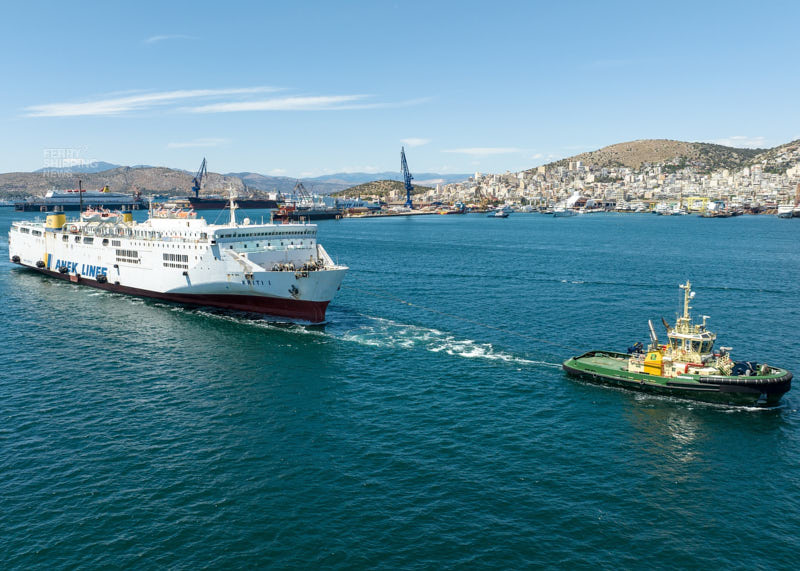
On January 20, 2025, the ARI (formerly GNV ARIES) left the Perama repair zone under tow after being sold for scrap in Aliaga, Turkey. The vessel, which arrived in Greece on October 26, 2024, had been laid up at Perama for preparatory works.

The former North Sea Ferries vessel served in Northern Europe and the Mediterranean for an impressive 38 years.

Photo: Kostas Papadopoulos

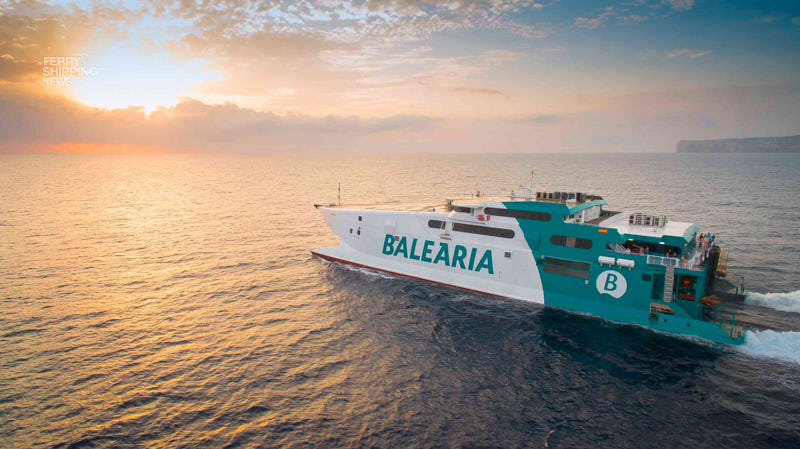
At Fitur, Baleària introduced the first green corridor between Spain and Morocco, operated by two 100% electric, zero-emission fast ferries. These sister ships will connect Tarifa and Tangier, offering a fully electric, zero-emission journey. Baleària’s president, Adolfo Utor, described the project as “pioneering and technologically advanced,” emphasising its commitment to sustainability and innovation.

Last December, Baleària won a 15-year contract from the Port Authority of Algeciras Bay (APBA) to manage the Tarifa-Tangier Ville route. The award prioritised technical and environmental criteria, making it the first intercontinental green line. Utor highlighted the initiative as a model of sustainable, modern mobility aligned with Baleària’s values.

The launch event drew about 300 attendees, including key figures like José Antonio Santano, Spain’s Secretary of State for Transport and Sustainable Mobility; Arturo Bernal, Andalusian Minister of Tourism and Foreign Affairs; Gerardo Landaluce, APBA President; and Moroccan Ambassador to Spain, Karima Benyaich.

2024: Record Volumes of Cargo for Viking Line

By 2025 Newsletter week 03

Viking Line: five vessels served a total of 4.6 million passengers in 2024 and transported a record volume of cargo.

  • Viking Line served a total of 4,646,676 passengers with its five vessels in 2024.
  • The cruise vessel BIRKA GOTLAND, which is jointly owned with Gotlandsbolaget, also served 438,743 passengers.
  • The biggest increase – almost 10% – was noted on the Helsinki–Tallinn route, which had 1,819,971 passengers.
  • Capacity on the Helsinki–Stockholm route more than doubled when VIKING CINDERELLA launched service on the route alongside GABRIELLA in March. A total of 722,051 people travelled on the route, and Viking Line’s market share was boosted to 43%.
  • On the Turku–Stockholm route, Viking Line’s market share was 70%, with VIKING GLORY and VIKING GRACE serving a total of 1,983,081 passengers.
  • Viking Line transported a record volume of cargo last year, a total of 134,219 units.

2024: Fred. Olsen Express Concluded Its 50th Anniversary with Strong Figures

By 2025 Newsletter week 03

Fred. Olsen Express concluded 2024 by celebrating its 50th anniversary in the Canary Islands, transporting:

  • over 3.7 million passenger.
  • more than 1 million vehicles.
  • In total 22,500 trips.

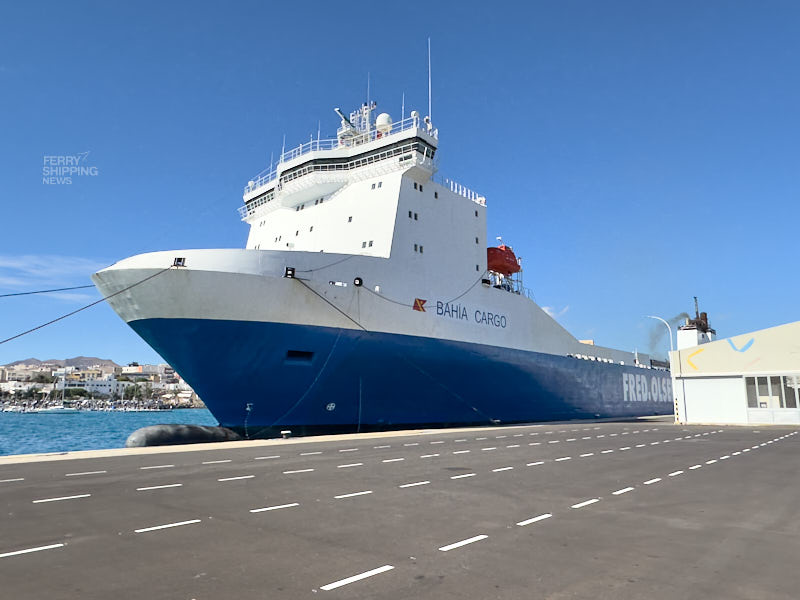
The company also reintroduced the Tenerife-El Hierro route and enhanced its cargo services with two new RoRo vessels connecting Tenerife, Gran Canaria, Fuerteventura, and Lanzarote.

These additions contributed to an 18% increase in cargo transport compared to the previous year.

2024: A Successful Year for the Armas Trasmediterranea Group

By 2025 Newsletter week 03

Armas Trasmediterránea Group closes 2024 with

  • 3 million passengers
  • 1 million vehicles
  • 5 million lane metres of cargo
  • 26 connections between the Canary Islands, southern Andalusia and northern Africa.
  • A request to operate a service between Gran Canaria (Puerto de las Nieves, west side, Agaete) and Santa Cruz de Tenerife
  • A green light to operate the Almeria-Melilla and Motril-Melilla OSP contract (3 weekly rotations per route).

2024: Challenges in the Polish Ferry Market

By 2025 Newsletter week 03
  • Decline in Freight Transport:
    • The main Świnoujście to Sweden ferry route experienced a 10% drop in freight, handling 9 million tonnes in 2024, according to the Ministry of Infrastructure.
    • Polish shipowners lost almost 20 percentage points of market share on the key route to Ystad due to competition from foreign operators with larger, more modern ferries.
  • Competition Impact:
    • Foreign operators with ferries featuring lane metre capacities over 4,000 outcompete Polish ferries, which average 1,500m.
    • TT Line and Finnlines have contributed to market saturation, challenging Polish operators like Unity Line and Polferries.
  • Delayed Ferry Modernisation:
    • New Polish ferries were planned for 2017 but faced repeated delays.
    • Polferries added the VARSOVIA ferry in 2024, purchased under an emergency procedure from Italy.
    • The government-funded construction of three ferries by Remontowa Shipyard has faced financial difficulties, delaying the completion of the third unit.
  • Financial Struggles:
    • A PLN 1 billion fund (PLN 650 million subsidy + PLN 350 million loan) financed ferry construction but fell short due to increased costs and market downturns.
    • Over PLN 500 million is needed to complete the third ferry.
  • Operational Challenges:
    • Polish shipowners face additional costs due to ETS emission rights, which will reach 100% in 2025 unless vessels use LNG propulsion.
    • Ferries under construction will feature LNG systems, but retrofitting older ferries is cost-prohibitive.
  • Positive User Feedback:
    • Increased competition improved service quality and lowered freight rates, benefiting users despite challenges for operators.
  • Future Outlook:
    • While the demand for ferry transport has dropped, modest growth in Swedish GDP (forecasted at 1.8% in 2025) may lead to increased freight volumes.
    • Industry stakeholders highlight the need for operational cooperation between Unity Line and Polferries to regain market share.

Conclusion:

Polish ferry operators face stiff competition, financial challenges, and declining freight volumes. Despite these hurdles, investments in LNG-powered ferries and potential market recovery could provide opportunities for growth in the coming years.

Source: https://logistyka.rp.pl/morski/art41669741-brakuje-ponad-pol-mld-zl-na-nowe-promy