

Flettner Rotors For Scandlines Ships On Puttgarden-Rødby

By 2019 Newsletter week 28

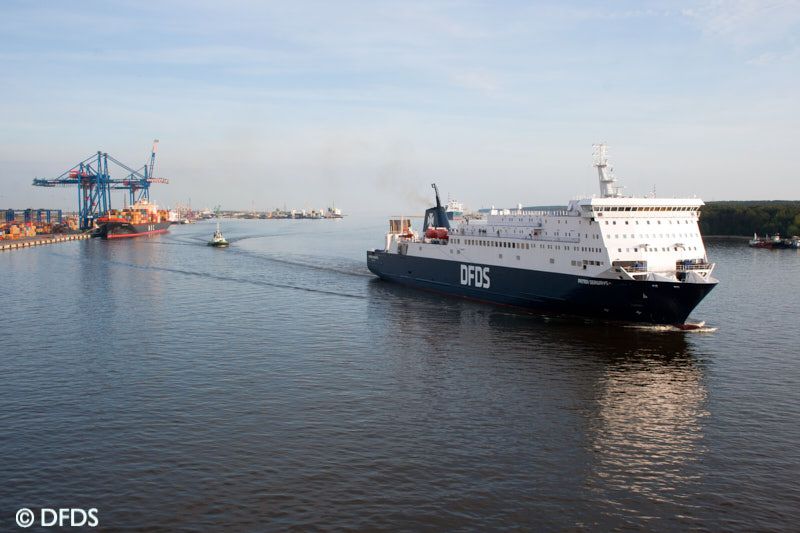
Scandlines is continuing to invest in green technology.

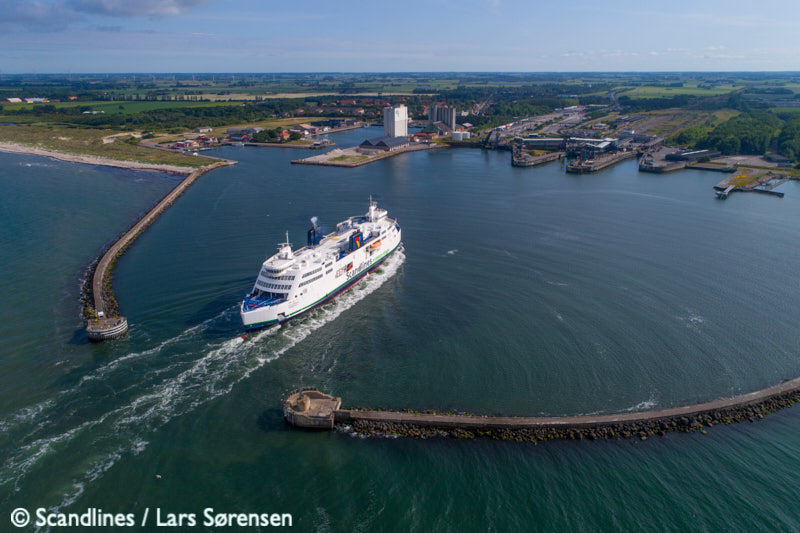
All 16 thrusters on Scandlines’ hybrid Puttgarden-Rødby route will be replaced with new thrusters. The EUR 13 million investment will reduce underwater noise and vibration caused by the ferries, for the benefit of maritime life in the Fehmarnbelt region. In addition, the more homogeneous flow of water during navigation reduces emissions.

On the route Rostock-Gedser, Scandlines has partnered up with Rostock Port GmbH and the Fraunhofer Institute of the University of Rostock, for a project funded by the Federal Ministry of Transport and Digital Infrastructure (BMVI). The aim is to make the loading processes of the hybrid ferries more efficient, in order to keep the speed and associated emissions during the sea passage as low as possible.

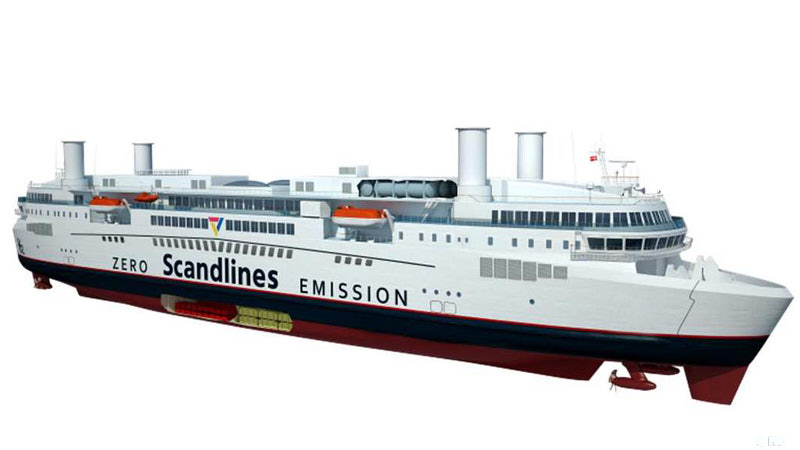
There are also (earlier announced) plans to mount Flettner rotor sails on the hybrid ferries of the Rostock-Gedser line, BERLIN and COPENHAGEN.

Scandlines’ blue print of its business plan foresees a future with zero emissions.
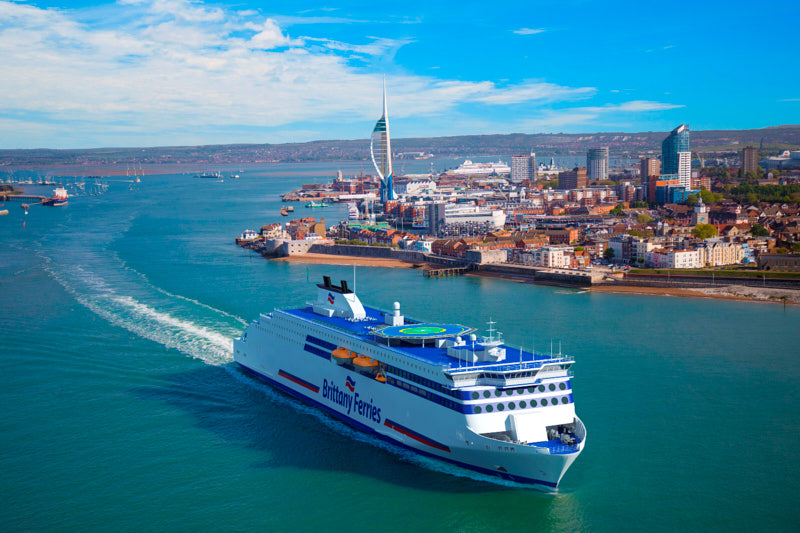
Brittany Ferries Name Next Ships

By 2019 Newsletter week 28

The AF MICHELA (STENA EGERIA) will be arriving in November 2019 for a one-year charter. She will be renamed KERRY.
This ship will cover the Cork to Santander route from November 2019 to November 2020.

The company’s third E-Flexer class ship, also to be chartered from Stena RoRo, will be named SANTOñA. She will arrive in 2023 and like sister ship SALAMANCA, she will be powered by LNG.

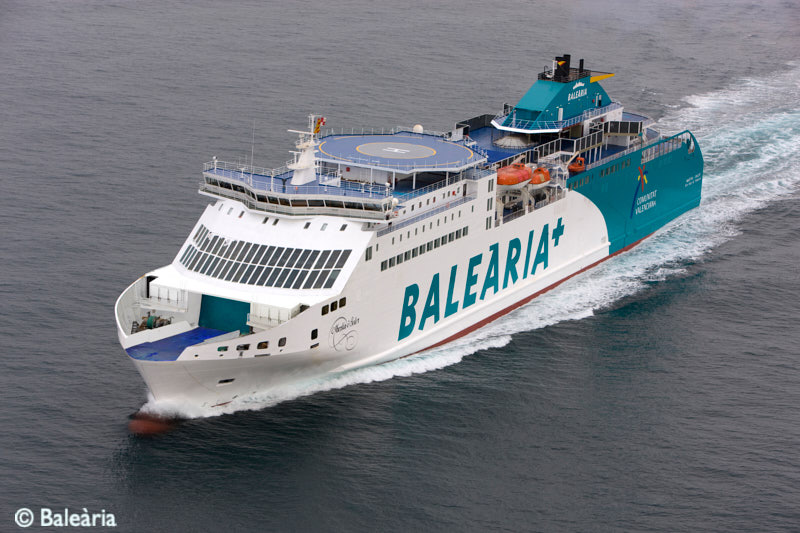
During Summer, Baleària Puts One LNG-powered Ferry And One Re-Engined Ferry On the Menorca Route

By 2019 Newsletter week 28

On 6 July, LNG-powered, 2,194 lane metre ro-pax HYPATIA DE ALEJANDRÍA did a docking test in the port of Ciutadella, using the newly built ROLON PLATA II port tug, recently acquired from Damen Shipyards.

The HYPATIA DE ALEJANDRÍA connects Barcelona with Menorca, with a stopover in Alcúdia (Northeast side of Mallorca)

This Visentini-built vessel is part of Baleària’s investment of EUR 362 million in a new generation of vessels that combine energy efficiency (thanks to LNG propulsion) with digitalization (“smart ships”). By the end of 2021 Baleària will have 9 vessels powered by LNG.

In addition, since 4 July Baleària has reinforced the route between Barcelona and Ciutadella with JAUME III, a high-speed ferry that recently got new engines. This has allowed to improve its speed and energy efficiency. Money has also been invested in the digitalisation.

JAUME III also sails on Barcelona – Ciutadella, with a stop in Alcúdia

Baleària Adds Summer Capacity On Almeria-Nador

By 2019 Newsletter week 28

On 7 July, Baleària added a second ferry to the route between Almería and Nador. It is the 2008-built MARTIN I SOLER.
Until September 15, Baleària will offer between two and three daily connections from each port, with the MARTÍN I SOLER and DUBA BRIDGE.
The daily offer of seats will be 50% higher compared to the days with the maximum demand of the OPE 2018 (Operation Paso del Estrecho).

It is the third summer that Baleària operates this route, and the first that it does with two ships.

Next year MARTIN I SOLER will be remotorised with LNG as fuel.

Next year MARTIN I SOLER will be remotorised with LNG as fuel.

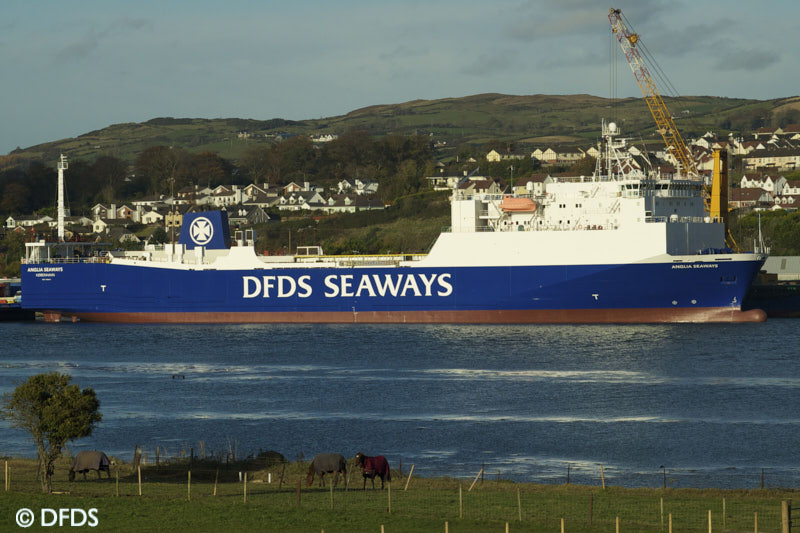
DFDS’ ANGLIA SEAWAYS Starts As BLUE CARRIER 1 For Attica

By 2019 Newsletter week 28

Attica Holdings S.A took the delivery of the ro-ro ferry ANGLIA SEAWAYS from DFDS, for a cash consideration of EUR 12,050,000.

The vessel, built in 2000, has an overall length of 142.5 meters, service speed of 17.5 knots and a garage capacity of 1,680 lane meters or 120 unaccompanied freight units.

The vessel was renamed BLUE CARRIER 1 and is scheduled to be deployed in Attica’s domestic route network.

The vessel now flies the Greek Flag.

FERRY FINANCE & FIGURES

By 2019 Newsletter week 28

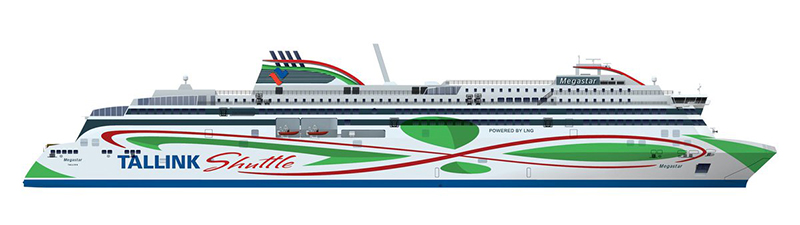
Tallink Grupp Has Signed The Loan Agreement For The New LNG Powered Fast Ferry

AS Tallink Grupp’s subsidiary Tallink Superfast Ltd. and KfW IPEX-Bank GmbH have signed the loan agreement in the amount of EUR 197,6 million to finance the new EUR 247 million LNG powered fast ferry currently under construction in Rauma Marine Constructions Oy.

The loan is arranged and long-term financing is provided by KfW IPEX-Bank GmbH. Finnish Export Credit Agency “Finnvera” guarantees 95% of this post-delivery buyer credit.

The loan is secured by the mortgage on the new vessel and the corporate guarantee of AS Tallink Grupp. This OECD-term export credit loan will be drawn on the delivery of the vessel, presumably in the beginning of 2022 and has the final maturity of twelve years from the drawdown.

All Time High Q2 For Wasaline

By 2019 Newsletter week 28

Q2 is the best so far for Wasaline, since the start of operations in 2013.

There is an increase in all segments.

  • +4.2% passengers
  • +8.6% cars
  • +6.6% freight

The total revenue increased by 10.8% compared to last year, to EUR 5.3 million.
In June there was a record increase on all segments and revenue increased by 16.4%.
In Q2, Wasaline has added 9.4% more departures to meet the demand.

Busy June For Bornholmslinjen

By 2019 Newsletter week 28

The cheap tickets that Bornholm Line has introduced on the route to Bornholm shows in the June statistics.

The route between Rønne and Ystad saw a 17% increase of passengers compared to June 2018.

The number of passenger cars has increased by almost 17% too.

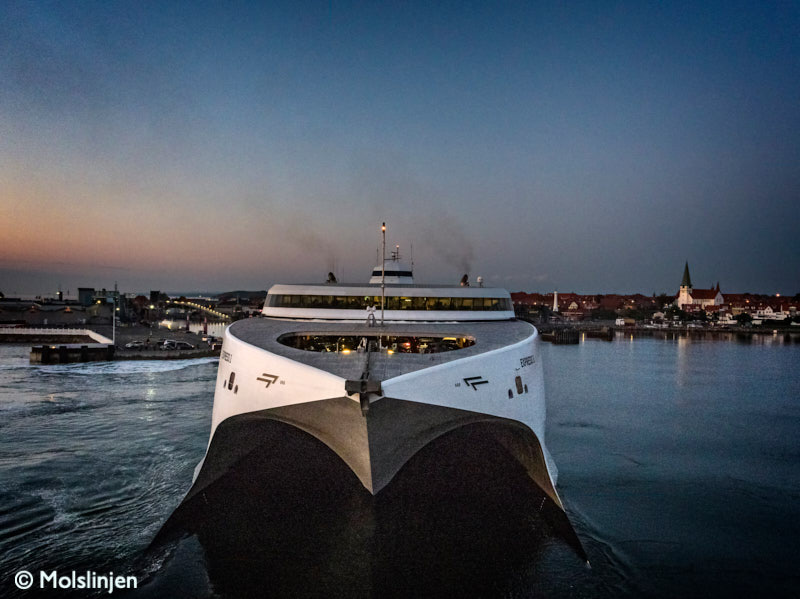
The June figures also show that the route between Rønne and Køge enjoys an increasing popularity with ordinary travelers. The new HAMMERSHUS sailed with almost 26% more passengers and 40% more cars. More tourists mean more food etc. Freight went up 13%.

Scandlines Is Ready For The Busy Summer

By 2019 Newsletter week 28

Scandlines is doing well. Last year, it was especially cargo that saw an increase, 11% on Rostock-Gedser and 5% on Puttgarden-Rødby.
The two hybrid ferries on the Rostock-Gedser route also showed a solid result – in the summer they carried over 16,000 passengers a day for the first time.

As usual, the shipping company’s first half of 2019 was stable, although truck volumes were not quite up to the level of previous year.
In passenger car traffic, Scandlines slightly exceeded the previous year’s figures.