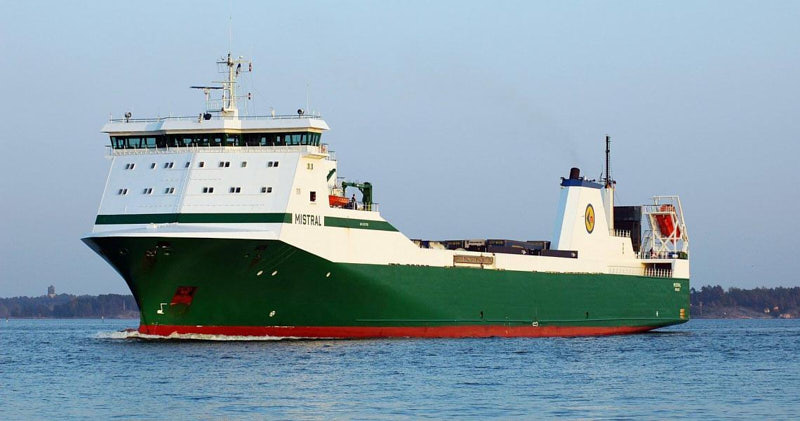
More Freight Capacity Between Finland And Sweden With VIKING GLORY

By 2020 Newsletter week 23

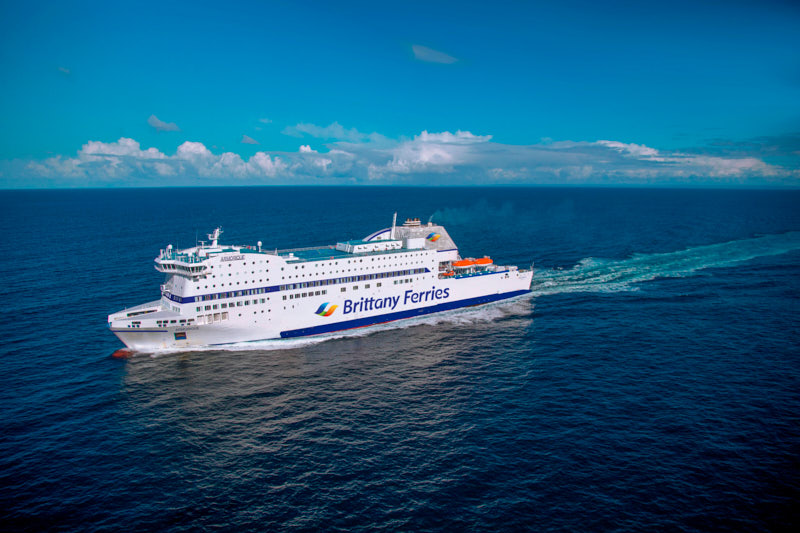
Cargo capacity on Finnish sea routes will increase when VIKING GLORY enters service in 2021. The vessel will replace AMORELLA and provide about 500 lane metres of additional capacity on the Turku–Stockholm route.

Key figures:

  • 133,000 cargo units on the northern Baltic Sea annually
  • Cargo market share 4% in 2019

The transportation of lorry drivers has been taken into consideration to a greater extent than previously in planning GLORY’s interior. In the quiet part of VIKING GLORY, lorry drivers have their own section, which includes some 70 cabins as well as sauna facilities and a lounge,” says Viking Line’s freight director, Harri Tamminen.

Stena Line Reduces Freight Capacity As Covid-19 Impacts Business Volumes

By 2020 Newsletter week 23

Stena Line will be reducing freight capacity on its Belfast – Liverpool (Birkenhead) service due to a decline in freight demand as a consequence of the Coronavirus crisis. Roro vessel STENA FORECASTER will be removed from service resulting in a reduction of 10 trips per week.

On March 9th, Stena Line launched its largest ship ever on the Belfast – Liverpool route, the brand-new STENA EDDA. STENA EDDA replaced the smaller STENA LAGAN and at the time increased capacity for both freight and travel customers.

In early 2021, Stena Line will replace STENA MERSEY with a further new ship, STENA EMBLA. These two new ropax ferries will increase freight capacity by almost 30% and will double passenger capacity compared with the vessels they replace.

FERRY FINANCE

By 2020 Newsletter week 23

After A Strong Year Attica Group Can Handle The Storm

  • +37% EBITDA €78.02m
  • +21% Net income after taxes €20.85m compared to €17.27m for fiscal year
  • 2018 which included one off gains of €15.80m
  • +11% Revenue increase €405.40m

The positive financial results are mainly attributed to the synergies generated from the acquisition of Hellenic Seaways Maritime s.a. which is consolidated for the first time on a full year basis.

Attica Group saw a significant increase of liquidity reserves to €105.33m at the end of the year,  compared to €59.42m on 31 December 2018.

The upward trend of traffic volumes during the first two months of year 2020 was disrupted by the outbreak of the pandemic. The management proceeded immediately with an action plan to mitigate the impact.

The management anticipates that the Group will present losses for the fiscal year 2020.

Additionally, it is expected that the Group’s liquidity fully covers its cash flow needs.

Finnlines Wants Piece of Emergency Cake

By 2020 Newsletter week 23

The National Emergency Supply Agency (NESA) in Finland is prepared to spend EUR 45 million on financial support to ensure the transport of vital cargo from Finland to Sweden, Baltic countries and Continental Europe.

Finnlines welcomes this decision and published a press release to draw attention on the importance of the company as a lifeline maritime connection.

NESA has already granted financial support to four out of seven commercial operators securing the main maritime bridges for rubber-tyred vehicles. The first support actions taken by NESA where addressed to ropax operators whose operations are not viable without revenue from recreational travellers. For more freight-oriented operators, the threat of serious disturbances was less imminent. However, the corona crisis is having a strong impact in Finland’s economy and the value added of the transport sector is estimated to fall by around 20%, to which Finnlines is also exposed to.

After several weeks of negotiations and encouraged by NESA, Finnlines has also filed an application under this same emergency financial support programme.

Finnlines is still waiting for NESA’s emergency financial support decision but feels confident in receiving support based on Finnlines’ pivotal role in securing Finland’s security of supply.

A member of the Grimaldi family, Finnlines repeats its mantra: “Companies that operate in the same sector and compete with each other should have uniform and equal opportunities to apply for and receive financial aid granted by the State and authorities. Non-discrimination and ensuring fair conditions of competition are the basic principles of EU State aid rules.”

Stena Group Q1 Interim Report: Covid-19 Impact

By 2020 Newsletter week 23

Ferry Operations were of course hit by the plunge in passenger volumes and the decrease in freight, due to Covid-19.

  • -53% EBITDA SEK 265 million
  • -10% cars
  • -15% passengers
  • -7% freight

Stena Line has taken steps to mitigate the financial impact of the Covid-19 situation. This includes closure of routes, reducing costs and number of employees.

RoRo Operations: chartering out of vessels

  • -9% EBITDA SEK 70 million

The decrease is mainly due to lower charter income due to the sale of KAIARAHI in the Q4 of 2019 offset by strong contract coverage and utilisation across the fleet.

FERRY PORTS

By 2020 Newsletter week 23

Marseille’s New Maghreb Ferry Terminal To Be Built By Four Companies

Eurovia Méditerranée, GTM Sud, Isolbat and Snef have been selected to build the terminal Gare Maritime du Cap Janet in Marseille.

The international terminal will serve the Maghreb ferry routes.

Each year, Port of Marseille Fos handles 500,000 passengers coming from or going to the Maghreb. This traffic generates 400 calls, which are divided over two terminals. To improve the accessibility the Port de Marseille Fos and Métropole Aix-Marseille Provence will regroup these services on one site, with easy, direct access to the A55 motorway.

Capacity will be 3,000 cars per day and also 600 foot passengers.

The terminal should be ready in 2022.

Port of Hirtshals: Increase In Freight Traffic And In Potential

By 2020 Newsletter week 23

During the first four months of 2020, the Port of Hirtshals has increased its turnover by 0.4% in freight traffic compared to the same period last year.

The roro traffic, which constitutes the majority of the freight, basically maintained the level from the same 4 months of 2019.

Due to the border closures in e.g. Norway, Germany and Denmark, there has been no car or passenger traffic over the Port of Hirtshals since mid-March. The ferry companies have thereby been able to use the car deck for lorries and trailers instead. This has meant that the freight traffic over the corridors in Hirtshals has consolidated even further during the corona crisis.

“Although the port has experienced growth in freight traffic for almost 10 years, we can only interpret the development of the last few months as an indication that the freight volumes increase when the capacity is present on the routes out of Hirtshals. This clearly shows that there is more potential to be gained. At the same time, we must see the development as evidence that the transport sector wants to utilise the direct corridors that we have right here in Hirtshals,” says Jens Kirketerp Jensen, managing director at the Port of Hirtshals.

Stockholm Norvik Port RoRo Terminal To Open In Autumn

By 2020 Newsletter week 23

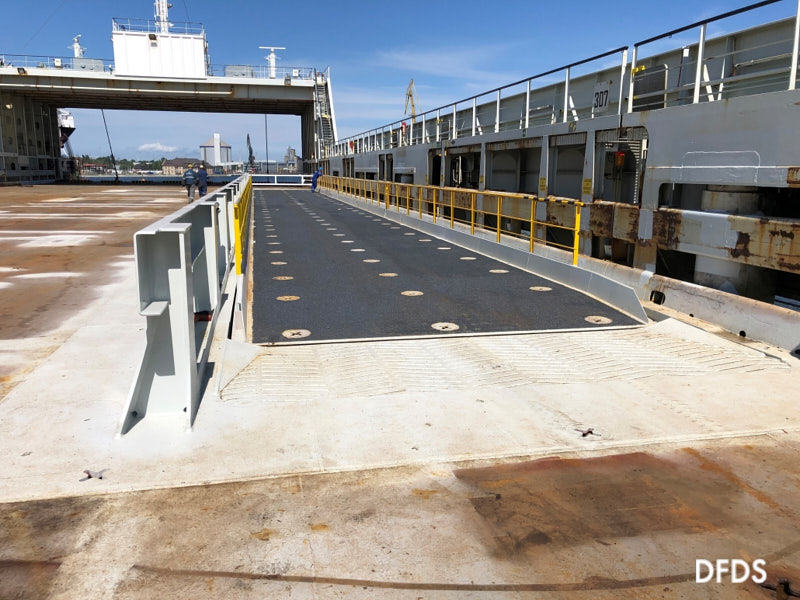
The final two of nine ramps have been delivered to Ports of Stockholm.

Five were delivered to the recently rebuilt Värtahamnen Port and two to the Port of Kapellskär.

The last two ramps for the Norvik roro terminal arrived at Stockholm Norvik Port end of March.

Norvik terminal is scheduled to open in September and will be operated by Ports of Stockholm. The two quay-berths for RoRo vessels are 230m and 280m, respectively, with respective depths of 10.5m and 10m. Both the quays and the ramps are dimensioned to be able to handle vessels larger than those that currently call at Ports of Stockholm.

INTERFERRY

By 2020 Newsletter week 23

Interferry Welcomes Easing Of Travel Restrictions, Follow Up

In his monthly letter, CEO Mike Corrigan explains how Interferry’s efficient work generated an invitation to participate in the European Union’s (EU’s) Commissioner for Transport’s ‘Healthy Gateways project’. Well done, Interferry!

“On May 15 we issued the above titled News Release in response to increasing signals across the globe that ferry routes would soon be opening up to more than just the movement of lifeline goods and essential travel. To say that this is welcome news might be the biggest understatement in my 17+ years in the ferry industry. Throughout the world, we are pleased to see that more and more governments and health agencies are recognizing that ferries will be the preferred choice of transportation for most travelers as restrictions loosen up – given their ability to adhere to physical distancing onboard and at the terminals, as well as the many other safety measures the industry has adopted.

These measures, COVID-19 Guidance for Ferries, were developed through Interferry’s Operators Policy Committee in consultation with operator members and issued via Johan Roos’ Regulatory Report to the membership and also to European Union’s (EU’s) Commissioner for Transport (COM). Johan reports that our Guidance was very well received by the EU COM. In fact, we have been invited to participate in the EU COM’s Healthy Gateways project and to provide assistance with the development of its comprehensive COVID guidelines for European ferries.”