
Green Initiatives at the Port of Hirtshals

By 2020 Newsletter week 34

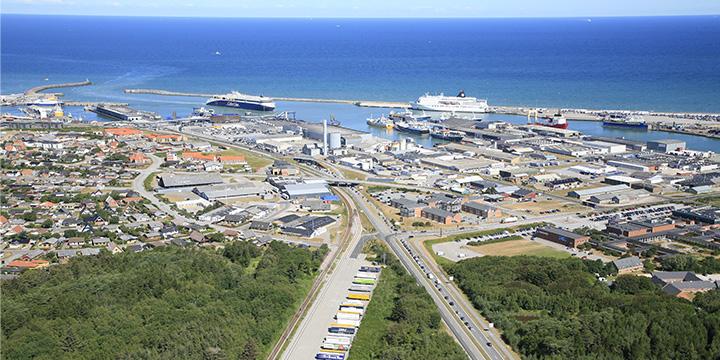
An electricity consumption of around 200,000 fewer kilowatt-hours in the first half of 2020, compared to the same period in 2019, speaks its own clear language. The Port of Hirtshals’ installation of the digital registration and invoicing system ProPower has, in addition to significantly reducing the consumption of the vessels in the port, also meant a reduction in the port’s total electricity consumption of 10%.
Port of Piraeus: Small Losses and 4th Place Amongst the Top-15 European Ports

By 2020 Newsletter week 34

According to the recent data from Porteconomics.eu, the port of Piraeus is ranked 4th among the top 15 ports in Europe despite the pandemic. In the first semester of 2020, the handling of containers in the largest port of Greece decreased only by 6.2%, compared to 2019. That figure reveals that the largest Greek port shows significantly better yields compared to other ports controlled by the Chinese COSCO as it seems to have withstood the strong shocks of the first wave of the pandemic in March and June.

On the other hand, regardless of the fluctuations of traffic as reflected for the port of Piraeus and the other fourteen ports in the data, Piraeus continues to claim one of the first three places in the ranking and consequently a better position in the world ranking under conditions related to infrastructure, the construction of the 4th pier as well as the railway project.

TECHNOLOGY

By 2020 Newsletter week 34

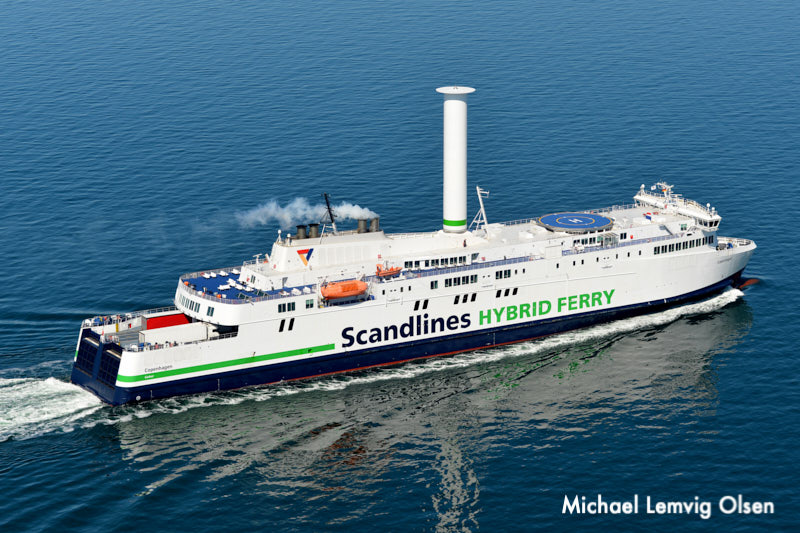
The EU Green Deal aims to lower pollution and carbon levels across Europe. End of May saw the installation of a new Norsepower Rotor Sail on the Scandlines hybrid ferry COPENHAGEN, operating on the Rostock-Gedser route.

The installation was undertaken as part of the EU-funded Wind Assisted Ship Propulsion (WASP) project that was launched in late 2019. It has the aim to install five wind assisted propulsion units on a series of different vessels operating in the North Sea and Baltic Sea to test, validate and help facilitate the uptake off wind-assisted propulsion technologies.

These systems are expected to deliver between 4 – 5% fuel savings – corresponding to the same amount of CO2 – in average, and more than 20% in optimal wind conditions.

Norwegian Electric Systems Completed the Delivery of 5 Zero-Emission Propulsion Systems to Fjord1

By 2020 Newsletter week 34

The five ferries have been outfitted at Havyard Ship Technology shipyard in Sogn, Norway.

These ferries have a capacity of 50 cars and will operate fully electric at four different ferry-crossings along the western coast of Norway. Crossing time for the ferries differs from 13 to 30 minutes depending on which ferry route they are operating in.

“With these ferries, NES has now a total of 19 fully electric or hybrid electric ferries operating in Norway”, says Jan Kåre Sundgot, project manager for these 5 projects.

  • BØMLAFJORD: Langevåg — Buavåg (Bømlo)
  • STANGVIKFJORD: Kvanne – Rykkjem
  • SMØLA and MØRINGEN: Edøya – Sandvika
  • FEDJEBJØRN: Fedje — Sævrøyna

Travel Industry Faces Quarantine Crisis: Airlines, Eurostar and Ferry Companies Slash Services After Wave of Cancellations in the Wake of France Being Taken off Safe List

By 2020 Newsletter week 34

EasyJet confirm it will close its bases in Stansted, Southend and Newcastle

Ryanair will reduce its flight capacity for 20 per cent in September and October

Brittany Ferries say ‘tough decisions’ to be taken on what routes should still run

Flight bookings have dropped in the last 10 days due to Covid-19 ‘uncertainty’

‘How many jobs need to go before they realise how much damage this is doing?’

SHORT NEWS

By 2020 Newsletter week 34

Corona Case on NORBANK

Saturday 15/8 P&O’s NORBANK was taken out of service after a Covid-19 discovery was made.

One crew member tested positive for coronavirus and was placed into self-isolation.

The ferry has been moved to a lay-by berth in the Port of Liverpool.

PHOTOS OF THE WEEK

By 2020 Newsletter week 34

Four-in-a-Row

By coincidence I was in Zeebrugge on 13/8, when 4 ro-ro ships were together in the PSA Zeebrugge (Wielingen Terminal). This sight is rather unusual.

Even more unusual was the fact to see three DFDS vessels, united in this terminal.

From left to right:

  • TRANSPORTER (chartered DFDS ship for route Oslofjord/Moss – Zeebrugge – Immingham)
  • FINNBREEZE (arriving from Bilbao)
  • BELGIA SEAWAYS (Zeebrugge – Göteborg)
  • MAGNOLIA SEAWAYS (Zeebrugge – Göteborg), replacing HOLLANDIA SEAWAYS during her drydock overhaul

GLEN SANNOX’s Mis-Manufactured Bulbous Bow Replaced

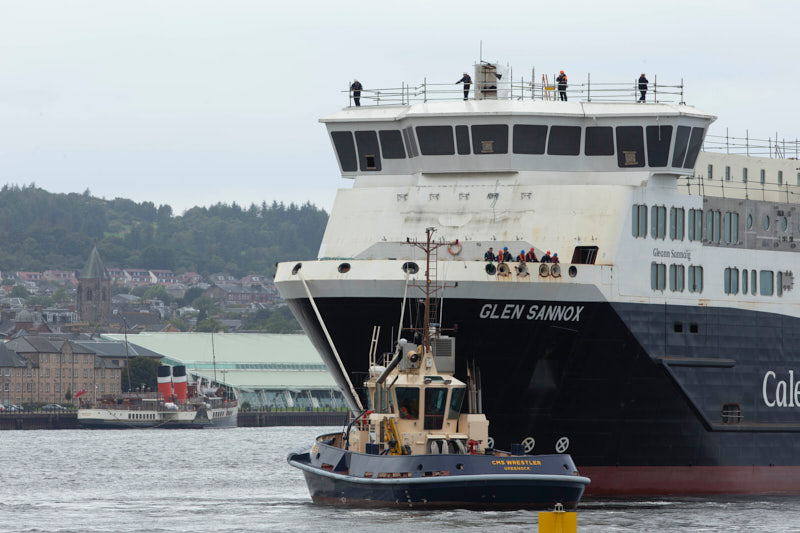
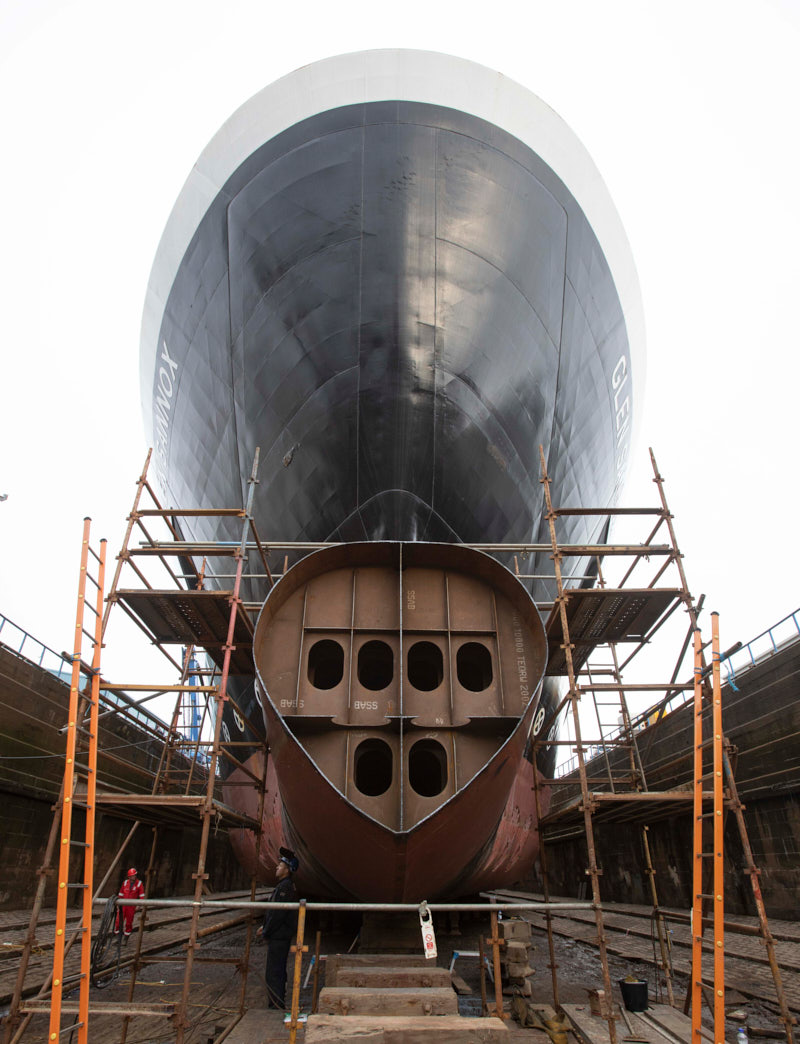
Following GLEN SANNOX’s move to dry dock in Greenock last week, the bulbous bow has been removed by engineers.

In 2017, before the official launch of the vessel, the bulbous bow was rejected by Lloyds Register.

The replacement of the bulbous bow is a crucial part of GLEN SANNOX’s current programme of remediation work which also includes the installation of deck windows, paint and coating repair, hull cleaning, pipework modification and more.

FERRY SHIPPING

By 2020 Newsletter week 33

According to the recent XRTC Business Consultants report, the Hellenic Coastal Shipping is entering a new era due to the pandemic.

The passenger traffic reduction by 50% will probably cause possible movements within the sector as well as allow new entries.

The most important points of the report are the following:

  • The passenger traffic of 2020 will be reduced by 49% compared to 2019 (about 8,88 million passengers compared to 18,2 million last year). The first five months of 2020 were disappointing for the ferry companies, as there was a drop of 60% in the transport traffic. As a result, only a few ships are currently operating –due to the pandemic- in order to cover the needs of this years’ high season, while many other ships remain moored including the majority of the high-speed crafts.
  • The winter of 2020-2021 will be particularly difficult for the sector, as the revenues from both the first semester and the summer season 2020 is not enough to cover sufficiently the operators’ financial and operational needs. So, the only way to stay afloat is to take a direct state or European subsidy.
  • The Greek ferry market should immediately take action on two levels: The first level is related to its survival while the second to its long-term maintenance and sustainability through European funds. At both levels, state aid is necessary.
  • This year’s financial results are not expected to be positive for the ferry operators, apart from a small number of companies that serve exclusively public interest lines. It is therefore important that both investors and financiers deal with the situation prudently in order to avoid an imminent immediate collapse of the companies.
  • Today, the large ferry operators (Attica Group, Minoan Lines and ANEK Lines) control about half of Greece’s transport traffic. The other half is controlled by comparatively new companies (leading Seajets), who have managed to control – with their fleet (65 conventional and high-speed crafts) – significant shares mainly in the Aegean markets and inter-island travel.