

Interview with line manager Antonio Raimo of Grimaldi Group, about the Zeebrugge – Cork route.
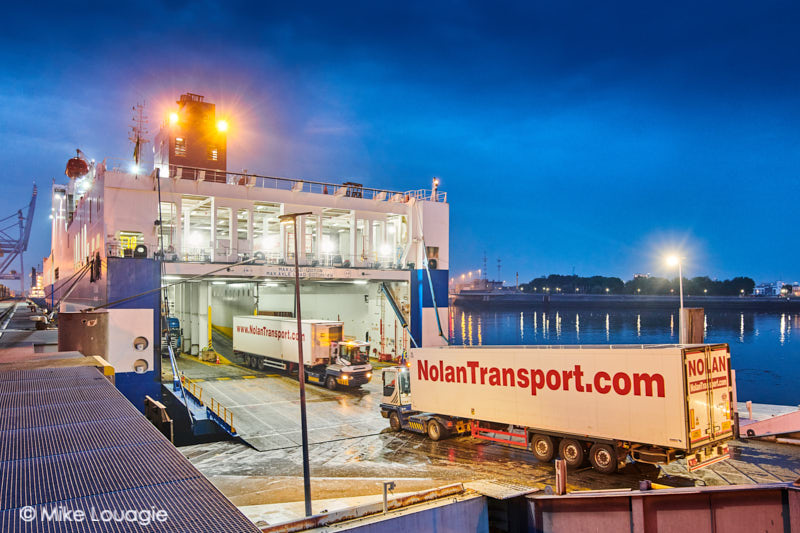

Interview with line manager Antonio Raimo of Grimaldi Group, about the Zeebrugge – Cork route.
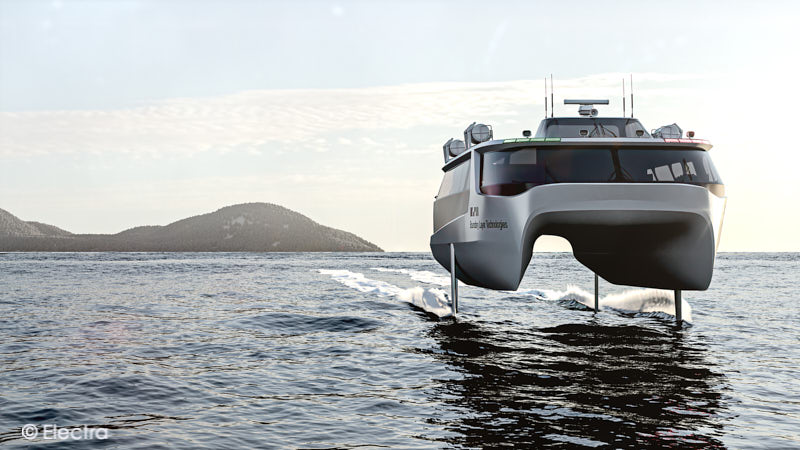
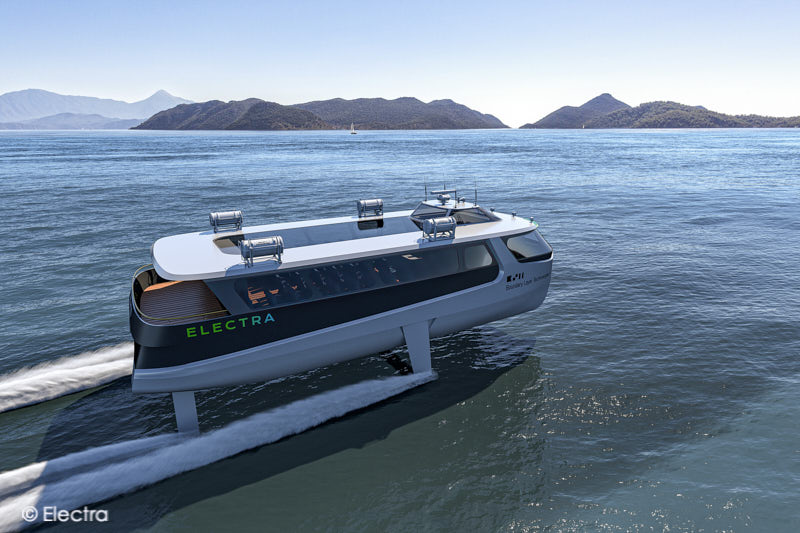
Boundary Layer Technologies, a California based marine technology startup launched their fully electric hydrofoil ferry concept design on 27 October 2021.
ELECTRA – twice the speed and range of existing electric ferries – has a range of up to 100 nautical miles and cruise speed of 40 knots due to Boundary Layer Technology’s proprietary hydrofoil technology and podded propulsion system.
Compared to fossil fuel alternatives, ELECTRA’s battery electric propulsion significantly reduces cabin noise by up to 20dB compared to conventional ferries.
The ELECTRA ferry offers OPEX reductions of up to 35% compared to fossil fuel burning fast ferry alternatives, as well as helps operators de-risk the future cost uncertainties of carbon taxes and emissions trading schemes being implemented globally.
ELECTRA was specifically designed with the Greek ferry market in mind.
“The ELECTRA ferry offers great appeal to many ferry operators in the Aegean and Mediterranean regions, who are currently evaluating their next generation highspeed craft fleet and want to comply to strict future emission regulations, reducing their environmental footprint asap” explains Pythagoras Nagos, former Chief Commercial officer of Hellenic Seaways, industry expert and a member of the ELECTRA advisory board.
The project has also gained traction with investors who are increasingly looking to fund green projects. “This would be a fantastic win for sustainable maritime transport and the blue economy. ELECTRA is the ideal zero emission catamaran to replace the aging fleet of Greek coastline hydrofoils and short haul ferries” says Spyros Poulios, Managing Partner at Athens-based impact investment fund Brace. “There is a real opportunity to form a coalition between our forward-thinking government, corporates, and global innovators to make industry-decarbonising projects like this a reality.”
After its inauguration last September, the Port of Calais opened its new terminal on the evening of Sunday, October 31. In order to mark this milestone in the Port of Calais’ history, the first passengers were welcomed in a festive atmosphere.
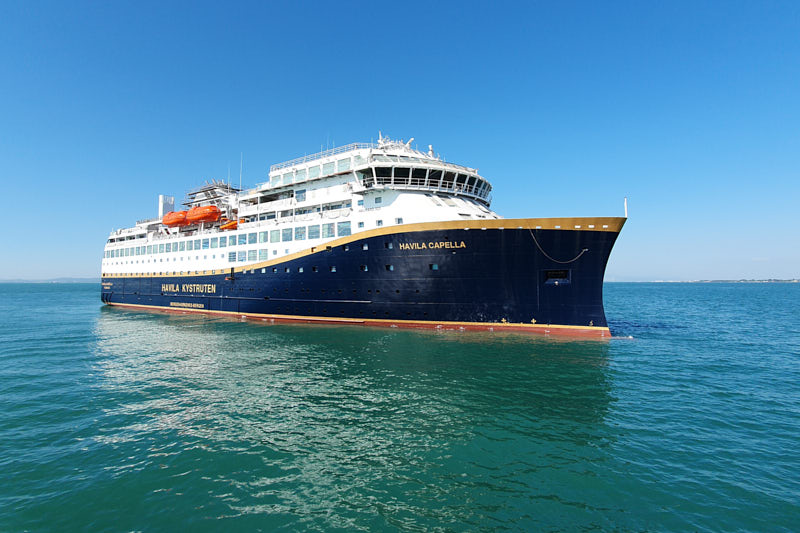
The Tersan Shipyard built HAVILA CAPELLA has been delivered to Havila Kystruten (Havila Voyages). The ship is on its way to Norway, where she will start her sailings on the traditional coastal route from Bergen on 1 December.
The owner says the ship has the world’s largest battery pack, with an autonomy of four hours.
Next ship will be delivered in January. Ships three and four arrive in the summer of 2022.
Havila Voyages is headquartered in Fosnavåg on Sunnmøre, and more than half of the shares are owned by the Sævik family.
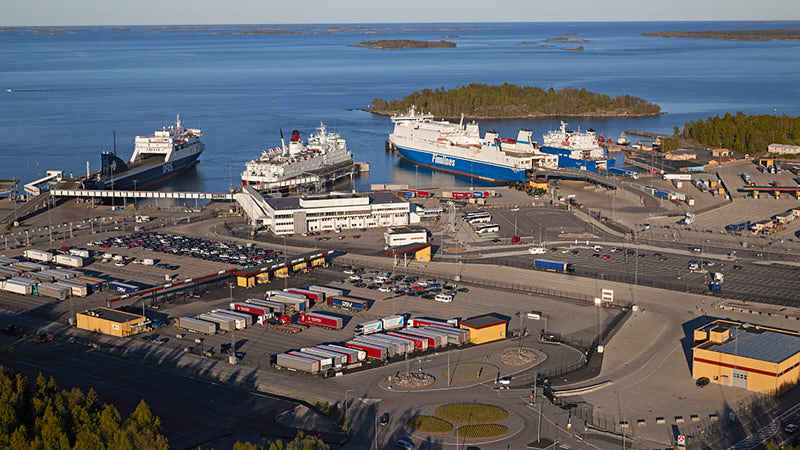
27 January 2022: The larger ropax EUROPALINK will replace the current FINNFELLOW on the route, increasing cargo capacity by an additional 1,200 metres. (4,200m in total).
EUROPALINK will operate on the route together with FINNSWAN, making 14 calls a week at Port of Kapellskär.
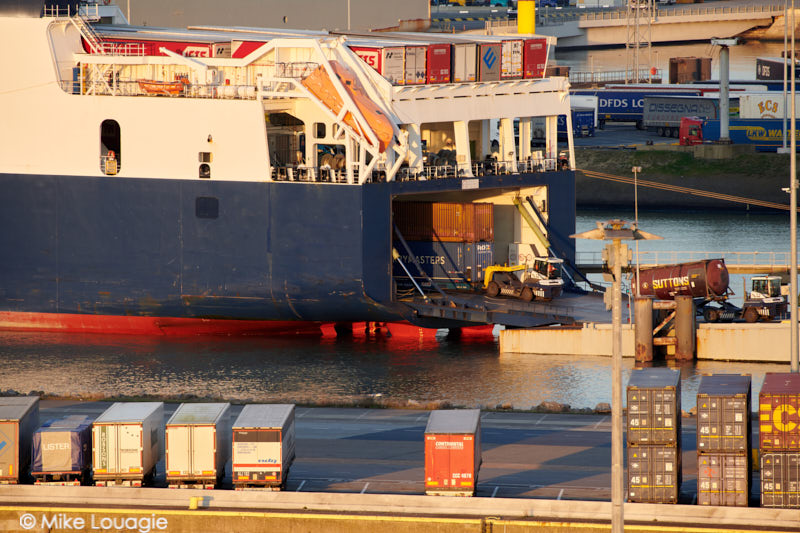
At the beginning of November, a complete renovation of the roro berth at quay 609 in the Brittanniana dock in Port of Zeebrugge will start.
The jetty will be renovated and widened to accommodate CLdN’s larger H5 roro’s. This will allow CLdN to use H5 vessels on all UK desitinations.
There will be no impact on the services to the UK during the four months of renovation work.
How will it work?
Drivers will still check-in as normal and will be allowed to embark on the next available ferry, this could be a DFDS or P&O vessel.
Sailing schedules have been re-planned: truck drivers will be able to get on a ferry every 37 minutes.
Exceptions: hazardous goods, plug ins, out of gauge vehicles, horses, pets, livestock.
In October 2021, AS Tallink Grupp transported:
412,046 passengers (+153.9%)
34,138 cargo units (+22.8%)
63,923 passenger cars (+37.4%)

Initially scheduled on 1 November 2021, the launch of the new shipping line between the port of Calais and the port of Tilbury has been postponed to the first quarter of 2022.
“Due to a failure of our partners, Blue Channel Line has been forced to postpone the launch of its line.” Blue Channel Line was going to charter a Suardiaz vessel.

Group Results (1 January – 31 August)
+Revenue SEK 1,624 million (SEK 1,393 million)
+Operating profit SEK 193 million (SEK 115 million)
+Profit after financial items SEK 219 million (SEK 129 million)
Ferry
+43% passengers
The improvement in earnings is largely due to more travellers and visitors to and from Gotland. Demand for travel has increased after the authorities eased the corona restrictions.
The newly started ferry line between Nynäshamn and Rostock which is operated by Hansa Destinations AB is a long-term investment that in the long run can contribute to the group’s result.