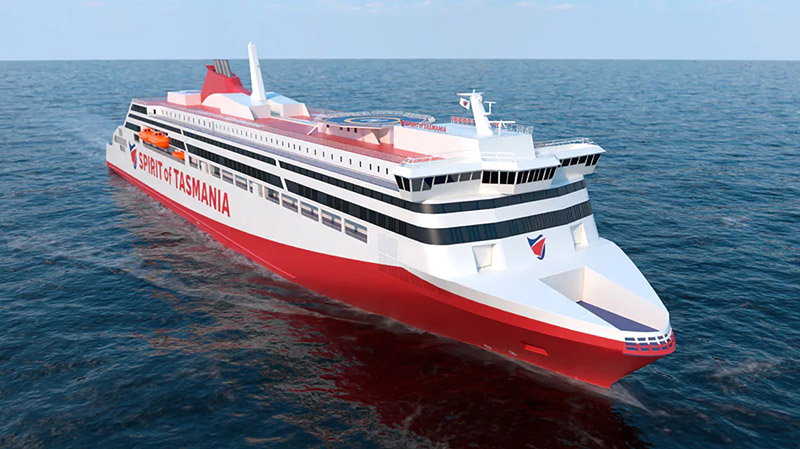
The shipping company has been awarded the tenders launched by the Ministry of Transport for 11 million euros.
Routes: Almería-Melilla, Málaga-Melilla and Motril- Melilla.
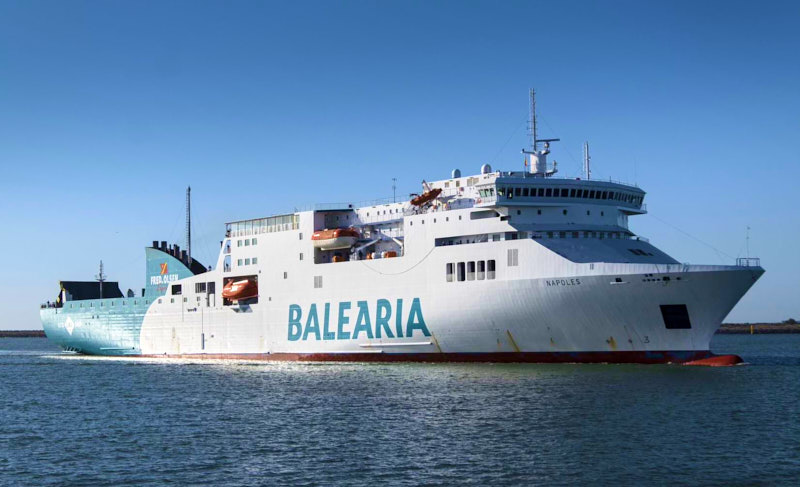


The shipping company has been awarded the tenders launched by the Ministry of Transport for 11 million euros.
Routes: Almería-Melilla, Málaga-Melilla and Motril- Melilla.
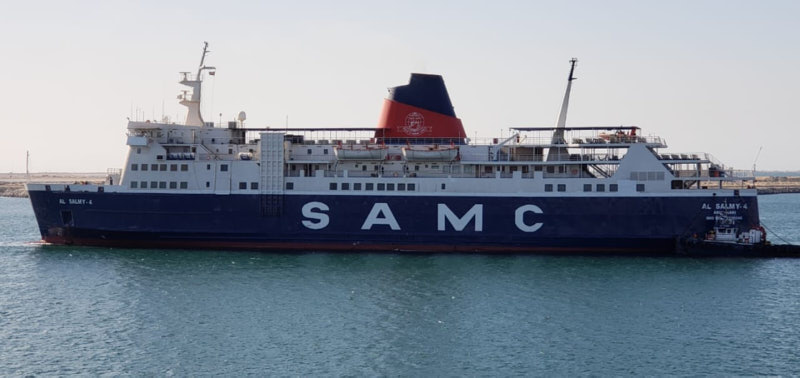
On her way to India (Bhavnagar Anchorage) is the former Sealink veteran CHARTRES. She was sold for scrap.
She was built in France in 1974 for SNCF and had a remarkable career in Greece and Azores as the popular EXPRESS SANTORINI (1993-2016).
In November 2016 she was sold to United Arab Emirates (Salem Al Makrani) and served as the AL SALMY 4.
In July 2021, she was transferred to Seajets and renamed AQUA MYTH. The plan was to return the 48-year-old ship to Greece. However, she was renamed MYTH, flag of Comoros.
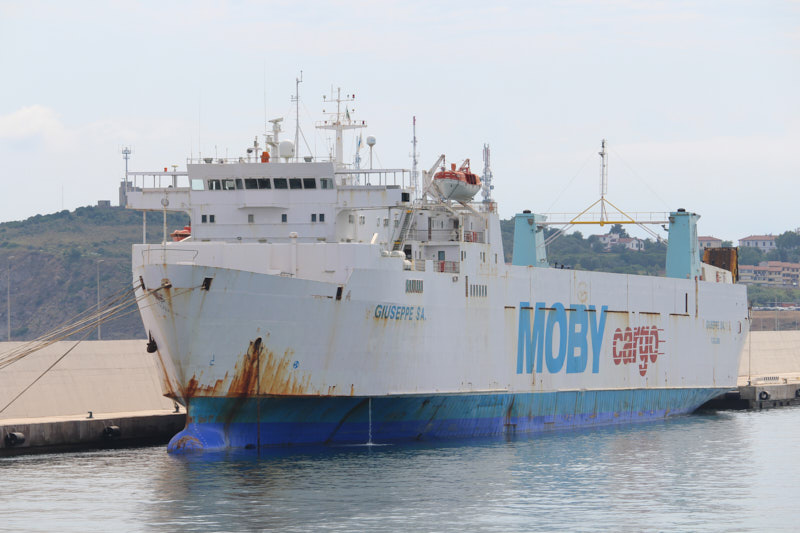
Moby’s veteran GIUSEPPE SA, currently idle in the Italian port of Piombino, will soon be sold at an auction following a procedure just approved by the Court of Milan under which the Vincenzo Onorato-controlled group submitted a debt restructuring plan.
Tender price is EUR 1,560,474 and the sale will take place on March 31st.
Looking at the age (built 1975) the roro is likely to be sold to a ship recycler since last year a cash buyer offered more than EUR 2.1 million.
The vessel can transport 376 passengers and 103 trailers.
Ropax EPSILON, owned by Caronte & Tourist, but operated for several years in a bareboat charter by Irish Ferries, will change hands in the near future.
The Italian company controlled by the Franza and Matacena families has just found an agreement with a Polish company (unconfirmed but the prime suspect is Euroafrica) for the sale of this ferry at a price of about 50 million euro.
The delivery will take place no earlier than next November because until that date EPSILON is employed on a bareboat charter, with options to extend the charter until mid-2023.
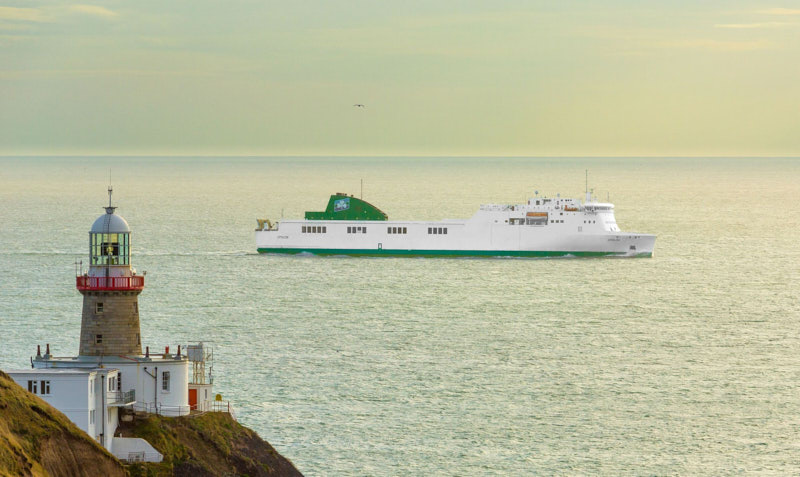
The first of two of a completely new generation of ferries called ‘Green Ships’ has been delivered to TT-Line.
More than 90% of the technology is provided by European suppliers.

This and other interesting items can be read in the DFDS Annual Report 2021.
Some interesting elements:
Newbuilding plans (p29)
There are currently no plans to build new ferries, apart from a green ferry new building scheduled for 2025. The next major fleet investment program is expected to be renewal of the five short-sea Channel ferries for completion towards 2030. These ferries are expected to be battery powered due to the short crossing time of the Dover Strait.
Remark: under ‘investments’ (p24), DKK 2.3bn investments are expected in 2022:
One combined freight and passenger ferry new building and exercise of a purchase option to buy one freight ferry: DKK 800m.
About Irish Ferries on Calais-Dover (p32)
The excess capacity created by the entry of an additional operator is therefore likely to impact both freight and passenger pricing negatively in 2022. The likely passenger ticket price decreases will to some extent be mitigated by additional revenue from duty-free sales. Moreover, the new entrant will decrease the energy efficiency of the Dover Strait transport corridor.
Baltic Sea region (p32)
Freight volumes have grown in recent years which has led to capacity increases on routes operated by both direct and indirect competitors. The bridge between Germany and Denmark is expected to be completed within the next ten years and this has also prompted some operators to adjust their route networks. Freight ferry capacity in the region is therefore expected to continue to grow faster than demand in 2022.
Truck driver shortage
The truck driver shortages experienced in 2021 are likely to persist in the coming years. This is expected to support continued growth in the demand for unaccompanied ferry services that DFDS primarily provides in the North Sea and Mediterranean business units.
Roro vessel market
There was high demand for roro’s offered for chartering in the market and fixtures were made for longer periods at strong rates. Despite a market orderbook for newbuildings above both 2019 and 2020 (2019: 50k LM, 2020: 25k LM, 2021: 43k LM) and limited scrapping, all new buildings were absorbed in the market and several large operators added extra charter capacity to their networks.
The orderbook for 2022 and 2023 is around 70k LM, although Covid-19 related delays are expected to move delivery of several ferries into 2024. Smaller/older vessels are currently sold to secondary markets, rather than scrapped, and thus removed from the European market as well.
Ropax vessels
There was high demand for combined ferries with an overweight of freight capacity, to the extent that no vessels were available for chartering during most of 2021.
Charter rates for this ferry type thus increased during 2021.
Conversely, the demand for passenger-focused ferries was low and several vessels were idle during the year.
The orderbook for combined ferries is around 105k LM stretching to 2025 as few vessels were delivered in recent years (2019: 11k LM, 2020: 11k LM, 2021: 17k LM).
Click on cover

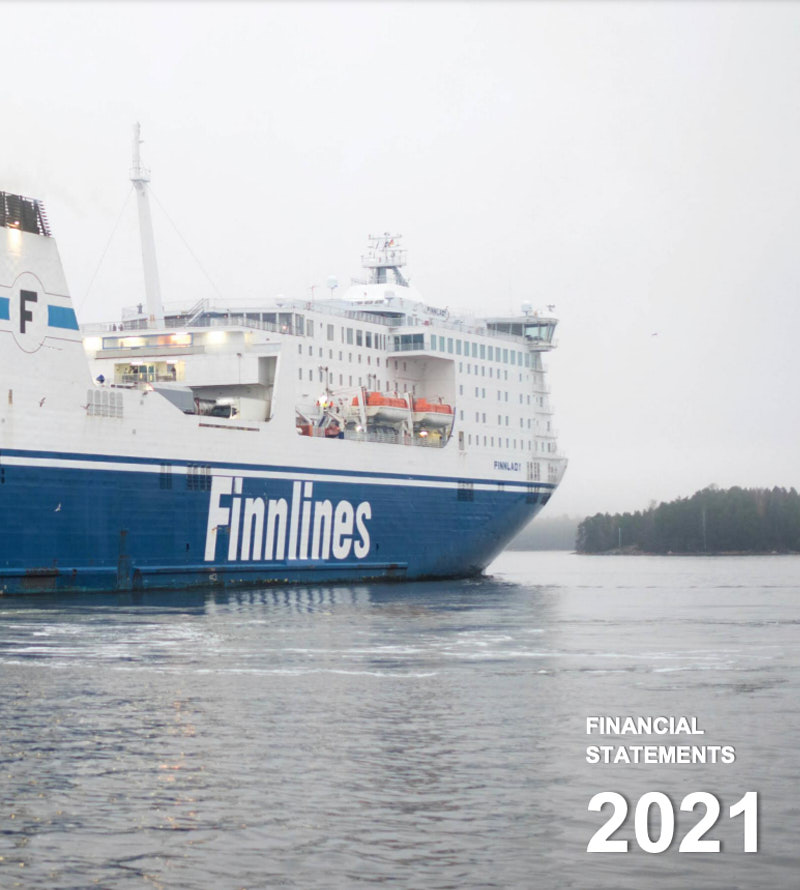
Rederiaktiebolaget Eckerö presented its financial statements, where it emerged that the company had chosen to write down the value of the cruise vessel that was a victim of the pandemic. The ship is now in Landskrona, awaiting a new future.

The Trapani-based ferry company Liberty Lines, controlled by the Morace family, is the only player which submitted an offer for the tender launched by Invitalia, on behalf of the Italian transport ministry. It was aimed at finding an operator for the regular high-speed ferry link between the ports of Reggio Calabria (Italy mainland) and Messina (Sicily region).
Public subsidies are worth almost EUR 37 million for five years.
Liberty Lines will have to offer regular shuttle services (up to 16 round trips from Monday to Friday) between Reggio Calabria and Messina taking half an hour on each direction to cover 18.1 miles distance with hydrofoils or high-speed crafts.

Rauma Marine Constructions has started the construction of the first of two ropax ferries ordered by the Australian company Spirit of Tasmania.
The vessels will operate an extremely challenging open sea route between mainland Australia and Tasmania.
The start of construction was celebrated in Rauma on February, 28, in a traditional steel cutting ceremony.
The route the vessels are set to operate will be the world’s southernmost ferry route powered by LNG.