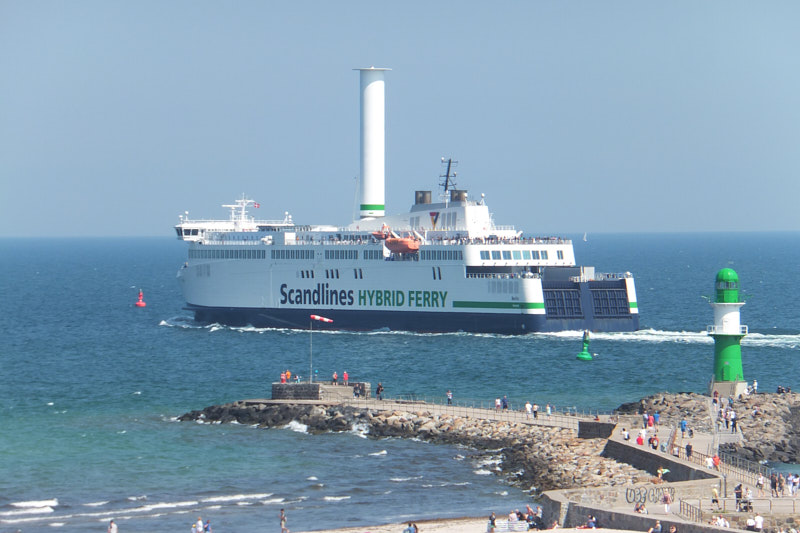


Scandlines Carries 1.17 Million Passengers in July

By 2026 Newsletter week 33

Scandlines carried 1.173 million passengers on its Puttgarden–Rødby and Rostock–Gedser routes in July, slightly up from 1.152 million in July 2025.

The busiest day was 18 July, when almost 62,000 passengers travelled with Scandlines, more than 10% above last year’s busiest day and the highest daily figure since before the pandemic.

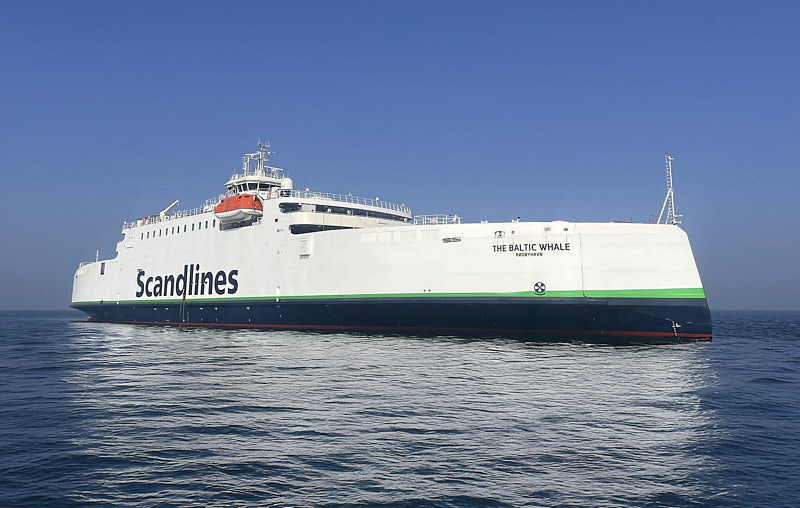
Scandlines says additional capacity provided by the new freight ferry THE BALTIC WHALE helped accommodate the strong summer demand (it freed up additional capacity on the other ferries). The company expects to carry around 2.5 million passengers over the three summer months.

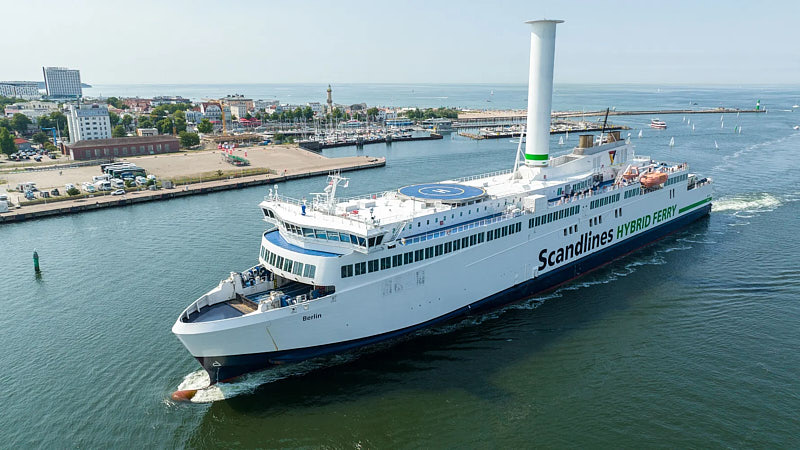
Photo: Matthias Tasler for Scandlines

Scandlines Launches Battery Freight Ferry BALTIC WHALE

By 2026 Newsletter week 11

Scandlines has deployed its new freight ferry BALTIC WHALE on the Rødby–Puttgarden route. The vessel, capable of operating on shore-based electricity, represents an important step towards the company’s goal of zero-emission ferry operations by 2040.

Purpose-built for freight transport, BALTIC WHALE can carry 66 trucks across two cargo decks and is equipped to handle hazardous goods such as batteries, industrial products and automotive components. The new ferry increases freight capacity on the route by 27%, while freeing space for cars and passengers on other Scandlines vessels.

The ferry is fitted with a 10 MWh battery system, enabling emission-free operation during the 18.5 km crossing, which takes about 45 minutes. Charging takes 12–18 minutes using new automated port charging systems that connect in less than 15 seconds.

Designed for flexible operations, the vessel can also operate in hybrid mode using diesel generators when required.

Key facts – BALTIC WHALE

  • Length: 147.4 m
  • Beam: 25.4 m
  • Draught: 5.3 m
  • Capacity: 66 freight units (1,200 lane metres)
  • Passenger capacity: 140
  • Battery system: 10 MWh
  • Charging time: 12–18 minutes
  • Investment: EUR 84 million

Scandlines Converts Two Fehmarn Belt Ferries to Plug-In Hybrids

By 2025 Newsletter week 24
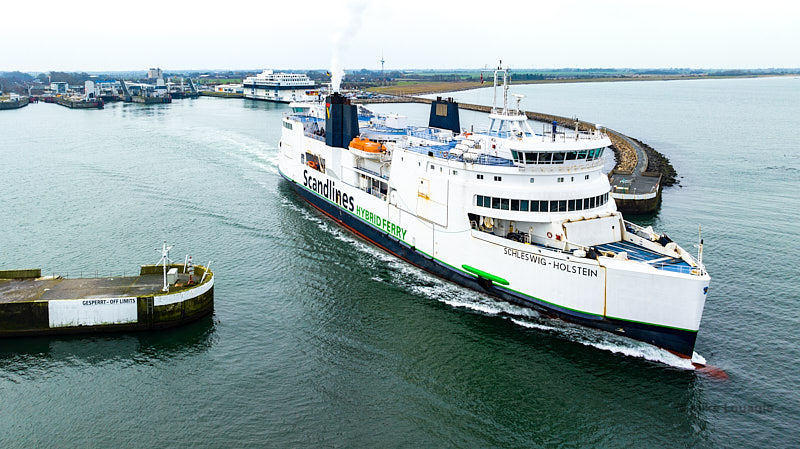
  • Scandlines will invest over EUR 31 million to convert two of the four Puttgarden–Rødby ferries into plug-in hybrids. (DEUTSCHLAND and SCHLESWIG-HOLSTEIN)
  • The goal is to cut CO₂ emissions by up to 80% using renewable electricity.
  • Each ferry will be fitted with a 5 MWh battery system.
  • Charging will take place in just 12 minutes at Puttgarden and Rødby terminals.
  • The conversion contract has been awarded to BLRT Grupp Western Shiprepair (Lithuania).
  • Work on the first ferry starts in August 2025; both conversions to be completed by early 2026.
  • Scandlines reaffirms its commitment to protecting the Baltic Sea and operating sustainably in the sensitive Fehmarn Belt area.
  • The German Ministry of Transport has awarded the project financial support, which covers up to 40 percent of the conversion expenses.

Photo: Matthias Tasler/Scandlines

Scandlines Becomes TourCert Qualified Partner

By 2025 Newsletter week 22

Scandlines has been certified as a TourCert Qualified Partner, recognising its commitment to sustainable tourism in Rostock. The certification is part of Rostock Marketing’s sustainability initiative, developed in collaboration with TourCert and the local tourism board.

Each year, over a million Scandinavian travellers arrive in Rostock via Scandlines ferries. As a certified partner, Scandlines will now work closely with Rostock Marketing to support the region’s development as a sustainable travel destination.

To achieve the certification, Scandlines completed a structured self-assessment focused on environmental, social, and governance (ESG) criteria. The partnership marks a further milestone in Scandlines’ long-term green strategy.

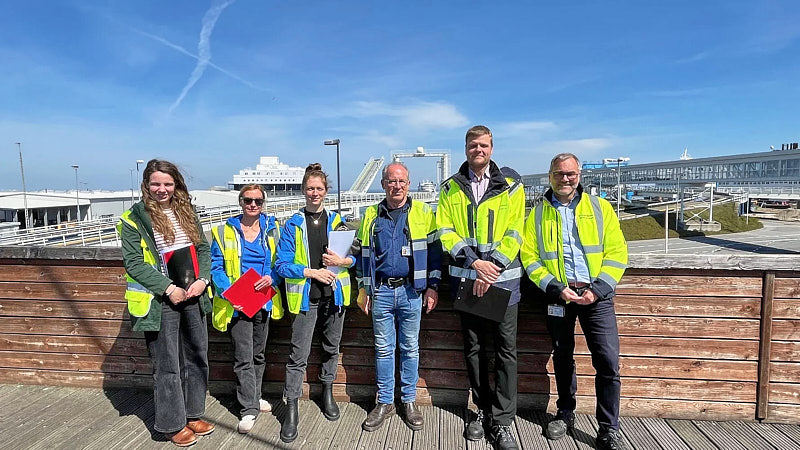
The certificate was officially presented on 16 May 2025 to Michael Dietz and Jenny Schmigale of Scandlines.

FACTS, FIGURES AND MORE

By 2025 Newsletter week 20

Scandlines Sharpened its Competitiveness in 2024

 Revenue: EUR 465 million, stable compared to previous year (466 million)

  • EBITDA: 181 million (↗ from 179 million)
  • EBIT: 149 million (↗ from 145 million)
  • Profit before tax: EUR 125 million (↗ or 122 million in 2023)
  • Investments: EUR 42 million, including major progress towards our zero direct emissions ambition
  • Revenue BorderShops ↘ (EUR 88 million against EUR 97 million) as currency developments reduced the incentive for Swedish customers to make use of the group’s shopping travel offering.
  • Sustainability: Construction of a zero direct emissions freight ferry is on track for commissioning in 2025; preparations for the conversion of two ferries to plug-in hybrid operations have advanced.
  • 4 million pax
  • 6 million cars
  • 693k trucks

Outlook

  • Continued focus on strengthening ferry operations, port infrastructure, and BorderShops in Puttgarden and Rostock.
  • Efficiency improvements, including automation and targeted commercial efforts, to enhance capacity utilisation and competitiveness.
  • Anticipated growth in leisure traffic and a return to freight volume increases from 2025 onwards.
  • Ongoing investments in green technology, highlighted by the upcoming deployment of a zero direct emission freight ferry.
  • Stable financial outlook supported by operational efficiency, with a long-term commitment to fair competition post-Fehmarn Belt fixed link.

Scandlines Extends Environmental Partnership with NABU

By 2025 Newsletter week 19

Scandlines has renewed its long-standing cooperation with NABU for another three years, further strengthening its commitment to sustainable ferry operations. Key initiatives include:

  • Supporting the shift to battery-hybrid and fully electric ferries.
  • Reducing underwater noise through advanced thruster technology.
  • Promoting biodiversity at the port of Puttgarden with rewilding and nesting initiatives.

Scandlines To Test e-Methanol Engine

By 2024 Newsletter week 49
  • Currently, Scandlines’ hybrid ferries on the Rostock-Gedser route utilise diesel, batteries, and wind power. To further reduce emissions, Scandlines is exploring the conversion of its MaK diesel engines to run on e-methanol.
  • In partnership with Caterpillar Motoren, Scandlines plans to test an e-methanol engine in 2025. If successful, the first engine conversion could occur in 2027.
  • This collaboration underscores the potential of e-methanol as a sustainable alternative to traditional fuels.

Photo: Matthias Tasler Scandlines

Record-breaking summer for Scandlines

By 2024 Newsletter week 36
  • Scandlines experienced a record-breaking summer in 2024, transporting 2.7 million passengers and 728,000 cars between Germany and Denmark. 
  • Passenger numbers increased from 2.6 million in 2023 to 2.7 million in 2024. 
  • The number of cars transported also rose, from 716,509 in 2023 to 727,978 in 2024. 
  • The busiest weekend for passengers was 19-21 July, with 146,209 passengers, while the busiest weekend for cars was 26-28 July, with 40,235 cars. 
  • Scandlines introduced a dynamic ticketing system offering lower prices for early bookings or less busy times, enhancing ferry capacity utilisation and competitiveness. 
  • A new app and licence plate scanners were launched to improve ticket booking and check-in processes. 
  • Frequent departures were offered, with crossings every half hour on the Puttgarden-Rødby route and every two hours on the Rostock-Gedser route. 
  • Passengers were more flexible in their return journeys, often travelling at various times throughout the day and night. 
  • In July 2024, Scandlines also transported 3,003 buses. 

Photo: Horst-Dieter Foerster/Scandlines 

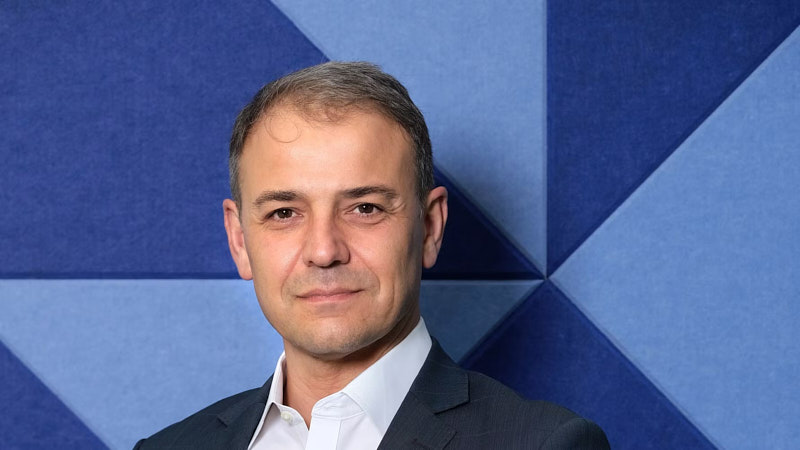
Scandlines welcomes CEO Eric Grégoire

By 2024 Newsletter week 28

Eric Grégoire started as CEO of Scandlines on 8th July. The Executive Management Team now consists of CEO Eric Grégoire, COO Michael Guldmann Jensen and CFO Mikael Koch. 

Eric Grégoire comes from a position as CEO of Goodpack Pte Ltd. in Singapore. He is an experienced business leader with a solid track record in business process improvements from several international companies such as General Electric and DuPont. 

Source: Scandlines 

Scandlines sees improvement

By 2024 Newsletter week 28

Freight: After a slight but persistent negative trend in the freight sector due to geopolitical factors, Scandlines sees improvement. In the first half of 2024, truck traffic on the Rostock-Gedser route grew by 5 percent compared to the previous year, with signs of economic recovery in Denmark, Sweden, and the Benelux countries. 

Passengers in Coaches and Cars: Passenger transport in coaches on the Rostock-Gedser route increased by 5 percent in the first six months of 2024 compared to 2023. Although car traffic was slightly down in the same period, advance bookings for the summer season are promising, bolstered by the start of school holidays in Denmark. 

Passengers: The desire for group trips abroad is returning, contributing to the positive growth in bus transport. Car traffic is expected to increase significantly during the summer season, indicating a rebound in passenger numbers using Scandlines’ ferry services. 

Sustainability: Scandlines is making strides towards its sustainability goals, aiming for zero-emission ferry operations by 2030 on the Puttgarden-Rødby route and zero direct emissions by 2040. Investments include rotor sails, propeller optimizations, and the commissioning of the fully electric freight ferry “Futura” in 2024. Since 2013, EUR 400 million has been invested in these initiatives, with a target to reduce CO2 emissions by 60 percent by 2030 compared to 2008. 
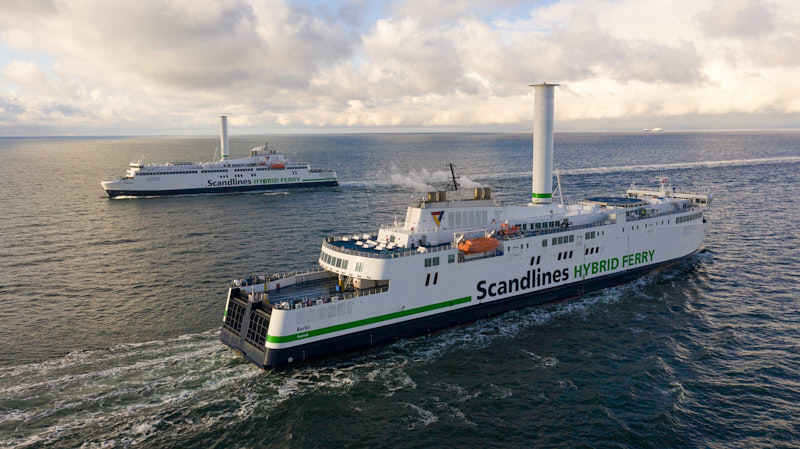
Photo: Scandlines/Ulrich Wirrwa