Wasaline introduced a carbon offset option in June 2024, which has seen significant uptake, particularly among Swedish travellers, with over 1,500 choosing to offset their travel emissions. The proceeds are used to power the ship with biogas, enhancing its sustainability. Wasaline aims to reduce its carbon footprint by at least 5% annually, working towards climate-neutral operations by 2030.
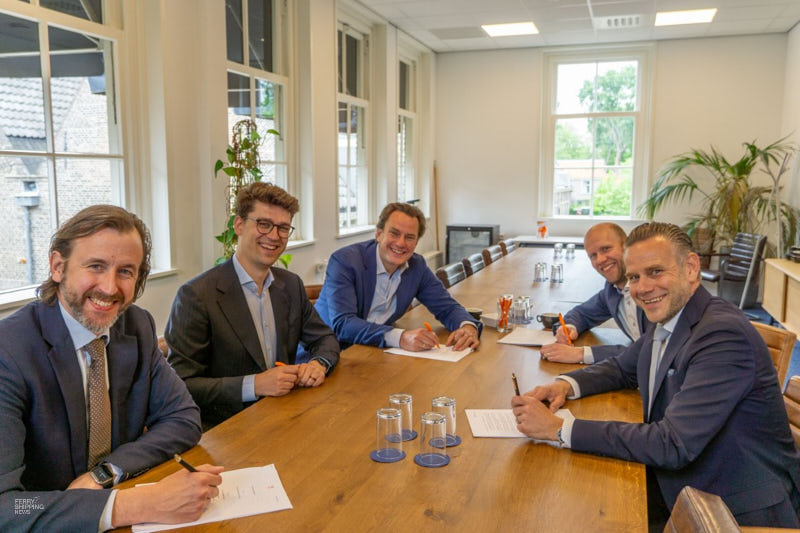
Stena, which previously owned 75% of the shares in the transport and logistics company NTEX, has purchased an additional 25% of the shares and thus has become the sole owner of the company.
NTEX is one of Sweden’s most expansive transport companies with 20 offices in 12 countries in Europe, over 1,000 employees and around 4 billion SEK in turnover. The company owns and leases around 1,500 trucks and has 16 terminals and warehouses of its own.
Stena entered as a majority owner of NTEX in 2020, and is now sole owner of the company.
“The main reason for this acquisition is that we wish to gain a greater understanding of how large transport companies operate in different markets. By owning and running companies, our understanding of our customers and where the market is going increases, which allows us to optimise Stena’s product portfolio,” says CEO Niclas Mårtensson.
BC Ferries has concluded a historic summer, marking the busiest season in its 64-year history, with over five million passengers and two million vehicles transported in June and July. As the summer ends, the company is now focusing on its annual refit season, beginning with repairs on the aging QUEEN OF NEW WESTMINSTER, among others. This refit season is part of BC Ferries’ commitment to safety and fleet modernization, with new major vessels planned to address growing demand and operational challenges.
For more details, you can visit the full release here.

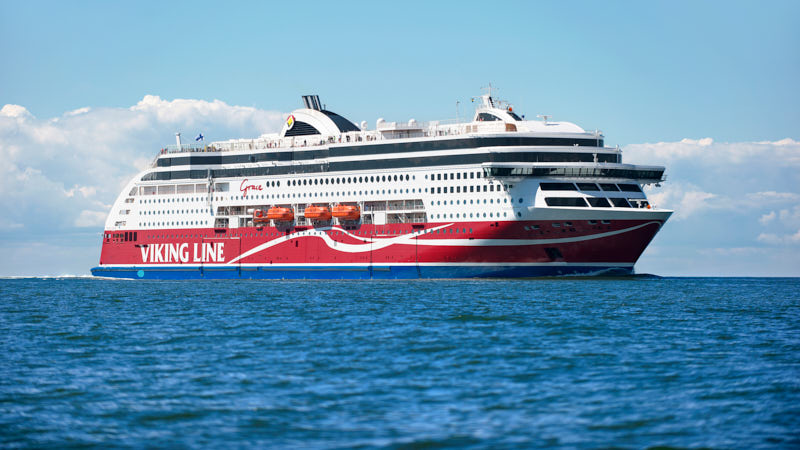
Nearly 1.8 million passengers travelled on Viking Line’s vessels during the period June–August 2024. The greatest increase in demand was on the Tallinn route, which also had more departures than in previous summer seasons. This summer, passengers were drawn by the variety of attractions in Estonia and the other Baltic countries, to Åland as depicted in the historical film Stormskärs Maja, and by a refurbished Viking Cinderella.
In short:
- Viking Line served nearly 1.8 million passengers during June–August 2024.
- The Tallinn route saw the greatest increase in demand, with over 732,000 passengers and a rise of more than 11%.
- The Helsinki–Stockholm route carried 274,000 passengers, with Viking Line’s market share rising to 44%.
- A cheap Swedish krona increased Stockholm’s appeal as a destination.
- Special cruises to Visby, Gotland were highly popular and sold out quickly.
- The Turku–Mariehamn–Stockholm route served 747,000 passengers, maintaining Viking Line’s market share at nearly 70%.
- International tourist numbers rose significantly, with notable increases in Chinese, German, Polish, South Korean, and American passengers.
- Climate tourism, driven by people seeking cooler destinations, is on the rise.
- The abrupt end of the summer season is a challenge for the tourism industry due to earlier school start dates in Finland.
Read the full story on Vikingline.com


At SMM in Hamburg, Knud E. Hansen revealed a concept design for the new Grimaldi RoPax vessels.
Grimaldi Group has just launched the tender for nine new ships: three for Finnlines (similar to the last two of the ‘Superstar’ series recently delivered), two for Minoan and three for Grimaldi Euromed.
A signature is expected end of 2024, beginning of 2025.

Sea trials have been successfully completed on the newly built ro-pax ferry GNV POLARIS, the first of four vessels commissioned by the MSC Group to Guangzhou Shipyard International.
The delivery is scheduled to take place before the end of the current year and then the GNV POLARIS will be deployed on the regular link between Spain mainland (Valencia and Barcelona) and the Balearic Islands.
GNV POLARIS (as the sister ship GNV ORION, already launched earlier this year) is 218m long with a capacity for 1,785 passengers and 3,100 lane metres of freight.
Two more sister ships will follow and will be LNG-powered.
Here are the financial highlights from the Irish Continental Group’s H1 Financial Report for the half-year ended 30 June 2024:
- Revenue Growth: The Group’s revenue increased by 8.1% to €285.5 million, up from €264.0 million in the same period in 2023.
- EBITDA Stability: EBITDA slightly increased by 1.4% to €49.7 million, compared to €49.0 million in HY 2023, indicating stable operational efficiency.
- Operating Profit Improvement: Operating profit rose by 7.4% to €17.4 million from €16.2 million in HY 2023.
- Profit Before Tax: The Group reported a profit before tax of €14.6 million, an increase of 4.3% from €14.0 million in HY 2023.
- Earnings Per Share: Basic earnings per share grew by 10.7% to 8.30 cents from 7.50 cents in HY 2023, reflecting improved profitability per share.
- Interim Dividend: An interim dividend of 5.11 cents per share was declared, a 5.0% increase from the 4.87 cents per share in HY 2023.
- Net Debt: Net debt increased by 28.7% to €211.7 million, primarily due to the acquisition of the OSCAR WILDE ferry on a charter with a purchase obligation.
- Volume Growth: The Ferries Division saw significant growth in volumes, with car carryings up by 21.0% and RoRo freight units increasing by 10.5%.
- Container and Terminal Division: This division experienced an 8.7% increase in containers shipped and port lifts, though profitability was down due to lower rates and higher costs.
- Strategic Developments: The Group strengthened its position on the Dover-Calais route through a space charter agreement with P&O Ferries and the acquisition of the Oscar Wilde ferry.
- Cost Management: Operating costs increased by 7.8% to €188.1 million, with notable increases in fuel costs and expenses related to the EU Emission Trading System.
- Strong Liquidity Position: Despite the increase in net debt, the Group maintained a strong liquidity position with cash balances of €51.2 million.
Strong performance of Irish Ferries:
- Revenue Growth: The Ferry Division’s revenue increased by 9.9% to €197.6 million, up from €179.8 million in HY 2023.
- Operating Profit Surge: Operating profit nearly doubled, rising by 79.2% to €9.5 million from €5.3 million in the same period last year.
- Passenger Revenue Increase: Passenger revenues surged by 16.8%, driven by a 21.9% increase in passenger carryings, totaling over 1.33 million passengers.
- Car Volume Growth: Car volumes rose by 21.0% to 277,200 units, reflecting strong demand for travel.
- Freight Revenue and Volume Expansion: RoRo freight volumes grew by 10.5%, contributing to a 13.3% increase in freight revenues.
- Strategic Fleet Expansion: The introduction of the Oscar Wilde ferry on the Dover-Calais route enhanced capacity and service, contributing to overall growth.
- Market Share and Recovery: The division’s performance underscores its ability to capture market share in a recovering travel market post-pandemic.
- Strong Outlook: These results position Irish Ferries for continued growth and success in the second half of the year.
Click on cover to view report
The 2023 financial report for Fjord Line AS, published on 19 August 2024, highlights a challenging year with financial losses primarily due to high fuel prices and a slow recovery in passenger numbers post-pandemic. Despite these challenges, the company implemented cost-saving measures and worked on optimizing operations. The report indicates an overall negative financial performance, but it also emphasizes efforts to strengthen the company’s long-term financial stability and improve efficiency.
Main figures Fjord Line AS Group
Revenues: 1469 MNOK (1666)
Operating Expenses: 1938 MNOK (1892)
Operating Result: -468 MNOK (-226)
Result: -823 MNOK (-411)
Comprehensive income for the year, net of tax: 101 MNOK (122 MNOK)
- High Season Performance: After two years of pandemic-related travel restrictions, Fjord Line achieved its highest-ever revenue during the 2022 high season.
- Financial Challenges: Rising LNG fuel prices, partly due to geopolitical events like Russia’s invasion of Ukraine, created a non-sustainable financial situation for Fjord Line.
- Vessel Conversions: STAVANGERFJORD and BERGENSFJORD, from single-fuel LNG to dual-fuel MGO/LNG to improve financial sustainability.
- Operational Flexibility:
- The dual-fuel capability provides flexibility to operate the vessels efficiently, regardless of fluctuations in LNG or MGO prices.
- Despite the ability to use MGO, Fjord Line remains committed to environmental sustainability and primarily operates on LNG.
- Strategic Changes in 2023:
- Terminated the Sandefjord-Strömstad route.
- Changed the destination from Langesund to Kristiansand for the vessels STAVANGERFJORD and BERGENSFJORD.
- Closed offices in Sandefjord and Strömstad, relocating functions to Bergen and Hirtshals.
- Concluded the sale of the vessel OSLOFJORD.
- Progress on Strategic Plan: The above measures align Fjord Line with its 3-year strategic plan for 2023-2026, marking 2023 as a transitional year.
- Outlook for 2024:
- 2024 is the first normal operational year since 2019 and is progressing well, with no extraordinary events impacting operations.
- To support the strategic plan and ensure sufficient financial flexibility, Fjord Line, along with its board and shareholders, has initiated steps to improve working capital, such as refinancing or capital injection. This process is expected to conclude in the second half of 2024.
Here are the financial highlights of the Color Group AS Interim Report for the first six months ending 30 June 2024:
- Operating Revenues: NOK 2,919 million (2023: NOK 2,733 million)
- Operating Expenses: NOK -2,530 million (2023: NOK -2,266 million), including NOK -60 million for environmental allowances
- Earnings Before Interest and Taxes (EBIT): NOK 96 million (2023: NOK 175 million)
- Profit Before Tax: NOK 88 million (2023: NOK 24 million
- Net Financial Items: NOK -8 million (2023: NOK -151 million), including gains from foreign exchange and derivatives
- Total Comprehensive Income: NOK 141 million (2023: NOK 44 million
- Net Cash Flow from Operating Activities: NOK 426 million (2023: NOK 421 million)
- Net Cash Flow from Investing Activities: NOK -12 million (including NOK 139 million from the ONS Ship Finance transaction)
- Net Cash Flow from Financing Activities: NOK 408 million (2023: NOK 3 million), with new unsecured bond loan of NOK 900 million issued
- Net Interest-Bearing Debt: NOK 3,889 million (2023: NOK 4,153 million
- Equity Capital: NOK 1,786 million (2023: NOK 1,548 million)
- Total Balance Sheet Value: NOK 9,297 million (2023: NOK 9,649 million)
Outlook
- Market Position: The company is well-positioned in the market with attractive commercial and operational concepts, a modern fleet, and a stable customer base. Despite economic uncertainties, demand for Color Line’s services has traditionally remained stable.
- Future Expectations: The market is currently perceived as strong, and the company expects positive results for the remainder of 2024.
- Financial Strategy: The company continues to focus on maintaining a diversified, long-term financing strategy. A new unsecured bond loan of NOK 900 million (maturing in April 2029) was issued in April 2024, and part of an existing bond loan (COLG16) was repurchased.
- Investments and Sustainability: Color Group remains committed to sustainability, with continued investments in innovative environmental technologies and energy efficiency measures. The company has also increased its hedging of bunker fuel consumption and environmental allowances for the coming years.
Overall, Color Group is optimistic about its market position and financial performance for 2024, maintaining a focus on sustainable growth and operational efficiency.
Click on the cover to access the interim report

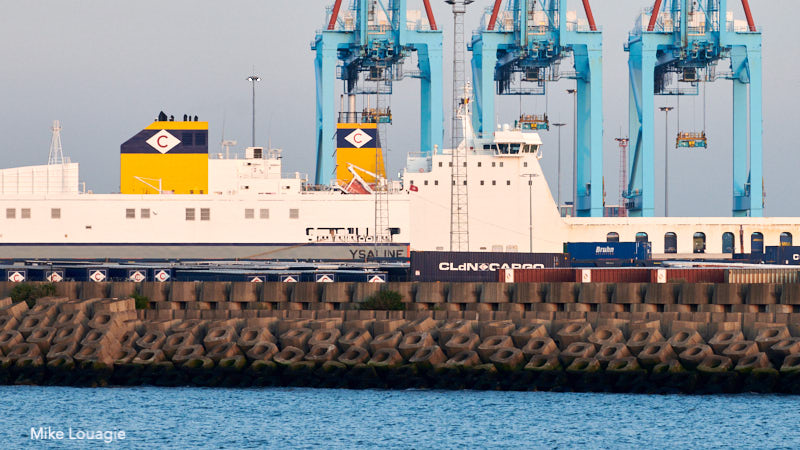
P&O Ferries confirmed the addition of RoRo LONGSTONE to its fleet, increasing freight capacity on its route between Tilbury and i Zeebrugge.
P&O Ferries will also add the sister vessel to its fleet in late 2025.
LONGSTONE’s capacity is over 50% greater than P&O Ferries’ existing vessels on the Tilbury-Zeebrugge route. With 4,076 lane meters, the new ship is the first step of P&O Ferries’ demand-led expansion plan for its North Sea Services and is expected to begin service in early September.
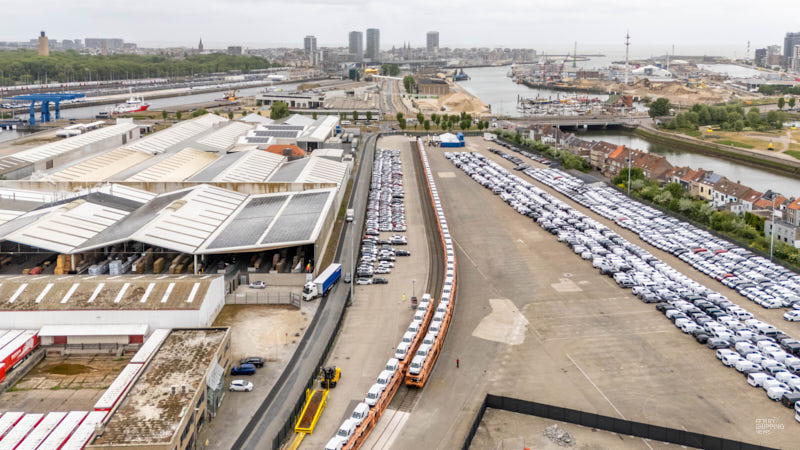
To complement this maritime expansion, P&O Ferries – with the support of its customers – has expanded its rail handling service in Zeebrugge with new intermodal services to/from Germany and Central Europe. This substantial boost in capacity for P&O Ferries’ Zeebrugge-Tilbury route, supported by the new rail connections, will facilitate smoother trade flows between the UK and Europe.
“We are expanding our North Sea network in response to the demand from our customers,” said Peter Hebblethwaite, CEO of P&O Ferries. “This long-term investment is just the first step of our expansion plan for this network. It is about having the right tonnage, underpinned by effective rail handling, to allow our customers to plan new opportunities. Boosting capacity on our routes between Tilbury and the continent of Europe is what our customers need, and will give them even greater direct access to London and its transport connections.”
“The efficiency and capacity of the vessel, along with integrated rail services will also help cut the carbon emissions associated with freight movements and reduce road congestion around ports and in the wider catchment area.”
“We will deliver significant growth of unaccompanied transportation on the North Sea by offering our customers scalable capacity and the right service package in ports and on our ferries. This contributes directly to the end-to-end logistics service offered by our parent company, DP World (**).”
(*) LONGSTONE is the former MARIA GRAZIA ONORATO, and has been a familiar ship in Zeebrugge when on charter to CLdN. Same for sister vessel ALF POLLAK, now renamed LISMORE.
(**) In April 2024, DP World got a concession for 25 hectares in the port of Zeebrugge, a part P&O Ferries did not use any longer.

CLdN announced an expansion of its freight service between Dublin and mainland Europe by adding an additional load-on/load-off sailing to its Rotterdam-Dublin route. Starting from August 30, 2024, this new service will provide three direct LoLo and three direct RoRo departures per week from both Rotterdam and Dublin. This addition brings the total number of weekly sailings between Ireland and CLdN’s continental hubs in Rotterdam and Zeebrugge to 22.
CLdN says it is the only operator offering this level of service between mainland Europe and Ireland.