IONIAN STAR Ex. BOHUS Is Sailing To Piraeus Soon

By 2019 Newsletter week 35

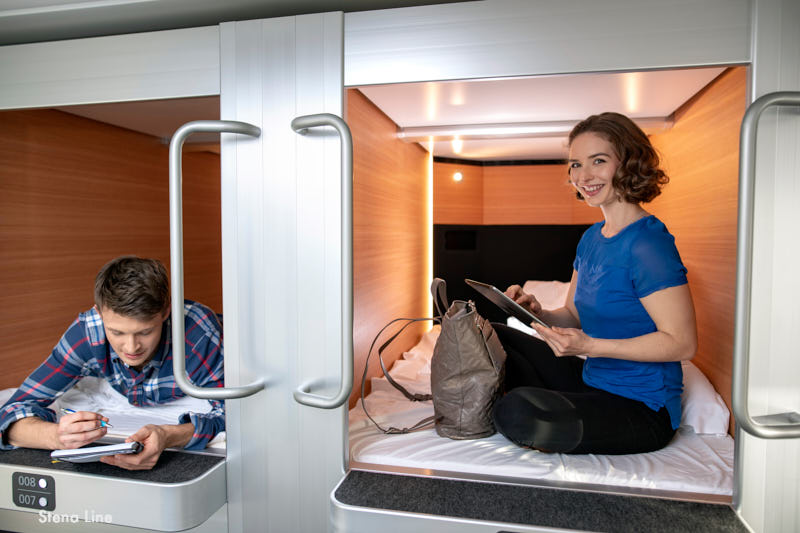
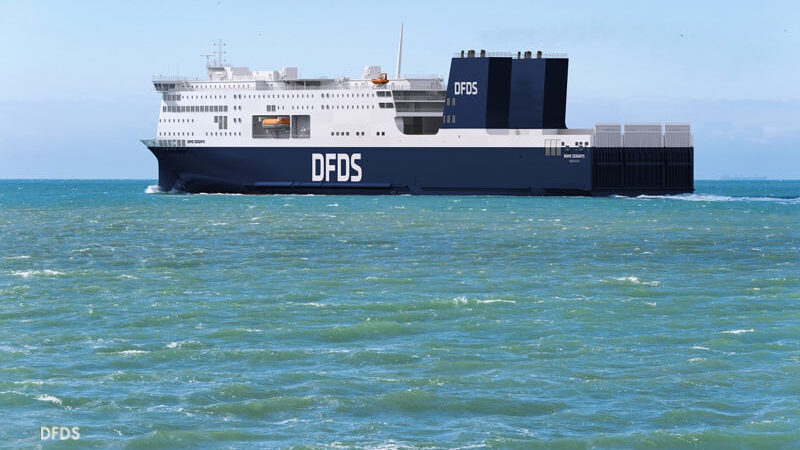
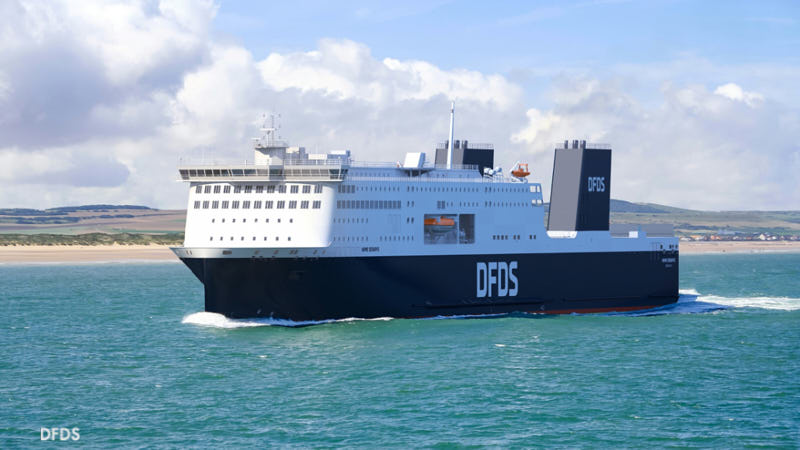
Color Line’s BOHUS is ready to sail -within the next few days- for Piraeus as she was purchased -a few months ago- by Red Star Ferries.

The ship was renamed IONIAN STAR and she left the port of Sandefjord for Piraeus where she is expected to arrive within the next few days.

The classic ferry is expected to be introduced between Brindisi (Italy) – Valona (Albania) and she will probably replace her older fleet mate RED STAR 1 (5.762gt/1965).

IONIAN STAR until recently served the Sandefjord-Stromstad run and she was replaced by COLOR HYBRID.

She is also a sister ship to Seajets AQUA SOLUTION which was purchased in 2018, while her other fleet mate EUROPEAN STAR is still at the port of Brindisi without having any service for the summer of 2019.

The Grimaldi Group Adheres To The ‘SAILS’ Charter

By 2019 Newsletter week 35

The Grimaldi Group has decided to adhere to the “SAILS” (Sustainable Actions for Innovative and Low-impact Shipping) charter. This declaration allows companies operating in the sea transport sector to formalize and pursue their pioneering commitments to protect our planet and its people.

The initiative was launched last July by the French Ministry for Ecological and Inclusive Transition, with the support of ‘Armateurs de France‘ (France’s Shipping Association), 10 members of which have already signed the document (Brittany Ferries, CMA CGM, Corsica Ferries, Corsica Linea, La Méridionale, Louis Dreyfus Armateurs, L’Express des îles, Orange Marine, Ponant)

The Grimaldi Group is the first Italian shipping company to have signed the charter, thus undertaking, in addition to its regulatory obligations, to implement specific actions such as the decrease of atmospheric pollutant and greenhouse gas emissions, the reduction of the underwater noise impact of ships, the optimization of ships energy performance, the fight against invasive species, the protection of cetaceans.

FERRY FINANCE

By 2019 Newsletter week 35

Stena AB Interim Report H1

Ferry & Ro-Ro highlights:

Ferry Operations

EBITDA increased compared to last year mainly due to continued positive volumes for cars (3%) and passengers (1%).

Shipping (Ro-Ro)

Strong contract coverage and utilization rate across the Ro-Ro fleet, offset by lower charter income as a result of vessels sold in 2018.

Irish Continental Group Reports H1

Key figures for the first 6 months (Group)

  • +6.1% Revenue
  • +14.9% EBITDA (pre non-trading items)
  • -12.0% EBIT (including non-trading items)

Key figures for the first 6 months (Ferries)

  • +1.5%  Revenue
  • +4.8%  EBITDA
  • -20.3% EBIT (including non-trading items)

Trends

  • -5.7% cars
  • +7.3% ro-ro freight

The Reorganised SNAV Is Now Even More Focused On Short Sea Ferry Links

By 2019 Newsletter week 35

Naples-based SNAV, the ferry company owned my Marinvest (the Italian holding company owned by the Aponte family), last year closed with a loss of EUR 550,000 (from a red of EUR 2.5 million in 2017), and the result is also due to an in-depth reorganisation of the business and of the structure.

Today SNAV mainly focuses on three business: the short sea ferry services from the port of Naples to the surrounding islands and from/to the Eolian islands, the link between the ports of Ancona and Split in Croatia, and the chartering management of the owned ferries and high-speed vessels.
The objective of the company from 2019 onwards is to reach a long-lasting financial equilibrium.
Last year SNAV also purchased the ferry SNAV ADRIATICO (ex-STENA BALTICA) for a price of EUR 7.4 million after six years of time charter from Stena and has been immediately re-chartered out for 3+3 years to Grandi Navi Veloci.

Grandi Navi Veloci In Red

By 2019 Newsletter week 35

Grandi Navi Veloci, ferry company part of the MSC group, registered last year a loss of EUR 13.4 million, from a red of EUR 10.2 million in 2017. Revenues were stable at EUR 386 million while the EBITDA and EBIT decreased respectively to EUR 46.1 and 4.5 million.

Revenues coming from passenger tickets were EUR 224 million (216 in 2017) and from ro-ro traffic EUR 80.4 million (from 72.4); sales and services on-board generated EUR 25.8 million and tonnage charters (out) decreased from EUR 48.7 to 26 million.

Earlier this year GNV was rumored to be in negotiation for taking a minority share in the ferry company Africa Morocco Link operating between the ports of Tanger and Algeciras with a fleet of three ferries.

Instead last July Gianluigi Aponte, founder of MSC, publicly said that Grandi Navi Veloci will currently not proceed with the order for two ro-pax ferries, which were previously announced. They were going to be built at the GSI Shipyard in China.

First Half Year Results For Eckerö

By 2019 Newsletter week 35

Some key data:

  • Same amount of passengers as last year: 1.5 million
  • Turnover of EUR 102.0 million (EUR 105.2 million)
  • Operating profit EUR -7.6 million (EUR 2.4 million)
  • Net debt EUR 65.8 million (EUR 43.6 million)

Outlook

  • The Swedish krona is expected to be weak during H2. The bunker price is expected to remain volatile. The profit for the year is expected to be significantly lower than in 2018, largely due to docking, ship investment and growing costs.

FERRY PORTS

By 2019 Newsletter week 35

Oslo To Make Port Emission-Free

Oslo Harbour KF has signed a cooperation agreement with the Bellona Foundation. Bellona will partner up with the Port of Oslo to make the port emission-free, and will distribute the lessons learned from this project with the international community, allowing others to follow Oslo’s example.

Zeebrugge Continues To Grow

By 2019 Newsletter week 35

In the first semester Zeebrugge registered a 12.5 % overall growth in comparison to the same period in 2018. A total cargo volume of 21,883,578 tonnes was handled.

The ro-ro traffic grew by 5 % in the first half of the year to a total volume of 8,404,658 tonnes. In anticipation of the first Brexit date (29 March) the UK markets were supplied in anticipation (volumes rose by 17.2%). In the second quarter the volume decreased by 6.8% in May and by 12.3% in June.

The roro traffics to Southern Europe increased substantially thanks to new services and economies of scale.

A total of 1,527,872 new cars were handled (+4.9%).

Government’s Master Plan For “Monster” Port Infrastructure In Rafina

By 2019 Newsletter week 35

The Regional Council of Attica was held up yesterday in order to approve the Rafina Port’s “Development Plan and Master Plan”.

According to the study, there are planned four main uses for Rafina Port, with equal four Port Authority Departments: The Port Authority for the Coastal Lines (Conventional and High Speed Crafts), the Port Authority of Small Boats, of Fishing Grounds and for the Seaplanes.

According to the master plan the port of Rafina will be expanded in order to facilitate 15 ferries, while the “vision” for its future exceeds all expectations:

The port of Rafina is the second largest in passenger traffic among the 16 Greek ports of international interest and participates substantially in the wider Attica port system, with the prospect of becoming the first passenger traffic in Attica in the coming years.

Of course, the construction of such a giant port will also require the construction of infrastructure that include terminals, two- and three-storey parking spaces, car waiting areas, lorries and bicycles, a convention center for 300 people, service facilities, parking facilities , café-restaurants and shops.

For all that infrastructure it is required a total surface area of ​​25,400 m2. People of Rafina protest strongly, claiming that the entire city’s sea front will be occupied by port facilities resulting in a traditional seaside town being cut off from the sea!

Also, they claim that the environmental burden (air pollution and noise pollution) from the simultaneous docking of 15 ships, 5 seaplanes as well as the passage of hundreds of thousands of trucks, will be unbearable.

Shipping Agents In Sardinia Suggest Ro-Pax Traffic Relocation In The Port Of Cagliari

By 2019 Newsletter week 35

The regional ship agents’ association in Sardinia calls for a relocation of the ferry and ro-ro traffic in Cagliari, from the old harbour in the city center to the so called ‘Porto Canale’ where the local container terminal managed by Contship Italia is set to be shut down soon.

The Cagliari International Container Terminal had a yard area of 400,000 m2 and 1,520 metres of linear quays.

According to the local ship agents’ association, “a broader reorganization of the port spaces is needed. Our idea would be to move from the old port all the activities related to ro-ro and ro-pax traffics thus leaving Rinascita and Sabaudo quays to the cruise traffic and yachts”.

As of today, the only ferry company calling at the port of Cagliari is Tirrenia, while Grendi Trasporti Marittimi offers a maritime ro-ro link to and from Marina di Carrara, and Grimaldi Group to and from Civitavecchia.