

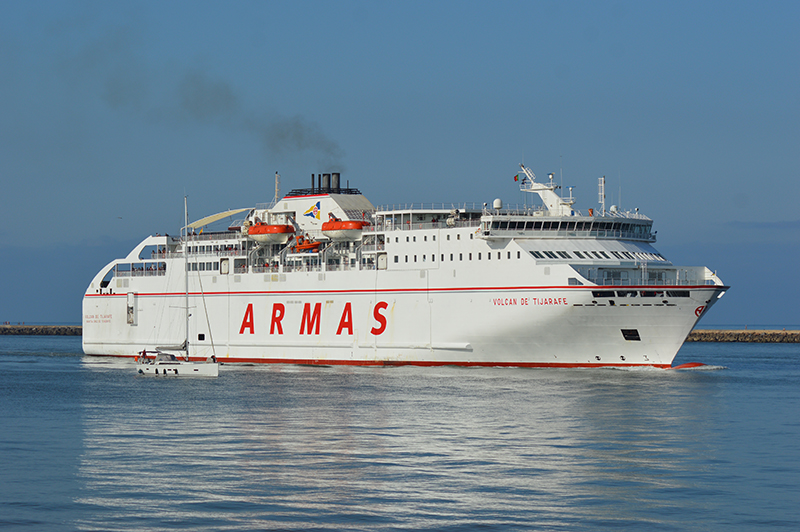
Matt Davies photographed the VOLCAN DE TIJARAFE. She is seen arriving at Portimão, coming from Madeira. Armas is operating a weekly round trip this summer under contract to ENM.
Matt Davies photographed the VOLCAN DE TIJARAFE. She is seen arriving at Portimão, coming from Madeira. Armas is operating a weekly round trip this summer under contract to ENM.
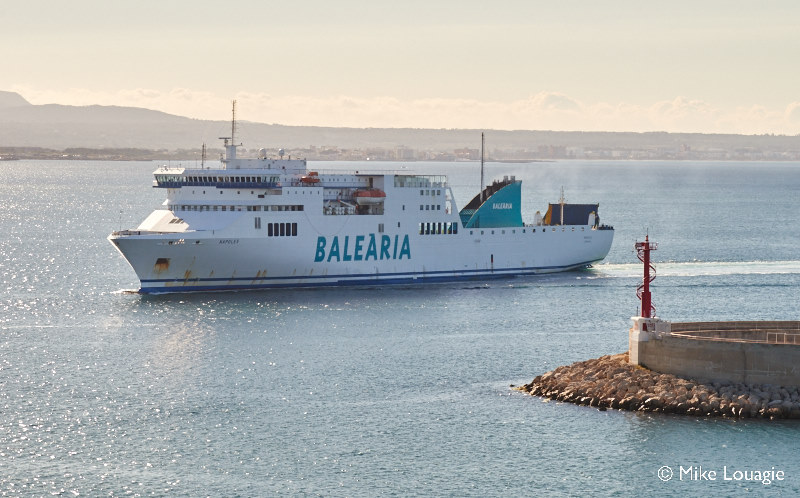
Two Balearia Visentini Ro-Pax Ships To Be Converted Into LNG Dual-Fuel
MAN PrimeServ, the after-sales division of MAN Energy Solutions, has won the contract to convert two ro-pax ferries from Baleària to dual-fuel operation.
Sister ships, the NAPOLES and SICILIA, are currently each powered by 2 × MAN 9L48/60A main engines, which will all be converted to 9L51/60DF units that will enable running on LNG.
The conversion of the NÁPOLES is due to take place in Spain between November 2018 and January 2019, with the conversion of SICILIA to take place from October to December 2019.
EL VENIZELOS was on her way from Piraeus to Chania, Crete, when a truck took fire.
All passengers were assembled on the outer decks, but not evacuated. After investigation the Coast Guard did not deem this necessary.
The ship could return to Piraeus at slow speed. Nobody was hurt.
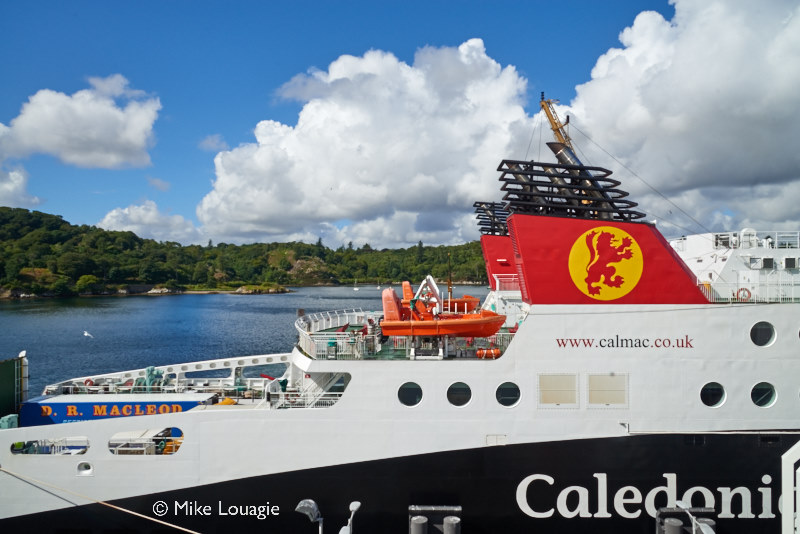
Following a summer of disruption on Scotland’s lifeline ferries, a GBP 3.5million Resilience Fund has been announced by the Scottish Government.
The fund will help to reduce the risk of vessels breaking down and to return them to service quicker if they do.
The aim is to tackle obsolescence on the vessels, which would take the ferry out of service for an extended period of time.
Fincantieri and China State Shipbuilding Corporation (CSSC) have signed a Memorandum of Understanding for the extension of the industrial cooperation already existing between the two groups to all segments of merchant shipbuilding.
The agreement foresees the parties to discuss the possibility to extend their current collaboration, which counts a joint venture dedicated to the first cruise ships ever built in China for the local market and other related activities, including a number of research and development projects in several areas of the shipbuilding, including cruise-ferries.

STENA FORERUNNER arrived in Belfast on Sunday 26 August, coming from Rotterdam. She is one the vessels to replace the previously Seatruck-chartered ferry STENA PERFORMER.
The latter re-emerged as SEATRUCK PERFORMER on August 28, when leaving the Cammell-Laird drydock in Birkenhead. She will be used on Seatruck’s own Warrenpoint – Heysham route.
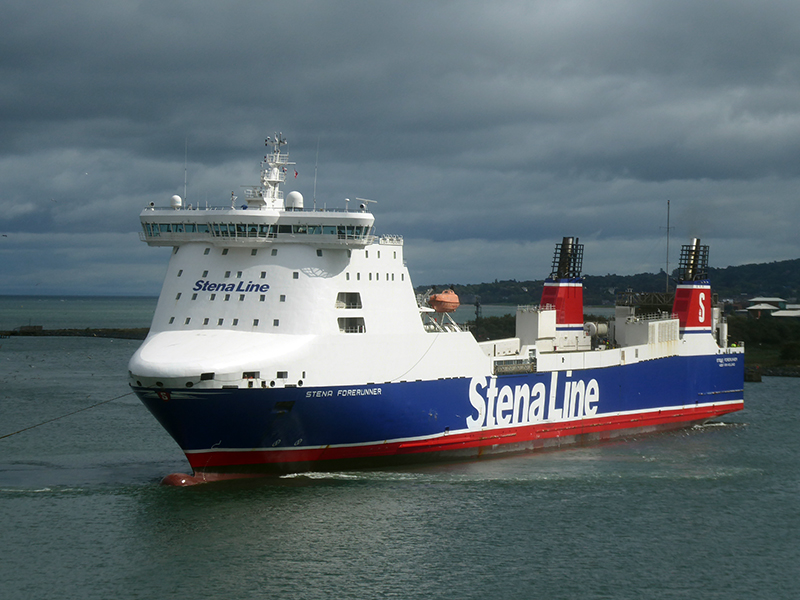
Photo: Scott Mackey
Wightlink’s new car ferry VICTORIA OF WIGHT carried her first fare-paying passengers on Sunday 26 August, just over two weeks after she arrived in the Solent from the Cemre shipyard.
Powered by hybrid energy, VICTORIA OF WIGHT can carry 178 cars and more than a thousand passengers.
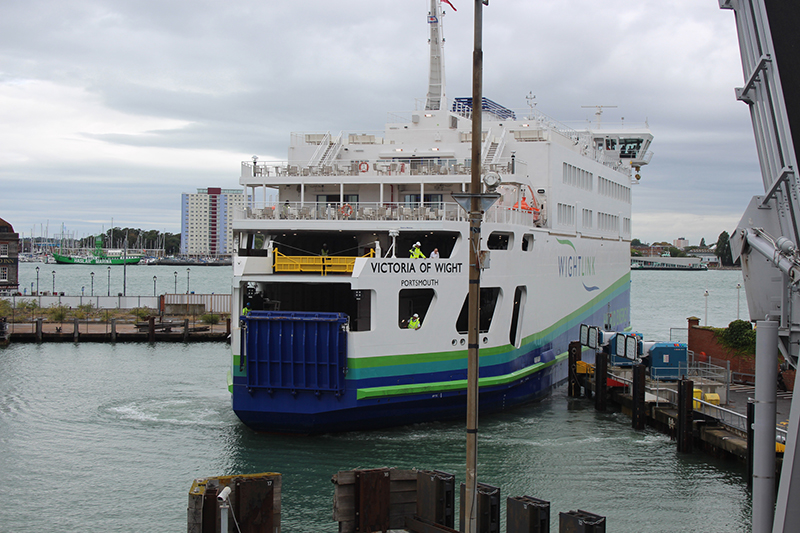
Photo: Wightlink
Intra-European Ro-Ro Traffic Continues To Grow In Port Of Gothenburg
Intra-European ro-ro traffic to and from the Port of Gothenburg comprises mainly forest products and input goods for the engineering industry. With 593,000 ro-ro units handled, 2017 saw an all-time high for this segment. The signs are that 2018 could be yet another record-breaking year with 305,000 units reported for the first six months, a rise of four per cent.
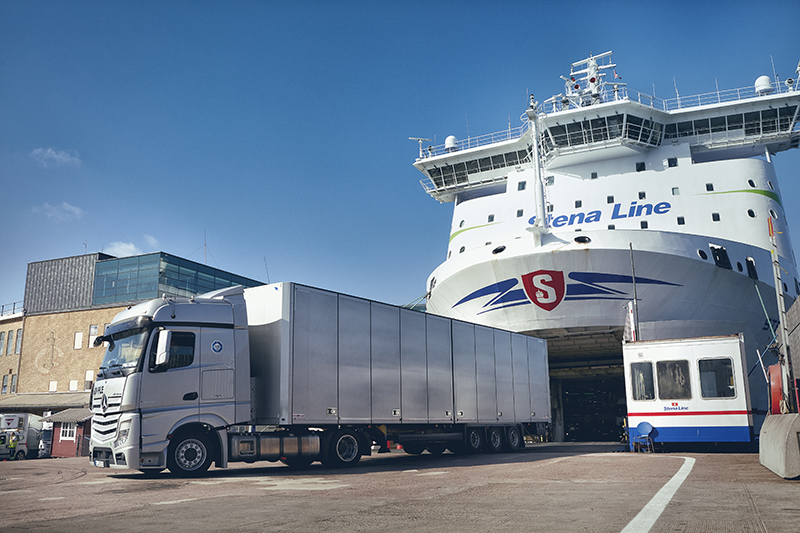
Photo: Port of Gothenburg
Breakdown Of ULYSSES Affects Irish Continental Group H1 Results
More freight (+4.0%) and less passengers (-1.0%). That is the estimate of market development on shipping routes serving the Republic of Ireland. Unfortunately Irish Ferries suffered from a major disruption due to technical difficulties affecting the flagship vessel ULYSSES, with less ro-ro capacity in June. Because of that, Irish Ferries could not absorb the potential of the growing freight market.
The sale of JONATHAN SWIFT and KAITAKI also caused a reduction in charter fees. Hence the EBITDA reduction of €3.5m principally due to an EBITDA reduction of €3.6 million charter fees.
+14.3% Fuel costs increase to €22.4 million
Delay in delivery of W.B. YEATS cruise ferry by shipbuilder affected planned schedules in 2018.
Irish Continental Group H1 Results summary
+0.7% Revenue €157.2m (€156.1m)
-11.8% EBITDA (pre non-trading items) €26.1m (€29.6m)
-37.8% EBIT (including non-trading items) €30.1m (€48.4m)
Irish Ferries H1 Results summary
-3.0% Revenue €90.9m (€93.7m)
-17.9% EBITDA (pre non-trading items) €18.8m (€22.9m)
-44% EBIT (including non-trading items) €24.1m (€43.0m)
Operational Highlights
-2.1% Cars 170,900 (174,500)
-2.9% Passengers 679,700 (700,400)
+3.2% Ro-ro freight 143,100 (138,600)

BC Ferries’ passenger traffic levels experienced during Q1 were the highest the company has experienced in over 20 years and the vehicle traffic levels were the highest ever recorded.
However, net earnings were only CAD 6.0 million, compared to CAD 17.3 million for the same quarter of the previous year.
Revenues increased by 1.5% to CAD 229.7 million primarily as a result of
the increased traffic levels, partially offset by a decrease in the average tariff per passenger and per vehicle due to the fare reductions.
