

Stena Line added a ro-ro vessel on Rotterdam (Europoort)-Harwich. They started to charter the CLdN-owned SOMERSET.
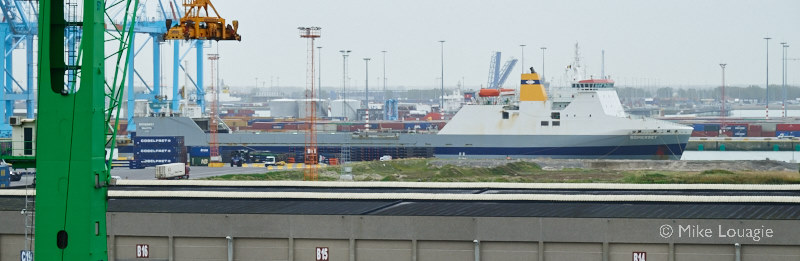
Stena Line added a ro-ro vessel on Rotterdam (Europoort)-Harwich. They started to charter the CLdN-owned SOMERSET.
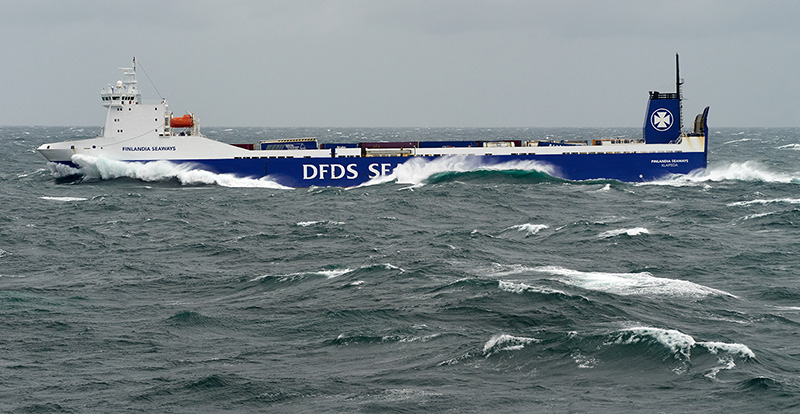
DFDS has decided to put the (repaired) ro-ro vessel FINLANDIA SEAWAYS on its route between Norway, Zeebrugge and Immingham, instead of the side port/container vessel LYSBRIS SEAWAYS.
DFDS will add Brevik to the port rotation, in addition to the current ports of Fredrikstad and Halden. This means that DFDS will be able to offer quick transport solutions from the continent and the UK to both the east and west shores of Oslofjord.
This service will replace the current ro-ro connection between Ghent and Brevik from the middle of February 2019.
All 12 Turkish-flagged UN Ro-Ro ships will be DFDS-rebranded, and will get Turkish UNESCO world heritage sites as new names for the vessels.
This was decided after Peder Gellert and Selçuk Boztepe launched a competition in which 107 staff participated.
CEMIL BAYULGEN will be the first to be named EPHESUS SEAWAYS in connection with her lengthening and scrubber installation in December.
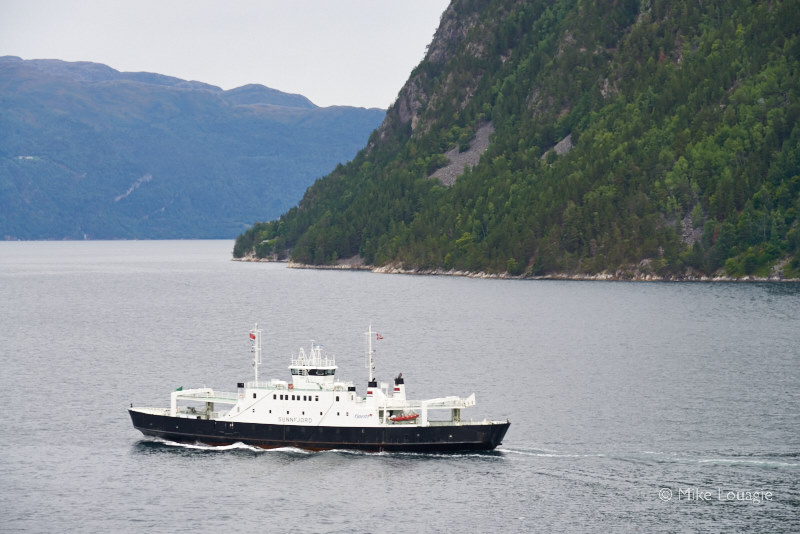
Møre og Romsdal county municipality has awarded the contract for the ferry connections Molde-Sekken, Solholmen-Mordalsvågen, Aukra-Hollingsholm and Sølsnes-Åfarnes, to Fjord1 ASA.
Characteristics of this Norwegian contract are:
As from 21 April 2019, Corsica Ferries will open a new route linking Southern France, namely Nice and Toulon, with the port of Trapani, a small city placed on the western coast of Sicily (100km from Palermo).
Reservations opened on 25 September.
The new route, according to what Corsica Ferries said in a statement, “will be operated overnight with some of its fast ferries”. This new service will take 19 hours to link France and Sicily and frequency is expected to be twice per week.
Also this month Corsica Ferries assigned to the Italy-headquartered naval architecture consultancy NAOS Ship and Boat Design the preliminary design work for the new ferries which intends to build in the near future. “An holistic investigation on the traffic characteristics and optimal vessel for the purpose has been performed by the technical department of Corsica Ferries, and then transferred to NAOS to design the corresponding ship” the Trieste-based designer said in its last newsletter
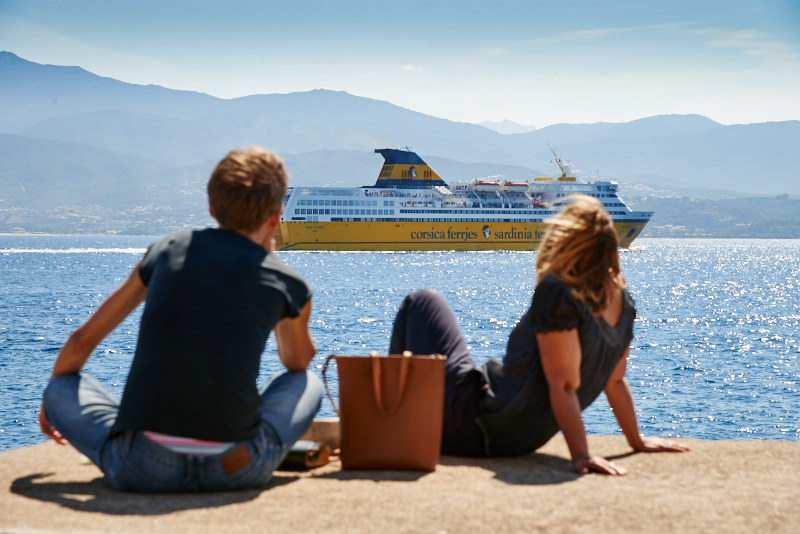
Halmstad Is Getting Ready For Stena Line
Stena Line will move the Grenå line from Varberg to Halmstad. This was confirmed in June.
Now an agreement has been signed between the municipality of Halmstad and Hallands Hammnar (Hallands Ports). The port will invest SEK 126 million into a new ferry terminal: extended marshalling area and dock, and an additional ro-ro ramp,
The first ferries will sail from Halmstad in 2020.
CEO Ole Ingrisch will retire by the end of February 2019. Ole Ingrisch became CEO at the Port of Esbjerg in 2003 and has since then been in charge of a significant development of the port. During this time, the Port of Esbjerg has grown by more than a million m2 after the establishment of the East Port. At the same time, both the top and bottom line has increased significantly. The Port of Esbjerg’s Board of Directors will now go ahead with the recruitment of a new CEO, who is expected to start on 1 March 2019.
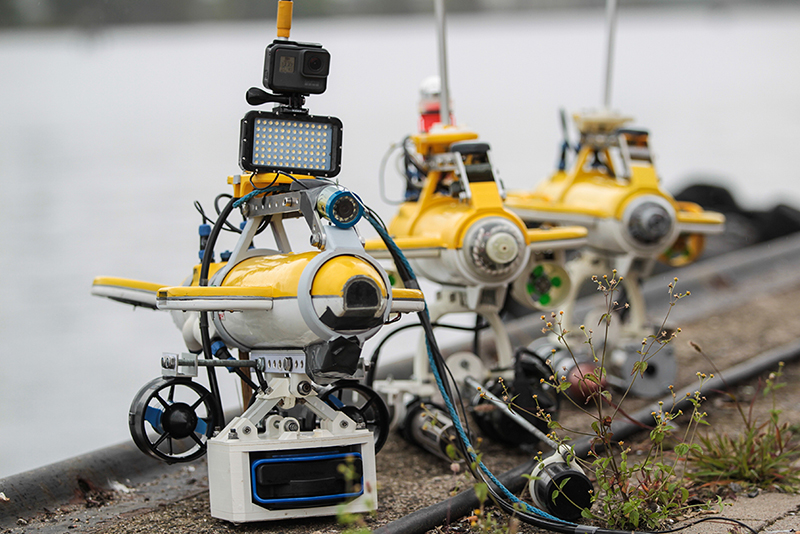
In cooperation with the local university, Port of Lübeck has started to do tests with underwater drones. They can be used to check the state of the quays.
Photo: Ulf-Kersten Neelsen / LHG
ESPO Welcome Parliament’s Explicit Support To Remove The Tax Barriers For Shore-Side Electricity For Ships
(25 Sepember) The Transport committee of the European Parliament supported the removal of tax barriers for the uptake of shore-side electricity supply (OPS) in ports for ships at berth. The Ertug report on the deployment of infrastructure for alternative fuels in the EU which was voted by the Transport committee, pointed out that taxation has a major impact on the price competitiveness of alternative fuels and underlined that disparities in energy taxation for shore-side supply for ships should be addressed.
European ports welcome the vote in the Parliament and believe that energy taxation on electricity has been a significant barrier for the uptake of shore-side electricity for ships, being often the reason why it does not make a strong business case.