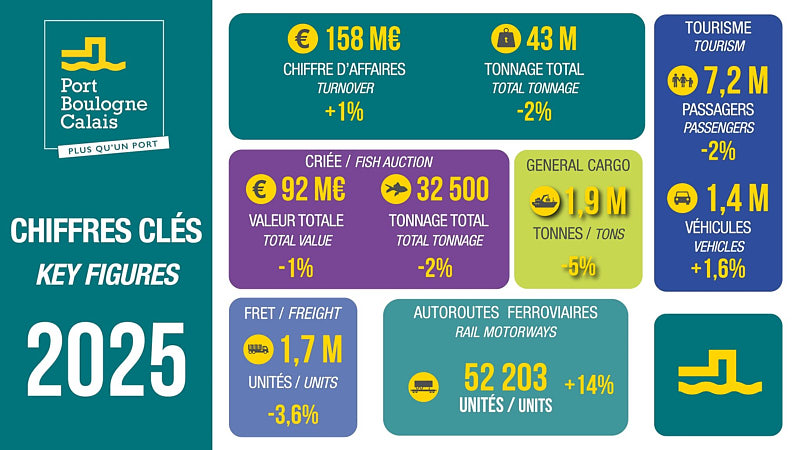

467,279 passengers (-2.5%)
21,855 cargo units (-10.2%)
58,006 passenger vehicles (-2.6%)
Click on figure to access the PDF
467,279 passengers (-2.5%)
21,855 cargo units (-10.2%)
58,006 passenger vehicles (-2.6%)
Click on figure to access the PDF
Following the green light from the Italian Antitrust Authority for the agreement that separates Moby from MSC and its ferry company GNV, the Onorato-controlled group moved immediately to sell five of its current vessels and use the proceeds to repay loans provided by MSC in 2023 to keep the company solvent.
To repay the debt, Moby has scheduled an online auction for next week, 12 November. Five of the company’s vessels will be offered in a single lot with a starting price of EUR 229.9 million. The auction lists five RoPax units: MOBY AKI and MOBY WONDER (to be chartered back to Moby for 15 years at a daily rate of EUR 15,000), MOBY ALE DUE, ATHARA, and JANAS.
DFDS has entered an agreement to sell the freight ferry CAPPADOCIA SEAWAYS after more than 23 years of service, as part of its ongoing fleet optimisation programme.
The Tunis–Marseille service has seen steady volume growth, and DFDS expects SELANDIA SEAWAYS to further strengthen capacity and support continued expansion.
“We are optimising operations to ensure our fleet is aligned with current and future demands,” says Mathieu Girardin, EVP and Head of Ferry Division. “By deploying SELANDIA SEAWAYS and optimising across our Mediterranean network, we maintain frequency and service quality while supporting trade between Europe, Türkiye and North Africa.”
On November 6, 2025 Olympian Ferries Panorama introduced on the Piraeus-Aigina route. The ship will depart daily from the port of Piraeus at 08.00, 12.00 and 16.00, while the return trip from Aigina will be at 10.00, 14.00 and 18.00. Panorama was serving on the Agios Konstantinos-Sporades Islands (Skiathos-Skopelos-Alonissos) line the previous two summer periods. She will be the largest and fastest ferry of the line and is expected to upgrade the services on the Aigina line. She was built in Germany in 1987 for the state-owned company Trinidad and Tobago Inter-Island Ferry Service. Sold in Greece (Panorama Shipping) in 2010 and served on the Rafina-Marmari route until 2024. Her carrying capacity is for 800 passengers and 160 cars. Her service speed is 18 knots.
Photo: Olympian Ferries
According to a Saronic Ferries press release, its new acquisition from Japan, YABUSA (ex HAYABUSA No.3), will be renamed CALLIRHOE and will become the sixth addition to the Saronic Ferries fleet.
In Greek mythology, Callirrhoe was one of the Oceanids, daughter of Oceanus and Tethys — a symbol of purity, flow, and the constant renewal of waters. The name therefore reflects Saronic Ferries’ philosophy: respect for the sea, consistency in movement, and continuous evolution.
The ship is being refurbished and upgraded to high-quality standards to offer a modern, comfortable, and environmentally friendly travel experience. Thanks to the excellent design of her Japanese hull and improved fuel efficiency, CALLIRHOE’s energy-efficient operation reduces her environmental footprint and enhances the “greener” nature of travel in the Saronic Gulf.
CALLIRHOE was purchased from Seikan Ferry in 2024. She was built in Japan in 2000 and has a capacity of 1,150 passengers and 130 cars, with a service speed of 20 knots.
Photo: Saronic Ferries
Ferry Shipping News listened to the DFDS Q3 results broadcast and heard CEO Torben Carlsen mention a new RoRo route between Türkiye and Spain.
United Global RoRo (UGR) has indeed launched a new RoRo service linking Haydarpaşa (Istanbul), Marseille, and Tarragona, expanding the freight corridor between Turkey, France, and Spain.
By including both Marseille and Tarragona, UGR enhances access to the French and Spanish hinterlands, supporting automotive and industrial exports.
On 4 November, Port of Tallinn and Ports of Stockholm signed a Memorandum of Understanding in Tallinn to launch the Swed-Est Green Collaboration — a joint initiative to promote sustainable and fossil-free maritime and port operations between Estonia and Sweden, primarily on the Tallinn–Stockholm and Paldiski–Kapellskär routes.
Key goals:
Planned actions include:
Valdo Kalm, CEO of Port of Tallinn, said the partnership gives both ports a strategic edge, offering sustainable solutions for passengers and freight operators.
Magdalena Bosson, CEO of Ports of Stockholm, highlighted the shared responsibility between the two countries: “Sweden and Estonia share the same sea and the same duty to protect it.”
The initiative marks a new phase of maritime cooperation in the Baltic Sea, strengthening the path towards cleaner, more sustainable port operations.
End of October, ESPO presented its Environmental Report 2025 – EcoPortsinSights during the GreenPort Congress in Valletta. The report, based on data from 77 ports in 18 countries, highlights the ongoing environmental progress of Europe’s port sector.
Key findings:
Environmental governance is also strengthening:
Ansis Zeltins, ESPO Chair, said the report “highlights the positive progress ports are making in environmental management.”
Tim Verhoeven, ESPO’s Senior Policy Advisor, added that it shows “how ports voluntarily strive to improve their surroundings and reduce environmental impact.”
DFDS’ Board of Directors has begun the search for a successor to CEO Torben Carlsen, who will remain in his role until a replacement is appointed to ensure continuity during the company’s transition and cost reduction programme.
Torben Carlsen joined DFDS in 2009 as CFO and became CEO in 2019. He led key acquisitions such as Norfolkline and UN RoRo, expanded the network, and guided DFDS through challenges including Brexit, Covid-19, and the Ukraine crisis.
The EU says no to support for Viking Line’s electric ferry concept Helios, but the shipping company is not slowing down but is charging ahead towards an emissions-free future in the Gulf of Finland.
Viking Line’s vision of the world’s largest all-electric passenger and car ferry was rejected by the EU’s Innovation Fund this week. But the shipping company is choosing to continue, just as determined as when the M/S Viking Grace put LNG on the world map.
Source: https://www.sjofart.ax/nyheter/eu-sager-nej-till-projekt-helios/