


Dutch seaports call for funding and clarity on EU Ports Strategy

By 2026 Newsletter week 40

North Sea Port, Amsterdam, Groningen Seaports, Moerdijk and Rotterdam have urged EU policymakers to translate the European Ports Strategy into practical, adequately funded measures.

Presenting their joint position paper, Full Steam Ahead, in Brussels on 29 September, the five port authorities identified three priorities: investment certainty, clear responsibilities for strategic port infrastructure and stronger cross-border cooperation.

The ports say predictable regulation and financing are essential for investment in quays, energy infrastructure and hinterland connections. They also want clarity on who should develop, secure and fund infrastructure serving both civilian and military needs.

The group argues that European funding and rules must reflect transport and industrial networks that cross national borders. New security requirements should strengthen resilience without unnecessarily delaying investment.

Isabelle Ryckbost, Secretary General of the European Sea Ports Organisation (ESPO), summed up the message at the close of the meeting: “Investing in ports is investing in Europe.”
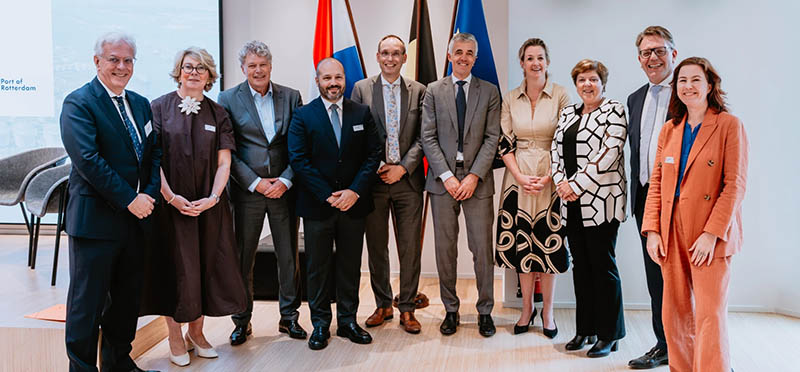
Source: https://www.northseaport.com/nl/nieuws/north-sea-port-en-nederlandse-zeehavens-vragen-europa-om-duidelijkheid-over-uitvoering

Europe’s Ports Welcome EU Ports Strategy

By 2026 Newsletter week 10

On 4 March, the European Commission launched its EU Ports Strategy, a 28-page framework outlining the future direction of Europe’s ports.

The European Sea Ports Organisation (ESPO) welcomed the document as a good starting point for further dialogue with EU institutions. The strategy recognises the growing complexity of ports, which must combine their role as competitive trade hubs with public service responsibilities supporting Europe’s economic resilience.

ESPO particularly welcomed:

  • The focus on maintaining the global competitiveness of European ports
  • The intention to review the impact of EU ETS and FuelEU Maritime
  • Recognition of the major investment needs in ports and their industrial clusters
  • Efforts to accelerate permitting procedures
  • The proposal for a high-level EU Ports Board
  • Plans for a cybersecurity forum linking ports, Member States, and the Commission

At the same time, ESPO warned against adding extra sector-specific regulatory layers or increasing reporting obligations for ports.

The organisation also called for further dialogue on shipping decarbonisation, the evolution of bunkering markets, and the role ports should play in the energy transition.