


- EBITDA rose 36% year on year to NOK 178 million in Q3 2026. Higher fares and passenger numbers lifted ticket revenue by 11% to NOK 376 million. Onboard revenue rose 25% to NOK 93 million.
- Fleet occupancy rose from 80% to 84%, and guest nights increased 5% to 104,000. Havila completed every scheduled sailing on the Bergen–Kirkenes Coastal Route without disruption.
- Interest expenses fell from NOK 834 million to NOK 124 million following the November 2025 refinancing. An amendment to the previous financing agreement had added to costs in Q3 2025. A stronger krone generated NOK 182 million in net currency gains.
- CO₂ emissions were 35% below the Coastal Route’s 2017 baseline.
- By mid-November, occupancy for 2026 had reached 79%, with cabin nights up 10% year on year. For 2027, more than 42% of capacity was already booked at a 19% higher average price.
- Havila maintains its target of more than 10% growth in the average cabin price for 2026.
- High energy prices and lower-than-expected growth in onboard sales and in pre- and post-voyage sales mean that 2026 earnings are expected to fall short of the company’s target. Approximately 70% of the increased energy costs are expected to be offset through index adjustment of the state contract, with a lag of one to two years.
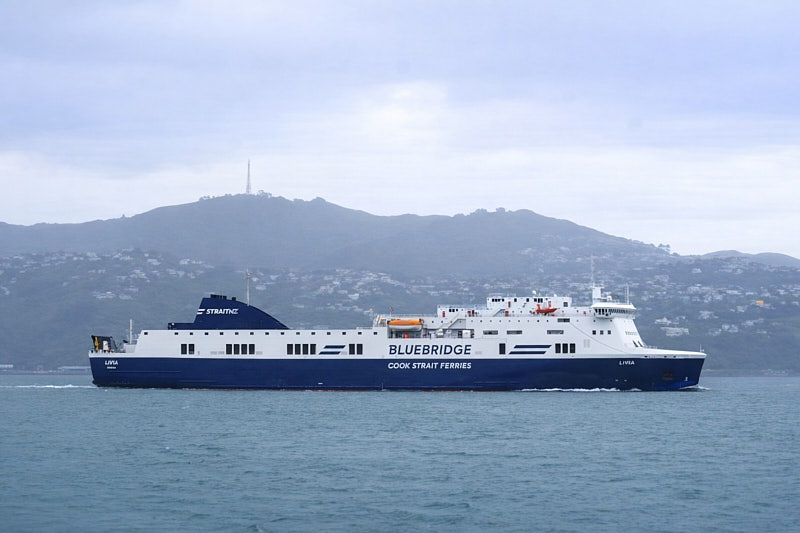
Partners Group has agreed to acquire StraitNZ, operator of New Zealand’s Bluebridge ferry service, from Morgan Stanley Infrastructure Partners. The deal is expected to close in the first half of 2027, subject to approval from New Zealand’s Overseas Investment Office and customary closing conditions.
StraitNZ operates two ferries carrying freight and passengers daily across Cook Strait. It also runs a national road freight business. Partners Group plans to work with management to improve sales channels and grow recurring revenue.
Since Morgan Stanley Infrastructure Partners invested in March 2022, StraitNZ has renewed its ferry fleet and secured multi-decade extensions to its port leases.
Photo: Wikipedia – Maungapohatu
DFDS is understood to have sold the 1999-built OPTIMA SEAWAYS following its replacement by CIUDAD DE VALENCIA on the Karlshamn–Klaipėda route. Delivery to the as-yet-unnamed buyer is imminent.
Stena Line has called for ferry operators and public authorities to work more closely to safeguard Irish Sea trade. Around 90% of Ireland’s trade by volume moves by sea, and Stena Line operates up to 240 Irish Sea sailings a week.
Speaking at the Irish-Swedish Resilience Forum in Dublin, Elisabeth Lönne, Stena Line’s Chief Commercial Officer, said maritime security was essential to keeping ferry services reliable and maintaining confidence in supply chains.
Johan Edelman, Stena Line’s Trade Director for Irish Sea South, included rival operators in that appeal. “Co-operation is key for the future, whether it is with our trade partners, our competitors or with government and authorities.”
Photo: Gustaf Bergström, Elisabeth Lönne, Inger Buxton, Dearbhail McDonald and Johan Edelman at Business Sweden Resilience Forum

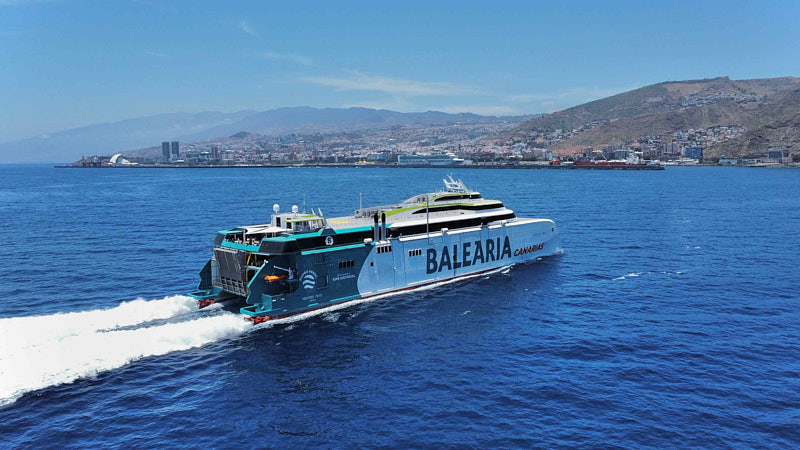
Baleària Canarias is upgrading ferries acquired from Armas Trasmediterránea to reduce fuel consumption and emissions. The work forms part of a three-year, €45 million programme to modernise its Canary Islands fleet.
During scheduled dry-dockings, the operator is fine-tuning propulsion equipment, introducing high-efficiency lubricants and replacing existing lighting with LEDs.
Baleària is also working to expand LNG supplies for its dual-fuel fast ferry MERCEDES PINTO. Road tankers currently deliver LNG to Las Palmas de Gran Canaria and Santa Cruz de Tenerife, and the ferry uses natural gas for part of its auxiliary power while alongside. Baleària aims to increase supply in the coming months so the vessel can also run on gas throughout each crossing.
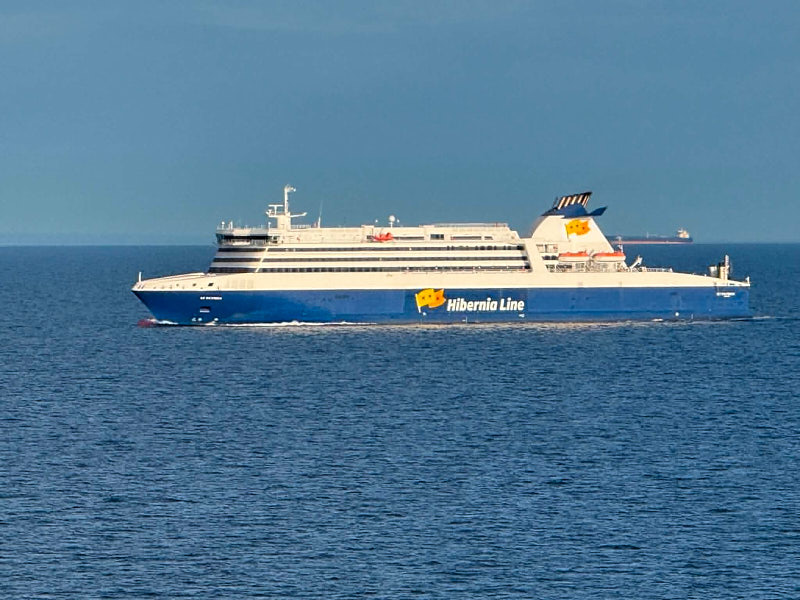
Hibernia Line will cease passenger and freight sailings between Ringaskiddy in the Port of Cork and Boulogne-sur-Mer from Friday 27 November. The service began on 12 June 2026 with two chartered RoPax ferries. ST PATRICK, formerly SUPERFAST IX and chartered from Tallink, made the first crossing from Cork, while TT-Line’s AKKA sailed from Boulogne-sur-Mer.
Laurent Devulder, Managing Director of Port Boulogne Calais, said the operator had been unable to absorb the unexpected rise in fuel costs during the launch period. Technical problems with the chartered ferries compounded the pressure.
Devulder regretted the premature end of a project he described as well prepared, with a sound case for freight and tourism. The port had backed the route alongside the Hauts-de-France Region and the City of Boulogne-sur-Mer.
Ferry ports across the island of Ireland handled 540,057 RoRo freight units in Q3 2026, up 2% year on year, while ferry passenger numbers fell 4% to 1.67 million. Direct routes between the Republic of Ireland and mainland Europe accounted for most of the Republic’s freight growth, rising 9% to 106,188 units.
- Dublin recorded the largest freight gain by volume, adding 4,419 units to reach 246,264 (+2%). Freight grew 5% on direct routes to mainland Europe and 1% on Great Britain routes. Passenger numbers were broadly stable at 665,134.
- Rosslare Europort handled 56,105 freight units (+5%). Traffic on mainland European routes rose 8%, while Great Britain routes slipped 1%. Passenger numbers fell 13% to 232,366.
- Cork handled 4,966 freight units, up 153% from 1,962 a year earlier. Hibernia Line’s Cork–Boulogne-sur-Mer service completed its first full quarter and was a major contributor to the increase. Cork also recorded the only rise in passenger numbers, up 13% to 62,746.
- Belfast handled 159,338 freight units, just 383 fewer than a year earlier. Passenger numbers fell 6% to 563,822.
- Larne handled 45,953 freight units (+3%). Passenger numbers held steady at 147,359, while passenger vehicle traffic rose 18% to 52,798.
- Warrenpoint handled 27,431 freight units (+5%). Its gain of 1,310 units was the largest among Northern Ireland’s three RoRo ports.
Source: Irish Maritime Development Office – Q3 2026 Unitised Traffic Report (PDF)
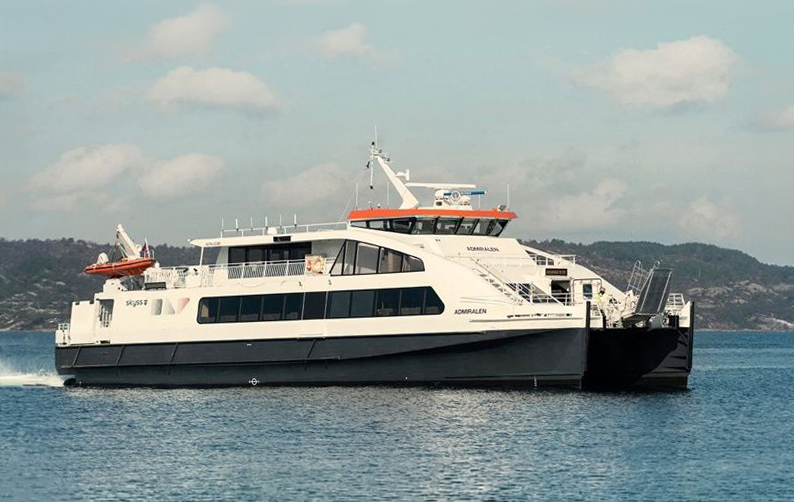
- Norled has been awarded the contract to continue operating Sunnhordlandsruta on behalf of Skyss, Vestland’s public transport authority, from 1 January 2028.
- The new contract runs from 1 January 2028 to 1 December 2030, with options to extend it by up to three years.
- Norled has operated the route since 2007.
Portsmouth International Port has called on the UK Government to repay the £6 million Portsmouth City Council contributed to its £23 million Border Control Post. The council covered a shortfall in government funding. The port says the new UK–EU agri-food deal is likely to make the facility redundant.
Built after Brexit, the post occupies two acres of operational port land. It was designed to handle 80 checks a day on plant and animal products. According to the port, it currently averages just two.
The agreement, announced on 20 November, is due to apply from 1 March 2028. It will remove routine health checks and certification requirements for most consignments of plants, animals and related products moving between Great Britain and the EU. Portsmouth welcomed the deal, saying it hopes simpler procedures will bring more freight through the port.
Interferry has urged the UK Government to learn from what it sees as the main failing of the EU’s maritime Emissions Trading System (ETS). The association says much of the revenue has gone into national budgets, leaving ferry operators to pay for emissions allowances while also financing cleaner vessels and fuels.
Interferry puts the ferry sector’s annual EU ETS bill at around €1 billion. It wants the UK to earmark maritime ETS revenue for measures such as cleaner fuel subsidies and high-capacity charging points for electric ferries. It also backs the EU’s three-stage phase-in, which softened the initial cost for operators.
The warning follows the 20 November EU–UK summit, where leaders announced the conclusion of negotiations to link their emissions trading systems from 2028.