Attica Group Prepares to Take Delivery of New RoPax Ferries

By 2026 Newsletter week 46

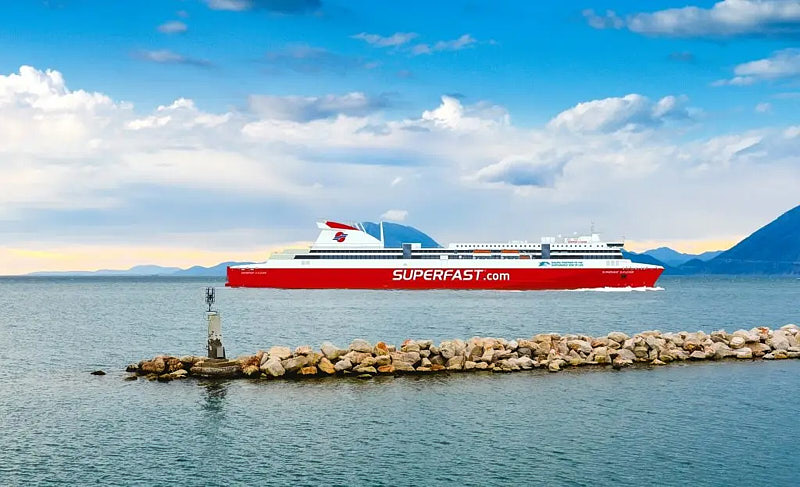
According to the latest information, Chinese shipyard CMI Jinling Weihai is expected to deliver Attica Group’s new E-Flexers on 30 April and 31 August 2027, respectively. The vessels will enter service in June and October 2027, respectively, on the Patras–Igoumenitsa–Ancona route. Both vessels will be chartered from Stena RoRo under a ten-year bareboat agreement, with a purchase option available after the fifth year. Each will have capacity for 1,500 passengers and 3,320 lane metres, and a speed of 24 knots. They will also feature multi-fuel, methanol-ready engines and battery-ready notation.

Photo: Superfast Ferries

GLEN ROSA Begins Builder’s Sea Trials

By 2026 Newsletter week 46

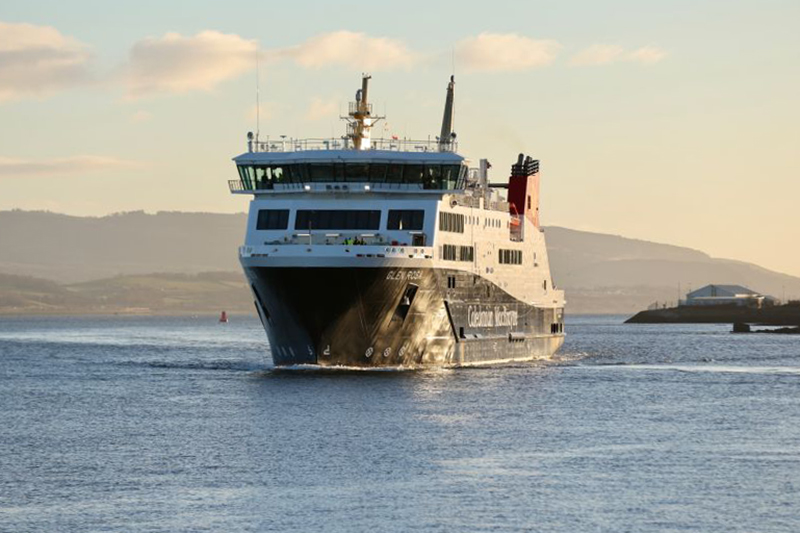
Ferguson Marine has commenced builder’s sea trials for GLEN ROSA, with handover scheduled for February 2027.

The 102-metre ferry is undergoing testing on the Firth of Clyde. Shipyard specialists and industry partners will assess handling, propulsion and power generation, alongside safety, automation and navigation systems under operating conditions.

Upon completion of both sets of sea trials and final regulatory sign-offs, GLEN ROSA will be formally handed over to CMAL in February 2027 before entering service with CalMac.

Image credit: George Munro, The Greenock Telegraphn, via Ferguson Marine

Seajets Charters SUPERSTAR II to CTMA in Canada

By 2026 Newsletter week 46

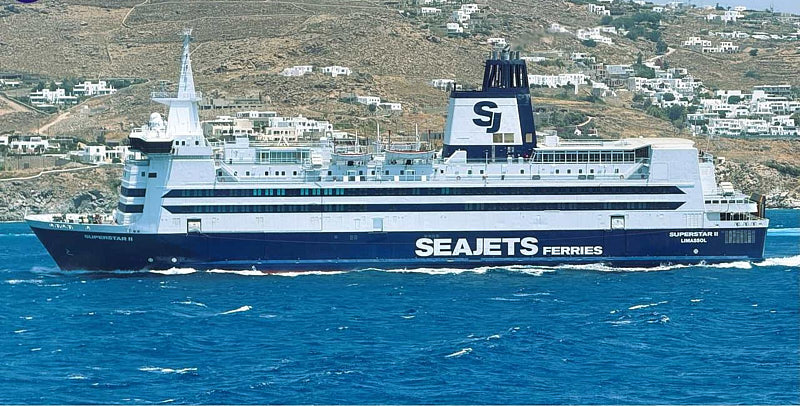
CTMA has confirmed that SUPERSTAR II will maintain the ferry link between Quebec’s Magdalen Islands and Prince Edward Island while MADELEINE II undergoes mandatory dry-docking in early 2027. (Ferry Shipping News, 11 September)

The Seajets ferry can carry 250 vehicles and is due to depart for the Magdalen Islands by the end of November. It will operate between Cap-aux-Meules and Souris for several weeks this winter under a charter supported by Transport Canada.

CTMA says the administrative and regulatory steps involved in chartering and importing a foreign vessel are similar to those required for a purchase. The co-operative still sees a new hybrid RoPax ferry as its only viable long-term solution and says support from the Quebec government will be essential to move the project forward.

CTMA announcement, 9 November 2026

Photo: Kostas Papadopoulos

Redwise Delivers

By 2026 Newsletter week 46

The following ferries have been or will be delivered and sailed to their new homeports under Redwise management or with Redwise crew.

  • BC Ferries: of the 4 Damen built ferries, 3 are already delivered at Vancouver Island, no. 4 is en route.
  • Torghatten Nord: MYSTERØY has been delivered by the yard and is en-route.
  • Isles of Scilly Steamship Group: MENAWETHAN has been delivered.
  • First one of Fjord1 from Türkiye to Norway to leave soon.
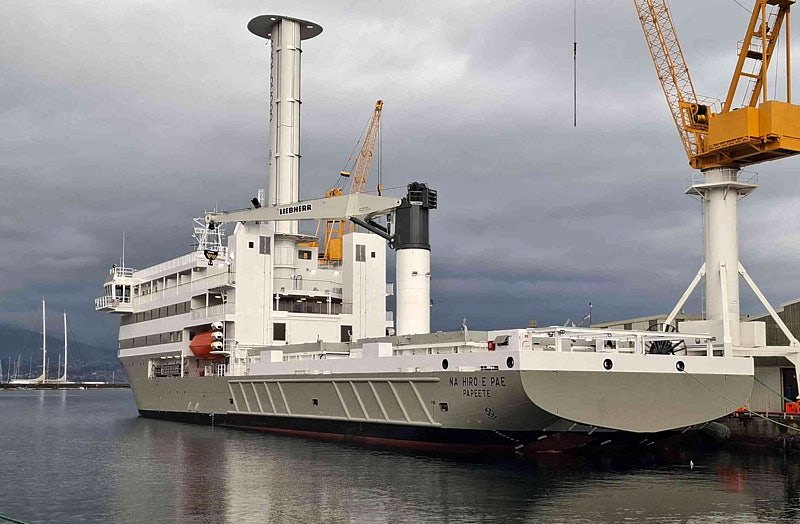
  • NA HIRO E PAE from Vigo to Papeete to leave soon.
  • SCILLONIAN IV is in the Indian ocean at the moment en-route to Europe.

New edition of the Sustainable Maritime Transport Outlook by Eni, Fincantieri and RINA

By 2026 Newsletter week 46

Eni, Fincantieri and RINA presented the second edition of the Sustainable Maritime Transport Outlook, developed with Bain & Company Italy. It compares options for decarbonising shipping by emissions-reduction potential, maturity, infrastructure availability and Total Cost of Ownership to 2050, backed by interviews with shipowners, engine makers, ports and industry associations.

The core message is that the picture is more uncertain than a year ago, and the main divide is regulatory, not technological. Europe is pressing ahead with binding targets under FuelEU Maritime, but the global IMO agreement has been postponed, nearly 90% of countries (weighted by tonnage) favour a slower path, and the US opposes maritime decarbonisation. Three of the four transition drivers have worsened, with regulation hurting most. Slowing growth, tariffs, geopolitical tensions and the Strait of Hormuz crisis add risk, and many hydrogen-based maritime projects have stalled. Technology still advances, with a slowly growing orderbook of alternative-fuel vessels, but shipowners increasingly prefer mature solutions.

In the reference scenario, Europe cuts emissions intensity by 80% by 2050 versus 2020, compared with about 40% globally. A slower scenario delays Europe’s targets to 2070.

There is no single solution. LNG and biofuels are viable now and in the medium term, using existing ships and infrastructure, while synthetic fuels from green hydrogen will be needed for net zero but remain costly. Eni (via Enilive) promotes HVO biofuels and calls for stable rules recognising them; Fincantieri cites LNG in cruising, moving to bio-LNG and e-LNG, plus dual-fuel systems, efficiency gains and nuclear research; RINA assesses maturity, feasibility and compliance.

The Outlook calls for shared standards, flexible port infrastructure, diversified fuel supply, multi-fuel-ready ships and retrofits, and ongoing R&D. The three companies also agreed to continue the Observatory for three more years.

https://www.rina.org/it/media/press/2026/11/11/sustainable-maritime-transport-outlook

Wasaline And Partners Plan Finland–Sweden–Norway Freight Corridor

By 2026 Newsletter week 46

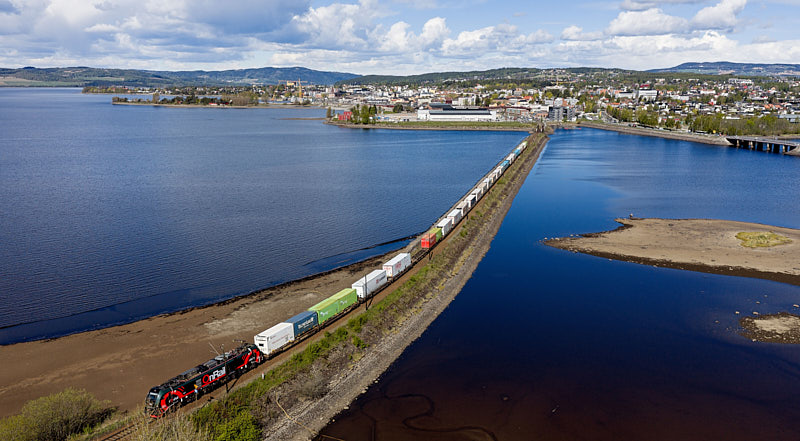
Wasaline, OnRail, Kvarken Ports Umeå and the Port of Trondheim have launched a joint project to develop an east–west freight corridor connecting Finland, Sweden and Norway.

The proposed corridor would combine Wasaline’s Vaasa–Umeå ferry service, a new rail freight service between Umeå and Trondheim, and onward sea connections from Trondheim.

  • Electric rail: Electrification of the Meråker Line enables freight trains to operate between central Sweden and Trondheim without direct emissions.
  • Cargo: The planned rail service would carry containers, semi-trailers and industrial goods, linking directly with both ports.
  • Shorter routes: The corridor could reduce transport distances for Finnish and Swedish exports to destinations including the UK and Iceland.
  • Resilience: It would provide an alternative to routes through the Baltic Sea, strengthening transport options during disruption.Service frequency and capacity will depend on discussions with customers. No launch date has been announced for the Umeå–Trondheim service.

Separately, OnRail’s planned Trondheim–Oslo freight service, starting on 1 February 2027, could provide onward rail connections to the Norwegian capital.

Photo: OnRail (Christian E. Bergheim)

FRS Acquires Majority Stake In Bingen-Rüdesheimer

By 2026 Newsletter week 46

FRS has acquired a majority stake in Bingen-Rüdesheimer Schifffahrtsgesellschaft mbH, marking its fourth acquisition on the Rhine and its entry into the river’s excursion cruise market.

The company operates car ferries between Bingen and Rüdesheim alongside four day-excursion vessels.

  • Ferry services, scheduled cruises and themed excursions will continue as usual.
  • All approximately 50 employees will be retained.
  • Managing Director Oliver Pohl will jointly lead the company with Tim Kunstmann, Managing Director of FRS Europe Division.

The acquisition brings FRS’s Rhine crossings and excursion cruises together under one roof. Bingen-Rüdesheimer’s vessels also call at Lorch, Niederheimbach, St. Goar and St. Goarshausen, where FRS already operates ferry crossings.

Bingen-Rüdesheimer will celebrate its centenary in 2030.

ESPO Calls For Shore Power Flexibility And Greater Protection For Island Connectivity

By 2026 Newsletter week 46

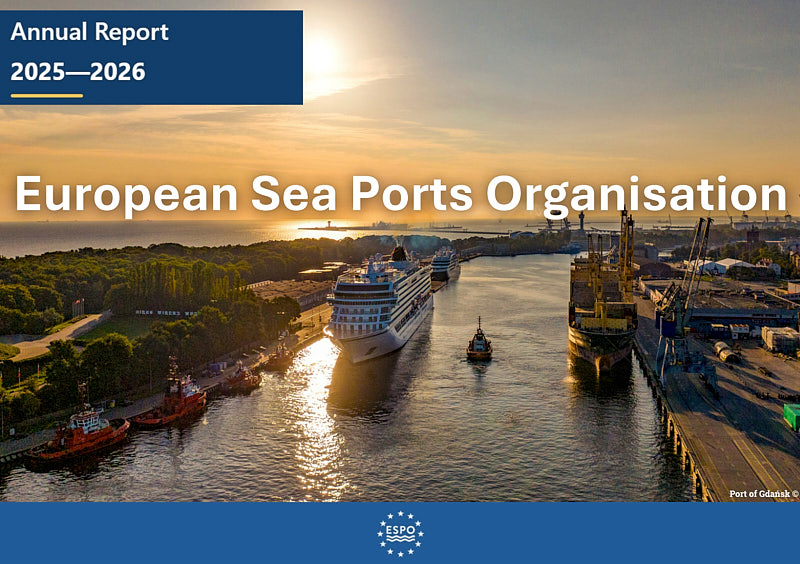
The European Sea Ports Organisation (ESPO) highlights shore power deployment, island connectivity and border checks among the priorities affecting ferry ports in its Annual Report 2025–2026.

ESPO stresses that ports’ ability to deliver onshore power supply (OPS) depends on factors often outside their control, including grid connections, electricity availability and energy prices. Ahead of the anticipated review of the Alternative Fuels Infrastructure Regulation, it calls for greater implementation flexibility and closer involvement of energy providers and grid operators.

Key points for the ferry sector include:

  • Island connectivity: ESPO welcomes the proposed five-year extension of existing EU ETS derogations for smaller islands and outermost regions to 2035. It advocates broader exemptions where ETS costs disproportionately affect island connectivity, affordability and cohesion.
  • Shore power costs: Competitively priced electricity is essential to encourage ships to connect. ESPO supports pricing transparency while stressing that costs vary between ports according to local electricity prices, grid capacity and operational requirements.
  • Border operations: The report identifies uneven preparedness for the EU Entry/Exit System at seaport border crossings, including equipment, staffing and operational constraints. ESPO continues to monitor the impact on passenger flows.

More broadly, ESPO argues that ports need substantial infrastructure investment, faster permitting and a strong European transport budget to fulfil their growing responsibilities in decarbonisation, energy security and military mobility.

https://www.espo.be/publications/annual-report-2025-2026

Wallenius SOL Renamed Wallenius Link

By 2026 Newsletter week 46

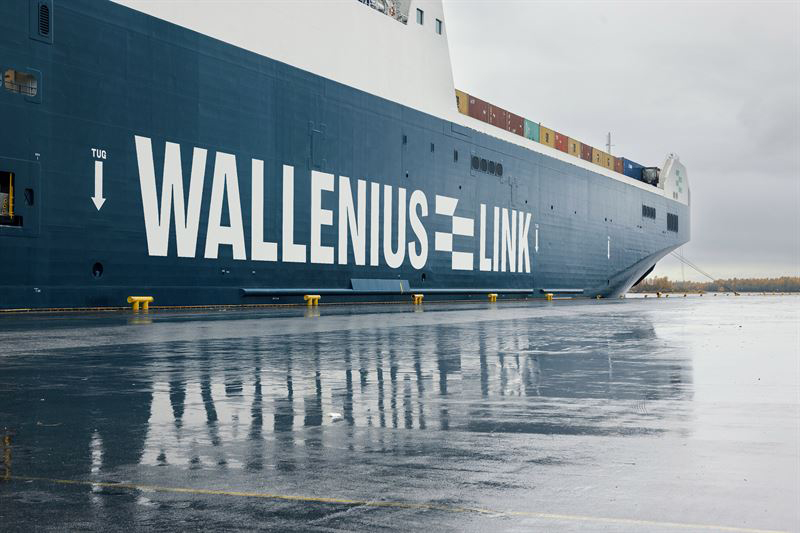
Wallenius SOL is changing its name to Wallenius Link, following Wallenius Lines’ agreement in April 2026 to acquire SOL Group’s shares and become the company’s sole owner.

The name reflects the company’s role in connecting businesses, markets and supply chains, according to Wallenius Lines CEO Erik Nøklebye.

The change will not affect operations, strategic direction or services. Wallenius Link will retain its existing management team and organisation.

Viking Line Leads Ferry Companies in Finland’s Asiakkuusindeksi 2026 Study

By 2026 Newsletter week 46

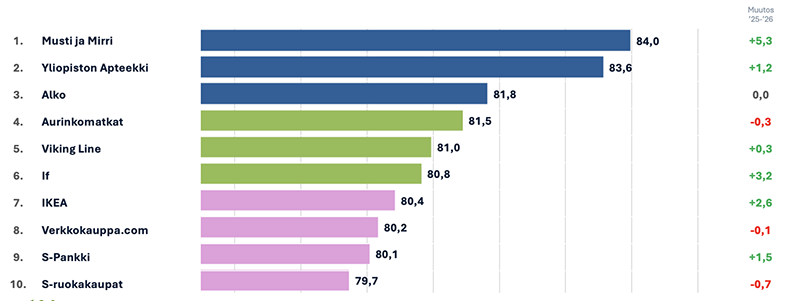
Viking Line ranked first among Baltic Sea ferry companies for customer experience and sustainability image.

  • Customer experience: 81 points, placing fifth overall and the only ferry company in the top 10. Its score improved for the fourth consecutive year.
  • Sustainability image: 67 points, placing ninth overall and the only ferry company in the top 10.

Viking Line highlighted investment in digital services, personal service on board and input from its approximately 1,000-member customer panel.

Conducted by the Finnish Customer Marketing Association (ASML), the study covered 51 companies and 4,350 respondents, with data collected in September and October 2026.

Source: https://asml.fi/asiakkuusindeksi-2026/