

Mixed August Volumes as Some Markets Slow

By | 2025 Newsletter week 37 | No Comments

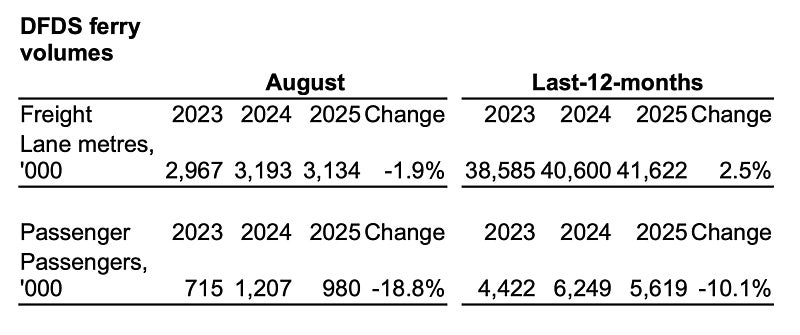
Freight volumes in August 2025 totalled 3.1m lane metres, 1.9% below 2024 and 3.9% lower when adjusted for route changes. Year-to-date growth was flat at 0.1% and -1.2% adjusted.

North Sea volumes fell compared to 2024, mainly due to weaker activity on UK routes. Mediterranean traffic was lower, reflecting a slowdown in Turkish automotive production, weaker domestic demand, and reduced capacity on one route.

Channel volumes rose thanks to the new Jersey services. Baltic Sea volumes increased, while Strait of Gibraltar volumes matched last year.

Over the last twelve months (2025–24), freight volumes rose 2.5% to 41.6m lane metres from 40.6m. Adjusted for route changes, growth was 1.9%.

Passenger numbers fell. In August, adjusted volumes dropped 3.3% to 911,000, with year-to-date growth at -3.8%. Higher Baltic Sea volumes were offset by weaker Channel traffic. Cars carried were 3.2% below 2024 on an adjusted basis.

For the last twelve months, total passenger numbers decreased 10.1% to 5.6m from 6.2m. Adjusted for route changes, the decline was 3.0%.
Nearly 1.8 Million Travelled with Viking Line in Summer 2025

By | 2025 Newsletter week 37 | No Comments

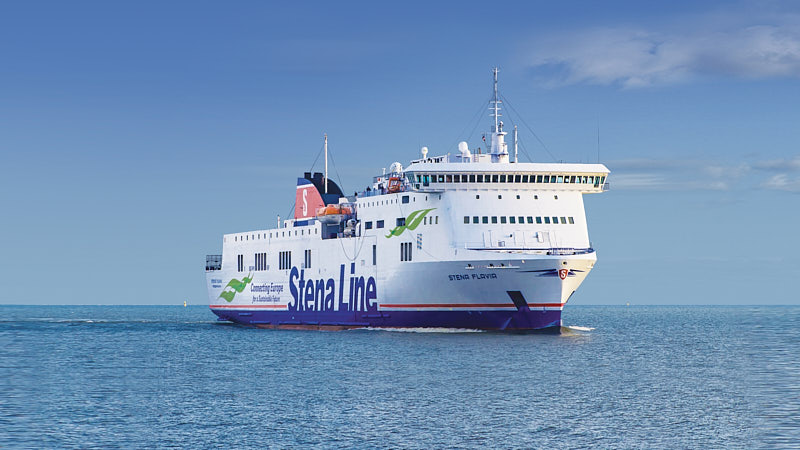
Viking Line carried 1.78 million passengers between June and August 2025, slightly more than last year. Cargo volumes on its five vessels rose 3.6 per cent, while greenhouse gas emissions decreased thanks to higher biofuel use. For the first time, passengers could book a totally fossil-free journey.

The busiest routes were Helsinki–Tallinn with 738,000 passengers and Turku–Stockholm with a similar figure, while 304,000 travelled on the Helsinki–Stockholm service. Extra summer capacity was provided by VIKING CINDERELLA and GABRIELLA alongside VIKING XPRS.

Customer satisfaction reached a record high. Deputy CEO Peter Hellgren said the company was pleased with volumes and highlighted continued growth on the Estonian route, where Viking Line presented a new electric ferry concept earlier this year. Communications Director Johanna Boijer-Svahnström noted the rise of domestic tourism and strong demand from German and Chinese visitors.

Source: Viking Line

South Enabler Named In Turku

By | 2025 Newsletter week 37 | No Comments

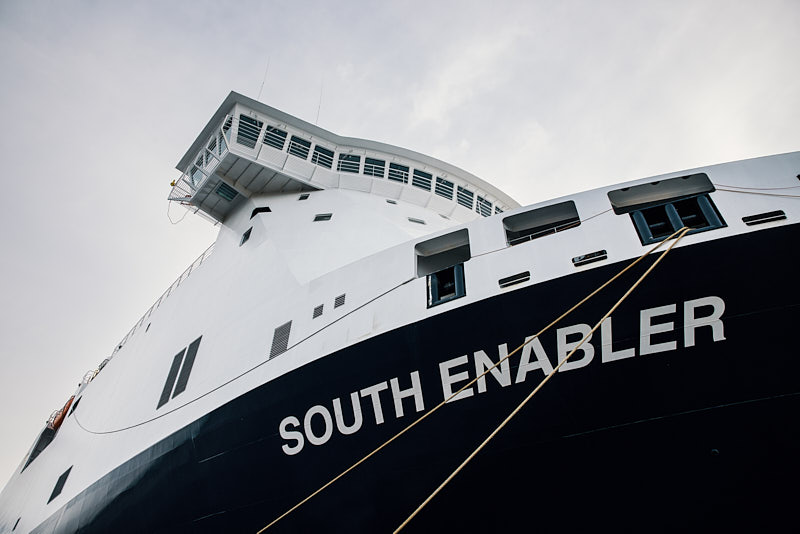
On 11 September, the latest addition to the WALLENIUS SOL fleet was officially named in the Port of Turku, Finland. The ceremony gathered representatives from the company, the crew, politicians and industry stakeholders.

WALLENIUS SOL acquired British Mann Lines earlier this year, and in June the fleet was further strengthened with the newly constructed SOUTH ENABLER. In Turku, the vessel was formally given her name in a traditional ceremony, where a bottle was broken against the hull to bring good fortune at sea. Beatrice Erikson, Senior Manager Transhipment Operations at Wallenius Wilhelmsen, acted as godmother.

The vessel was built by Visentini Shipyard and designed by NAOS Ship and Boat Design. At 203.4 metres in length, she is ice-classed and prepared for methanol propulsion. Power comes from two 7,200 kW Wärtsilä dual-fuel engines, giving a top speed of 22 knots. She can carry a wide range of cargoes, including LoLo, RoRo and high and heavy cargo.

Since June, SOUTH ENABLER has been operating on the Tilbury–Cuxhaven–Turku–Paldiski–Bremerhaven–Tilbury service. Holding the naming in Turku was a natural choice for both the company and the port.

“The shipping line between Turku and the UK has been going strong since the early seventies. We’re pleased to begin our collaboration with WALLENIUS SOL, and are happy to see the increased capacity brought by SOUTH ENABLER,” said Erik Söderholm, Managing Director at Port of Turku.

Photo Christoffer Björklund

Brittany Ferries Calls for Fair Emissions Rules

By | 2025 Newsletter week 37 | No Comments

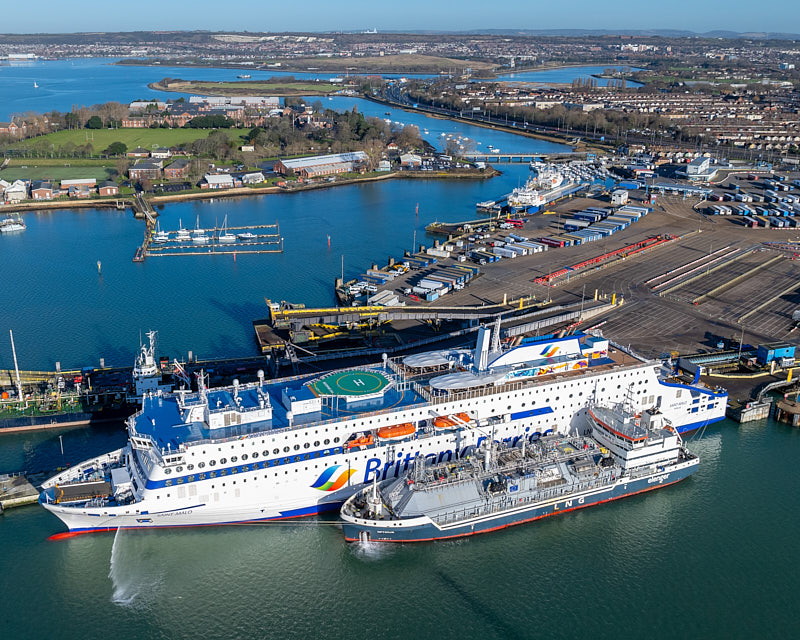
Brittany Ferries says EU climate rules must reflect real-world data after a new study showed methane slip from its LNG-powered ships is far lower than regulatory assumptions. Independent research led by Benoit Sagot of ESTACA, published in the Journal of Marine Science and Engineering, recorded annual methane slip of 1.57% on SALAMANCA – less than half the 3.5% figure used in EU benchmarks.

CEO Christophe Mathieu said the company supports the polluter-pays principle but warned it must not be penalised for “phantom emissions that exist only on a spreadsheet.” He urged regulators to revise reference data in ETS and FuelEU rules to ensure innovation is recognised and rewarded. Brittany Ferries, which has invested in four LNG-powered ships, contributed to the year-long study with ADEME and is open to follow-up research.

Photo: Brittany Ferries – Brian Barcher

Stena Line awarded contract to continue operation of the Gdynia – Karlskrona route

By | 2025 Newsletter week 37 | No Comments

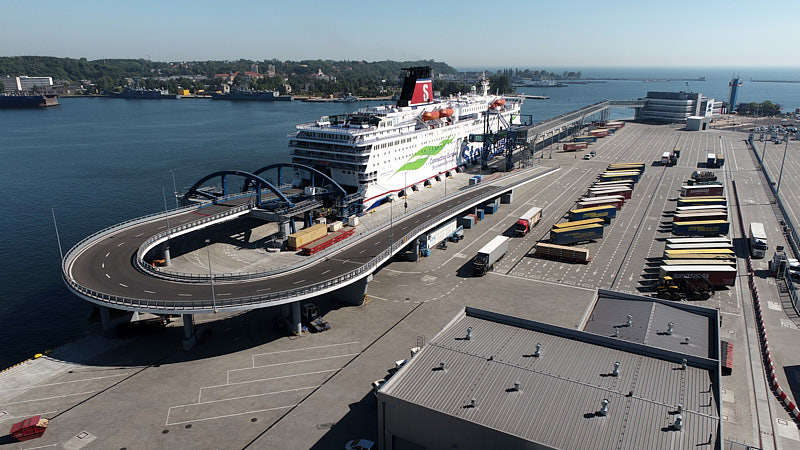
The Port of Gdynia Authority has awarded Stena Line the contract to continue operating at the Public Ferry Terminal, following a tender launched in June. The Swedish carrier competed with Unity Line Limited for Package I and secured the agreement, ensuring its continued presence on the Gdynia–Karlskrona route. Package II was cancelled despite one bidder submitting.

The consortium of Polish ferry operators (PŻM including Unity Line) has criticised the outcome and is considering legal action. The Port Authority rejects the allegations, stressing that the procedure was transparent and did not allow for appeals.

Stena Line To Acquire Port Operator Terrabalt In Liepaja

By | 2025 Newsletter week 37 | No Comments
  • Stena Line will acquire all shares in Latvian port operator Terrabalt, which runs the RoRo, bulk and general cargo terminal in Liepaja, Latvia’s third-largest port.
  • The port is part of the Liepāja Special Economic Zone (SEZ), a free trade zone established in 1997.
  • Stena Line currently operates the Liepaja–Travemünde route with two vessels.
  • Stena Line also operates Ventspils–Nynäshamn with two vessels. Since May 2023, the company owns the port operations in Ventspils.
  • The Gdynia–Karlskrona route is run with three vessels, where Stena Line holds a majority stake in Karlskrona Baltic Port (KBP).
  • The Trelleborg–Rostock route is operated with Sweden’s only two ferries with rail capacity.

Next Steps

  • The acquisition is subject to approval by the Latvian competition authority and other institutions.
  • Until approval, the current owners will continue to operate the terminals.
  • Commercial details remain undisclosed.

Helsinki’s Katajanokka Terminal to Be Renovated

By | 2025 Newsletter week 37 | No Comments

Helsinki’s iconic Katajanokka terminal, completed in 1937 and designed by Gunnar Taucher, will undergo a major renovation with an extension planned to respect its historic architecture and cityscape. The Port of Helsinki has signed a design agreement with Helin & Co Architects, supported by Sweco, bringing the project to a concrete stage. Work begins in autumn 2025.

The redevelopment is part of wider changes to Helsinki’s port traffic. Tallinn services will move to West Harbour, while Stockholm traffic will be concentrated at Katajanokka. The South Harbour will be released for cruise traffic and city use, including a future architecture and design museum.

In future, Katajanokka will serve both Viking Line and Tallink Silja Line, whose ships operate to Stockholm. The first design phase will define space needs and ensure smooth passenger flows. According to Kaj Takolander, Director of Passenger Operations, the terminal will be both a gateway to Stockholm and a shared place for locals.

The renovation will be carried out in close cooperation with the City of Helsinki and the City Museum to preserve the listed building. Planning starts in autumn 2025, with initial input ready in spring 2026. Construction is scheduled for 2028–2032, with the renovated terminal set to open in 2032.

Port of Kiel Expands Shore Power Capacity

By | 2025 Newsletter week 37 | No Comments

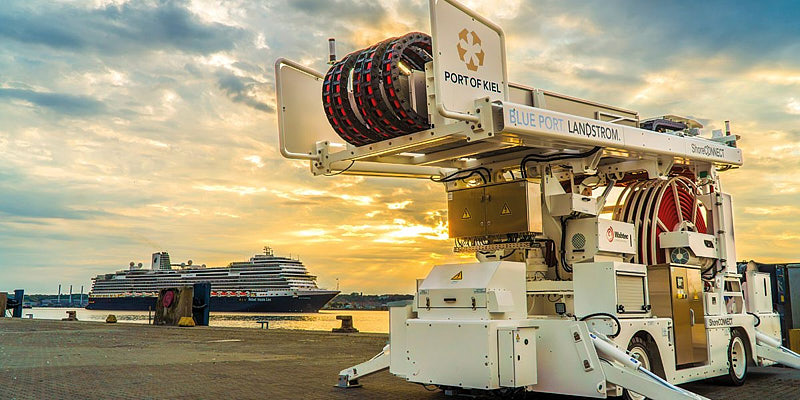
The Port of Kiel has completed the final phase of its extensive shore power infrastructure. With the expansion, the port can now supply up to three cruise ships and four ferries with emission-free electricity simultaneously.

Kiel has been providing green shore power to seagoing vessels since 2019, making it one of the pioneers in Europe.

Over the weekend, the port commissioned its second facility for cruise ships at the Ostseekai terminal. Instead of one vessel, the terminal can now supply two cruise ships with shore power at the same time. Another cruise ship can connect at the Ostuferhafen terminal.

The completed extension makes Kiel’s infrastructure one of the most extensive worldwide.

DNV: Fleet Readiness Surges, Fuel Supply Lagging

By | 2025 Newsletter week 37 | No Comments
  • DNV’s Maritime Forecast to 2050 shows shipping’s energy transition entering a new phase.
  • Alternative-fuel-capable vessels will almost double by 2028. By 2030, they could burn 50 Mtoe of low-GHG fuels – double the volume needed to meet IMO targets.
  • Actual consumption today: only 1 Mtoe. Fleet readiness is surging, but fuel supply and infrastructure lag far behind.
  • IMO’s Net-Zero Framework (pending adoption in October) is already influencing investment and operational choices.
  • Key solutions identified:
    • Use existing fuel infrastructure for biodiesel and bio-LNG.
    • Deploy more efficiency measures on newbuilds.
    • Adopt onboard carbon capture (OCC).
    • Accelerate wind-assisted propulsion (WAPS), reducing fuel use by 5–20%.

Knut Ørbeck-Nilssen, CEO DNV Maritime: “The stage is set for the next phase of the maritime energy transition.”

Download the 2025 edition of the Maritime Forecast to 2050

Dover Among First to Launch EU Entry/Exit System

By | 2025 Newsletter week 37 | No Comments

The Port of Dover will be one of the first French border sites to roll out the EU’s new Entry/Exit System (EES) from 12 October. The phased start will initially cover coach passengers, with car, motorbike and foot passengers to follow from 1 November. EES requires non-EU visitors to the Schengen area to register passport data, answer short questions, and provide facial and fingerprint biometrics.

Full article in The Connexxion