
In the first part of our conversation, Port of Dover CEO Doug Bannister explained why the port is putting digital solutions ahead of costly physical expansion.
In Part 2, he turns to decarbonisation and the much larger challenge of electrifying one of Europe’s busiest ferry corridors.
Previously: Port of Dover – Part 1: A Digital First Approach
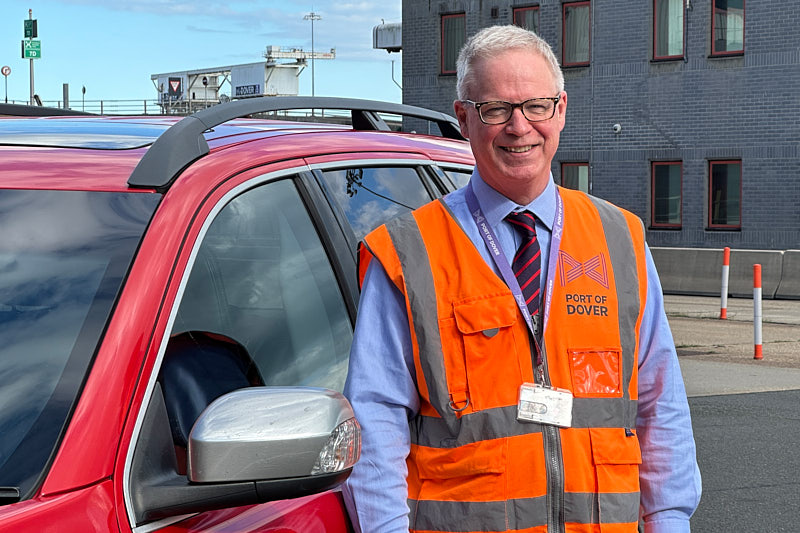
Net Zero for the Port’s Own Operations
In 2022, the Port of Dover set itself the target of reaching net zero for Scope 1 and Scope 2 emissions by 2025. That was 10 years ahead of any other UK port and 25 years ahead of the UK Government’s target.
The port achieved the target in 2025. Measures included replacing diesel with hydrotreated vegetable oil, using certified biogas, installing photovoltaic panels and improving the management of refrigerant gases. Dover says this made it the first UK port to reach net zero for its own direct operations and purchased energy.
That achievement, however, addresses only a relatively small part of the wider picture. The next and far more demanding step is Scope 3: the emissions generated by the ships, vehicles and supply chains using the port.
A Natural Corridor for Electric Ferries
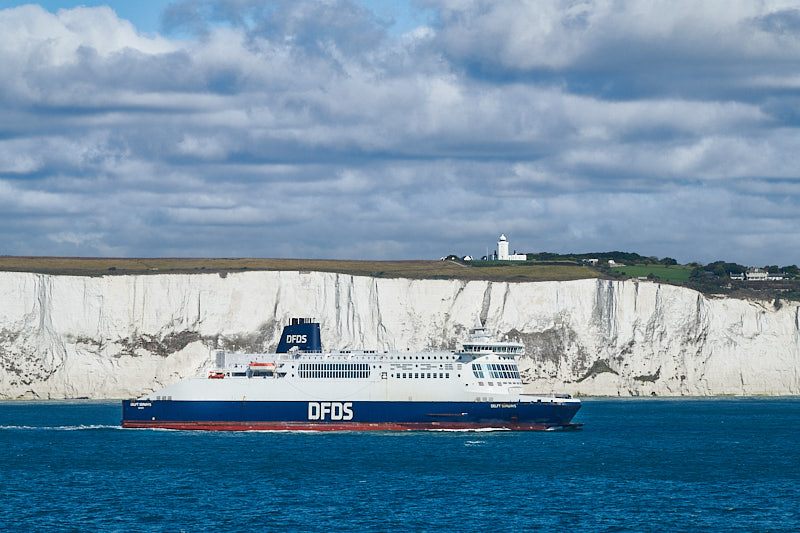
The English Channel would appear to be an ideal place to introduce electric ferries. The crossing is short, traffic volumes are high and the ships return frequently to the same terminals. In March 2023, Dover signed a memorandum of understanding with DFDS and the ports of Calais and Dunkirk to work towards a green shipping corridor.
The concept depends on more than fitting batteries to ships. Dover, Calais and Dunkirk will need compatible high-speed charging systems, while the ferry operators require the confidence that a vessel can connect and receive sufficient power at every berth. The infrastructure must therefore be developed as one interoperable cross-Channel system.
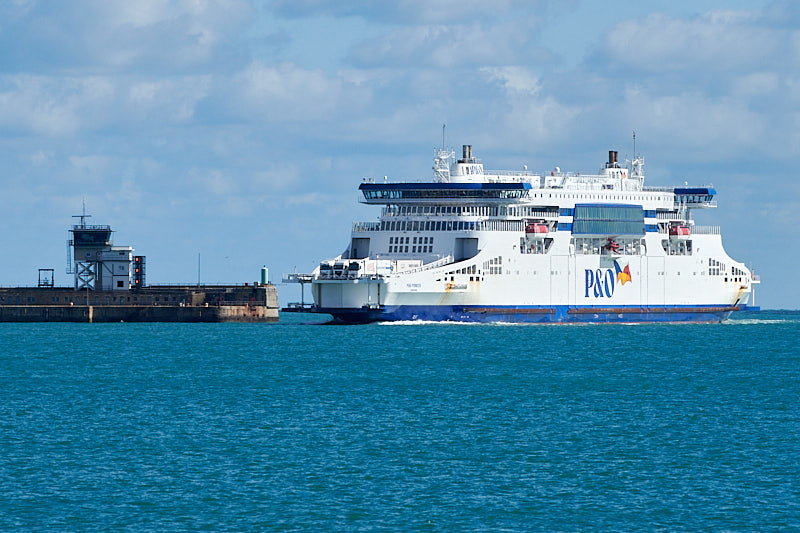
P&O Ferries’ latest hybrid vessels are already capable of accepting shore power. The difficulty is that the necessary supply is not yet available.
From 8 MW to More Than 160 MW
The scale of the power deficit is striking. Dover currently has an electricity supply of around 8 MW. Its future requirement is estimated at more than 160 MW once the port’s own facilities and the rapid charging of several ferries are included.
A single ferry could require between 30 MW and 35 MW during a turnaround of approximately 45 minutes. Several ships may need to charge at the same time, without disrupting the port’s other operations. The national grid cannot presently deliver that level of power to Dover.
The challenge is not simply one of volume. No single established technology currently provides everything required for repeated high-power charging within such short turnarounds. The solution will demand investment, technological development and close coordination between ports, ferry operators, energy providers and government.
Electrification as a Competitive Necessity
For Dover, electrification is not only an environmental objective. It is also central to the ferry route’s long-term competitiveness. Eurotunnel already operates an all-electric transport system, while the UK and EU emissions trading schemes may increasingly attach a price to carbon.
Alternative sources of energy have been considered, including the possibility of small modular nuclear reactors at the decommissioned Dungeness site. Such options could eventually contribute to the solution, but Bannister’s message is clear: a firm and substantially reinforced connection to the national grid remains essential.
The investment will be considerable. Yet the combination of short crossings, frequent sailings and high traffic volumes also gives the Short Straits a compelling case for large-scale electrification – provided that both sides of the Channel advance together.
A £144 Billion Trade Gateway
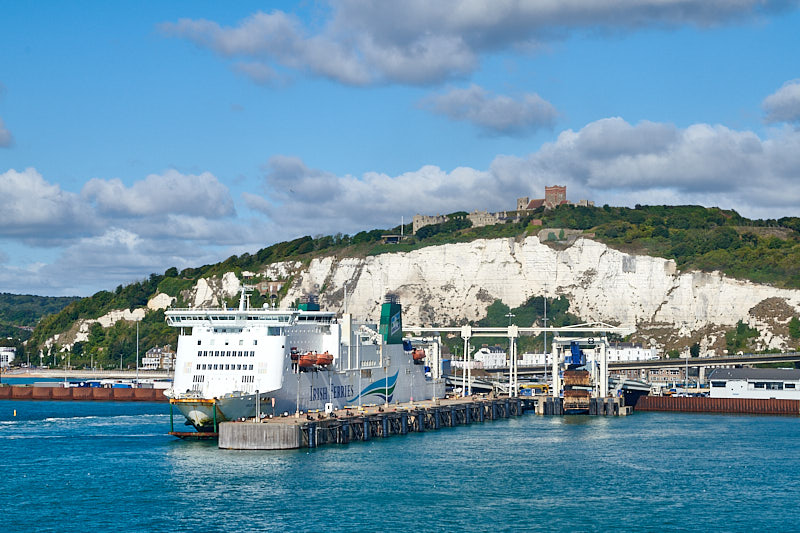
The Port of Dover facilitates around £144 billion in trade each year. That represents approximately one-third of all unitised trade between the UK and the European Union. Its performance is therefore closely connected to the health of the national economy.
Dover’s fundamental advantage is geography. Only 22 miles separate the port from the European mainland. Combined with up to 130 ferry crossings a day, that proximity gives freight customers speed, frequency and the ability to reroute traffic when required.
The Strength of Accompanied Freight
The accompanied freight model also provides a particular form of resilience. When the border reopened following the COVID-19 closure, the Short Straits cleared a very large backlog in six days. High-frequency sailings and drivers remaining with their vehicles allowed traffic to move rapidly once restrictions were lifted.
Unaccompanied freight has an important role elsewhere, but it requires substantial land for trailer storage and additional handling at both ends of the route. Dover’s model uses scarce port land intensively and keeps the vehicle moving through the supply chain.
Brexit has nevertheless added procedures and complexity. Bannister supports closer UK-EU cooperation where this can reduce unnecessary friction, with digitalisation offering one route towards simpler and faster border processes.
One Corridor, Three Ports
Competition between operators remains strong, but the ports themselves increasingly need to work as a single corridor. Dover is cooperating closely with Calais and Dunkirk on issues ranging from the Entry/Exit System to future energy and berth infrastructure.
That coordination could also reduce the cost and risk of future fleet investment. Dover’s Port 2050 Master Plan allows for new ferry berths designed to match the new berths at Calais. A common interface would make it easier for ferry operators to deploy the same ships across the corridor without requiring different equipment at each terminal.
Port 2050: Optimising What Dover Already Has
The Port 2050 Master Plan was developed through consultation with customers, public authorities and other stakeholders. Rather than completely reconfiguring the harbour, it keeps the ferry terminal in the Eastern Docks and the cargo and cruise activities in the Western Docks.
The long-term ambition for the ferry terminal is strikingly simple: to create a “flat piece of land”. Removing buildings and other fixed obstacles would give the port greater freedom to adapt its traffic flows and infrastructure as operational needs and border requirements change. The transformation would be phased rather than delivered as one disruptive redevelopment.
More Space Before the Border Controls
Peak travel days expose a specific weakness in the present layout. Traffic can back up before the outbound border controls, even when capacity remains available elsewhere in the port. Dover therefore plans to move those controls deeper into the site, creating more queuing space at the front of the terminal.
The reordered process is expected to be in place by the end of 2028. It should improve the customer experience during the busiest periods while increasing the practical capacity of the existing footprint – another example of Dover seeking more performance from the land it already has.
Automation Remains on the Horizon
Dover has previously tested automated mooring, although the equipment struggled with the harbour’s demanding weather conditions. The concept has not disappeared and may return as the technology develops.
The Dover-Calais route could also provide an unusually controlled environment for future autonomous ship trials. It is short, intensely monitored and can be observed across almost the entire passage. The regulatory questions remain considerable, but the geography makes the corridor a natural testbed.
Across digitalisation, electrification and physical planning, the same principle runs through Dover’s strategy: extract more value from a highly constrained site while preserving the speed and frequency that make the English Channel unique.