
Mike Louagie crossed the Channel on P&O Ferries to meet Doug Bannister, CEO of the Port of Dover, at Harbour House on Marine Parade. At one of Europe’s busiest ferry ports, P&O Ferries, DFDS and Irish Ferries share the berths, connecting Dover with Calais and Dunkirk. In this first part of our conversation, Doug Bannister explains how digitalisation can help the port handle more traffic, improve safety and make travelling easier.
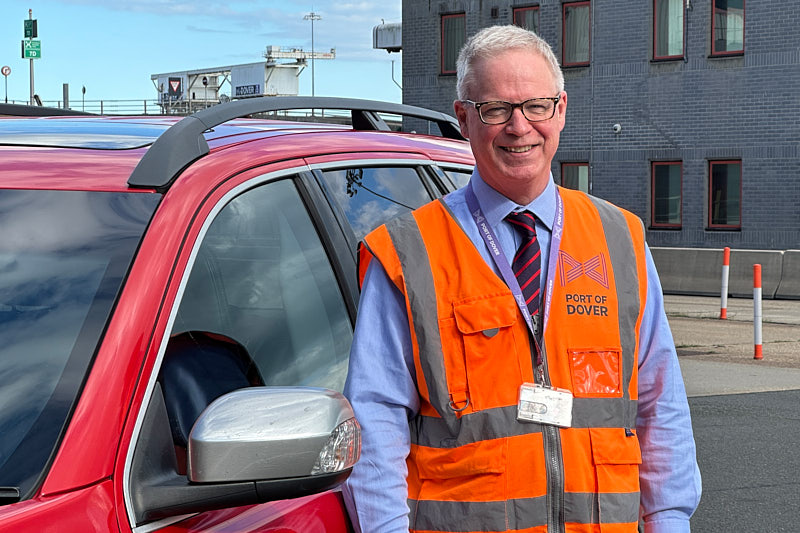
Photo: Doug Bannister, CEO at Port of Dover
For Bannister, Dover’s capacity is closely linked to how quickly traffic moves through it. The port turns over its berths ten times a day and its land six times. Its operations team therefore pays attention to every transaction: saving a few seconds, repeated thousands of times, can make a meaningful difference.
This thinking underpins Dover’s digital first approach. Before committing to expensive construction, the port asks whether technology could solve the problem.
An elevated roadway is one example. Replacing it would require substantial investment. But better digital management of traffic at ground level could potentially remove the need for it. Similarly, Dover shelved plans for a new check-in plaza in favour of developing digital check-in. Bannister puts the avoided investment at an estimated £20 million.
The ambition is to achieve several things together: reduce infrastructure costs, increase capacity and improve the customer experience.
The wider programme bringing these initiatives together is Project Ignite, which covers digitalisation across the port. Its scope stretches from border processing to helping passengers navigate their journey.
For travellers, the vision includes a mobile app offering live traffic advice, directions to the correct lane and estimates of how long each stage of the process will take. The aim is to give customers useful information as they need it, reducing uncertainty along the way.
Digital border processes are another important element. The port is exploring how biometrics and automation can support requirements such as the EU’s Entry/Exit System (EES).
Some of Dover’s digital tools are already in use. For about three years, the port has been using an AI traffic management system, initially focused on freight.
Bannister recalls how it predicted a traffic surge in December 2023 that experienced staff had not anticipated. When the surge materialised, it provided a convincing demonstration of the technology’s value.
The system now forecasts arrivals of cars, coaches and trucks. This helps the port plan its resources and reduce the time that Dover TAP traffic controls (TAP: Traffic Assessment Project) need to remain in operation. Better forecasting therefore also benefits the surrounding community.
AI is being tested for safety, too. Working with RoboK, Dover is piloting technology that analyses CCTV footage to identify potentially dangerous situations.
An early trial in the cargo terminal revealed staff taking shortcuts rather than following designated safe routes. Showing them the visual evidence helped correct the behaviour.
In another assembly area, a camera flagged 800 potential near misses in a single day. These were potential risks identified by the system, rather than confirmed accidents. The example illustrates how automated analysis can draw attention to situations that might otherwise escape notice and help the port decide where improvements are needed.
Digitalisation also extends to the water. In partnership with the University of Manchester, Dover is developing a digital twin of its harbour: a computer model designed to help understand and anticipate conditions.
Bannister describes a significant reduction in the time needed to run a model, from around 16 hours using conventional methods to about 30 minutes with AI. He also cites accuracy within 1 cm for tides.
The goal is to provide pilots with live information that supports their decisions and gives them greater confidence when conditions are challenging. For large cruise ships in particular, better information could help avoid losing a call because of uncertainty over harbour conditions.
Another initiative addresses a very specific border challenge. To accommodate EES processing for cars carrying third-country nationals, Dover moved part of its border operation to the Western Docks. Vehicles then need to travel to the Eastern Docks for embarkation.
Coaches can be physically sealed for this transfer. For cars, the port developed WETA, the West East Transit Assurance system. (see the post of Brock Solutions on Linkedin)
Bannister describes this as digitally sealing a vehicle. The AI-powered system calculates the expected transit time between the two locations. A significant deviation flags the car for inspection.
According to Bannister, the European Commission has praised WETA as groundbreaking and identified it as a potential pilot for other European borders. A solution developed for Dover’s particular geography could therefore have applications well beyond the port.
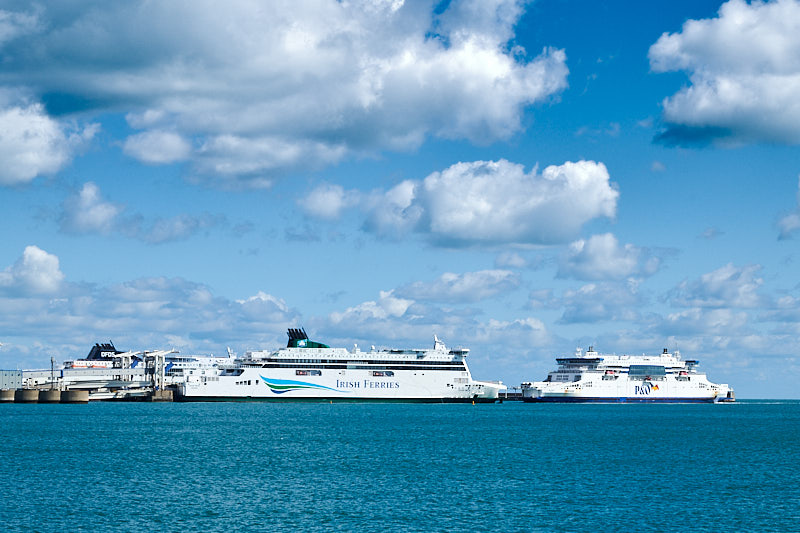
Dover serves three ferry companies: DFDS, Irish Ferries and P&O Ferries
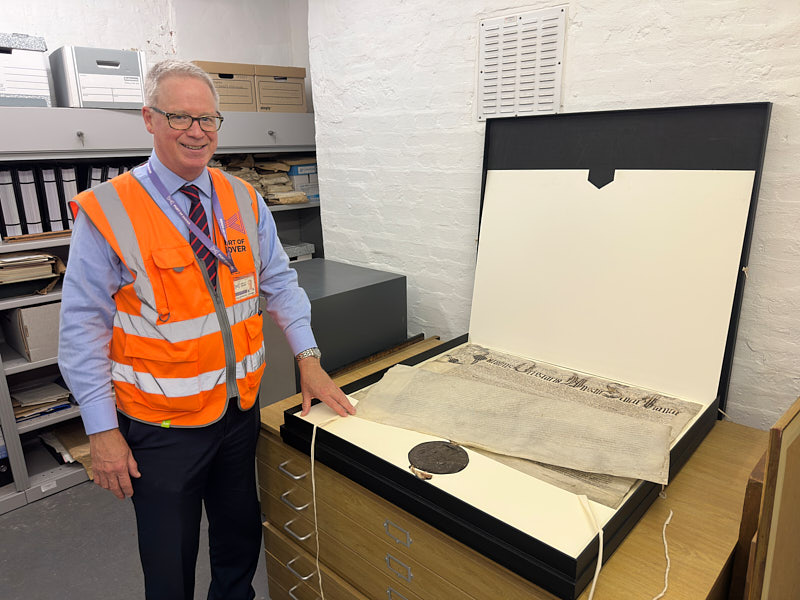
Doug Bannister proudly displays the original Royal Charter granted by King James I in 1606, establishing the body that would become Dover Harbour Board.
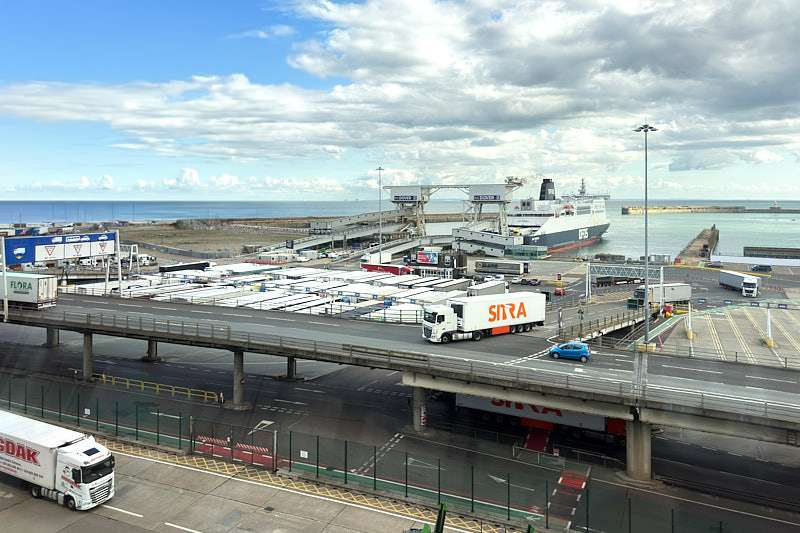
A view from the terminal control tower in Eastern Docks.
In next Ferry Shipping News: Doug Bannister about Sustainability, Decarbonisation, the ferry market and the future development of Port of Dover.