Risk of human error
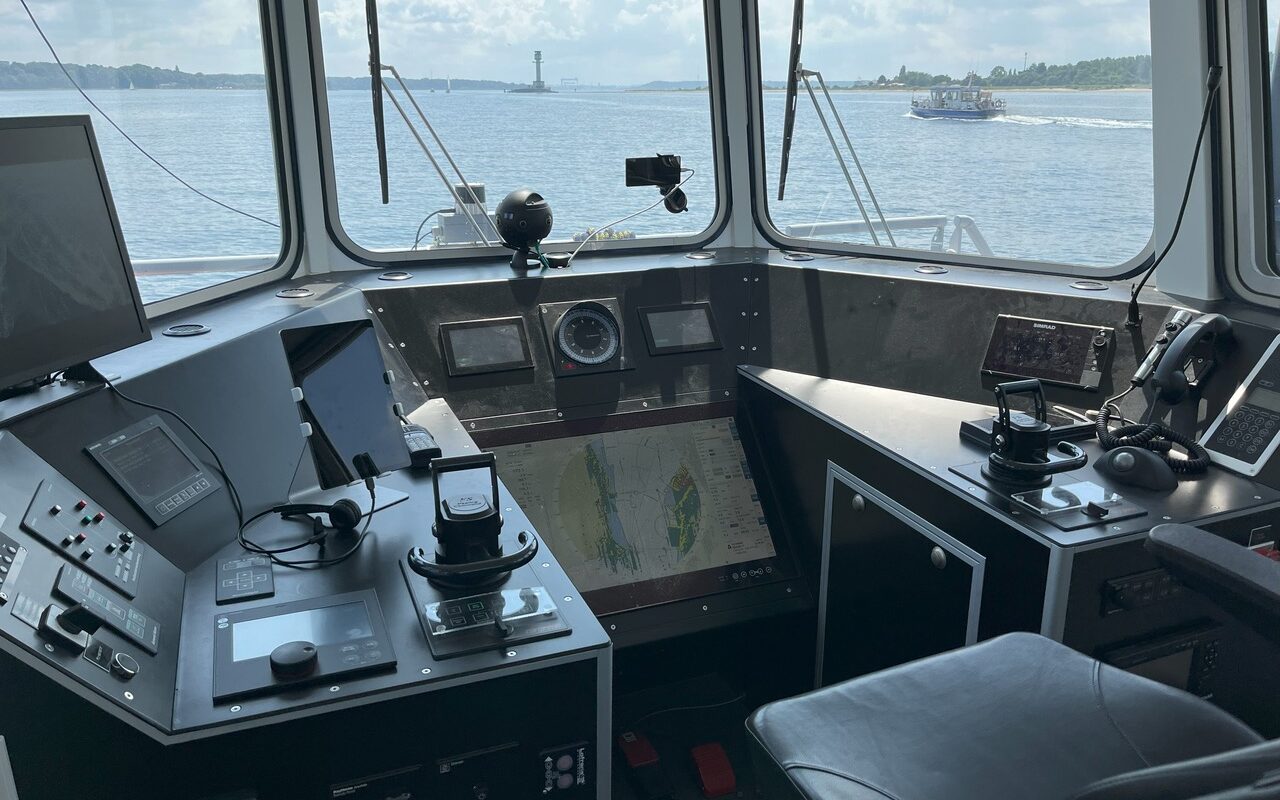
Daily operations add further complexity. Passenger ferries face congested routes, frequent port calls, strict timetables and dynamic traffic patterns. Navigators must make quick decisions during coastal manoeuvres, in narrow sea areas and even during high-seas transits, often under significant time pressure. While safety is non-negotiable, maintaining full situational awareness and making the right decisions at all times is a major challenge. These tasks are particularly demanding for less experienced officers.
Studies show that human error accounts for up to 75–96% of maritime incidents, underlining the need for intelligent assistance systems that support crews in critical situations.
The solution: Collision Avoidance System (CAS)
Anschütz has developed a CAS to increase efficiency and enhance safety for the future. The CAS addresses the challenges outlined above by acting as a virtual backup officer: continuously monitoring the environment, identifying risks early and providing clear decision support, enabling crews to maintain safety even under demanding conditions.
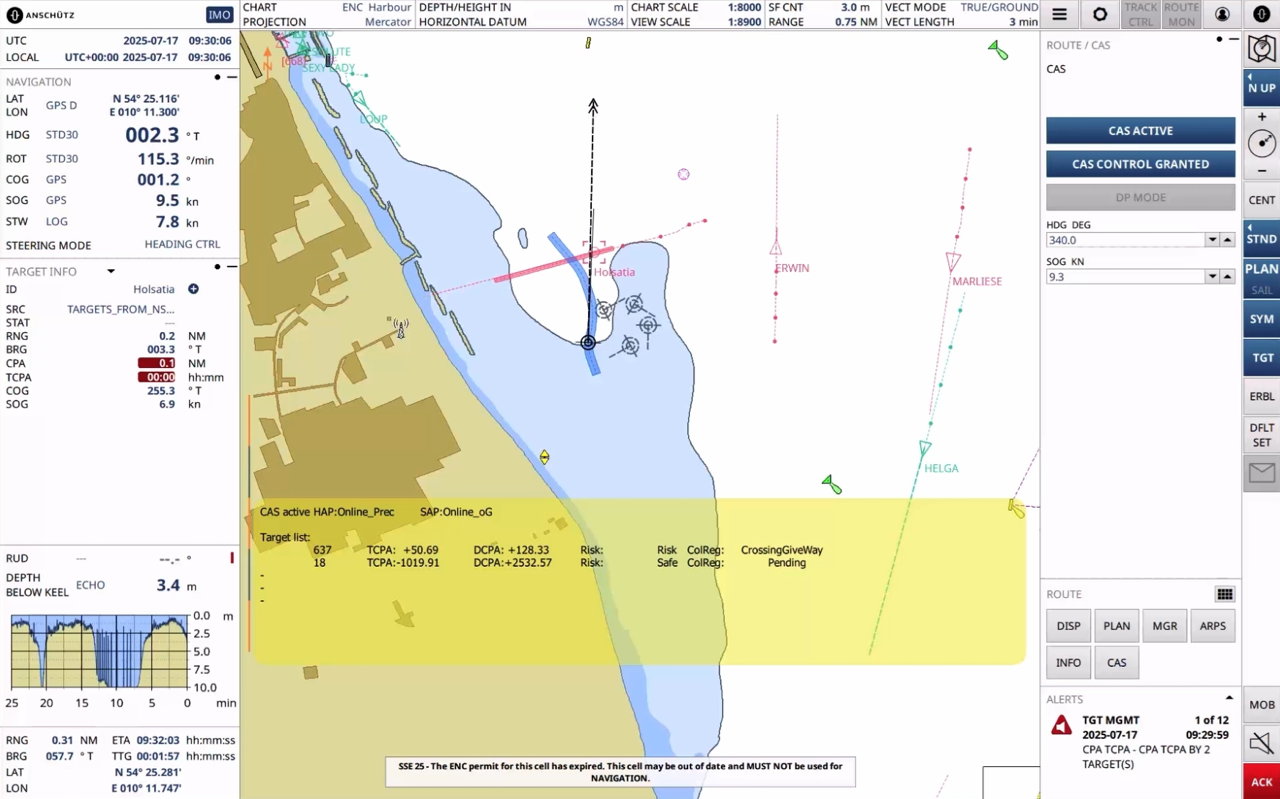
The Anschütz CAS builds on the proven SYNAPSIS integrated navigation system, adding smart functionality to the bridge. It continuously monitors radar and AIS data, evaluates risks according to COLREGs and calculates safe manoeuvring options. Here is how our CAS works:
- Continuous environment analysis: The CAS collects and processes data from radar, AIS targets and electronic charts to maintain a real-time situational picture.
- Risk identification: Potential collision scenarios are detected early and assessed against COLREGs to ensure compliance with international standards. The CAS adheres to COLREG Rules 12–18 among others, and can handle multi-target scenarios, even when other vessels fail to comply.
- Safe manoeuvre calculation: The CAS computes avoidance trajectories for course and speed, considering vessel dynamics, traffic patterns and charted obstacles. All parameters can be adjusted to the vessel’s particulars and operational requirements.
- Decision support and alerts: The system provides clear recommendations and alerts to the crew, enabling safe decision-making under pressure. The navigator remains in the loop, with the CAS making its decision process transparent.
- Optional automatic avoidance: For operators seeking higher automation, the CAS can execute avoidance manoeuvres automatically when authorised.
Integration is straightforward: as soon as it becomes available, Anschütz CAS will be offered as a software add-on, allowing existing SYNAPSIS bridges to be easily upgraded without major modifications. Future upgrade paths include camera-based systems to further enhance target management and situational awareness.
Benefits for shipowners and crews
The CAS offers a range of practical advantages for both navigators and shipowners. By continuously monitoring the environment and providing intelligent alerts, it enhances situational awareness and supports better decision-making. In high-traffic areas or complex conditions, a CAS reduces stress for crews by taking over demanding calculations and offering clear recommendations, helping to lower fatigue and improve operational confidence. Automated analysis and decision support significantly reduce the risk of human error, preventing incidents that could lead to costly consequences.
All calculations and decisions made by the CAS are fully transparent and traceable, ensuring crews understand the rationale behind every recommendation. During its design and testing phase, the CAS was validated by experienced navigators through extensive lab trials and more than 300 collision avoidance manoeuvres in the Baltic Sea and Atlantic.
Finally, the CAS ensures future readiness by positioning fleets at the forefront of smart navigation, enabling them to adapt to evolving standards and technologies without significant hardware changes. For shipowners, this means not only improved safety but also protection of reputation, as passenger confidence and brand image depend on reliable operations.
The modular architecture of the SYNAPSIS integrated navigation system allows shipowners to integrate additional assistance functions over time without requiring major modifications to the hardware. This ensures vessels remain compliant and competitive as automation standards evolve.
Integrated Navigation Systems
anschuetz.com