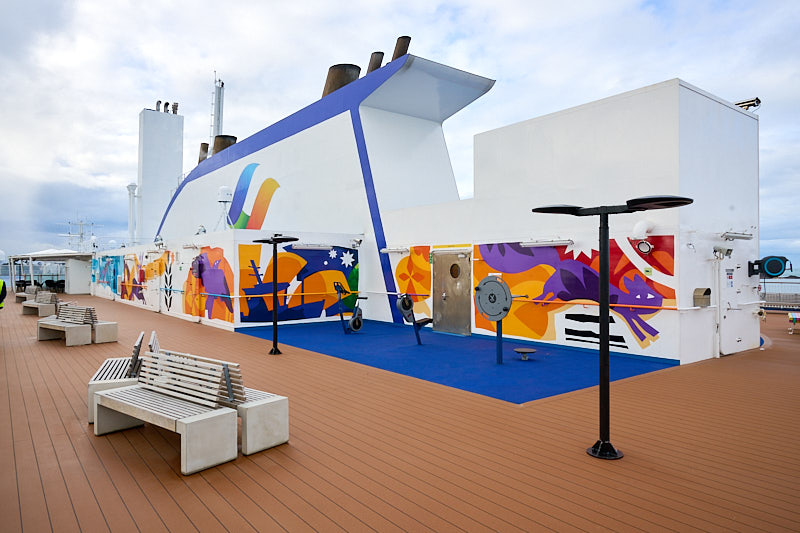
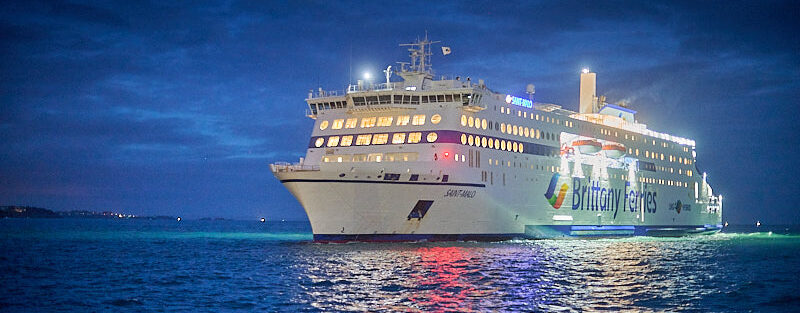
During a visit to the new RoPax SAINT-MALO, Ferry Shipping News spoke with Brittany Ferries CEO Christophe Mathieu about the company’s ambitious fleet renewal programme, the challenges of ETS, and his views on maintaining fair competition in the Channel market.
Brittany Ferries CEO on Fleet Renewal, ETS, and Fair Competition
Last week in Saint-Malo, Ferry Shipping News visited the new RoPax SAINT-MALO, guided by Captain Olivier Raimbeaux and Frédéric Pouget, Group Maritime Director. The visit ended on the bridge, overlooking the walled city, where Christophe Mathieu, CEO of Brittany Ferries, spoke candidly about the company’s fleet renewal, the impact of environmental regulations, and unfair competition in the Channel ferry market.
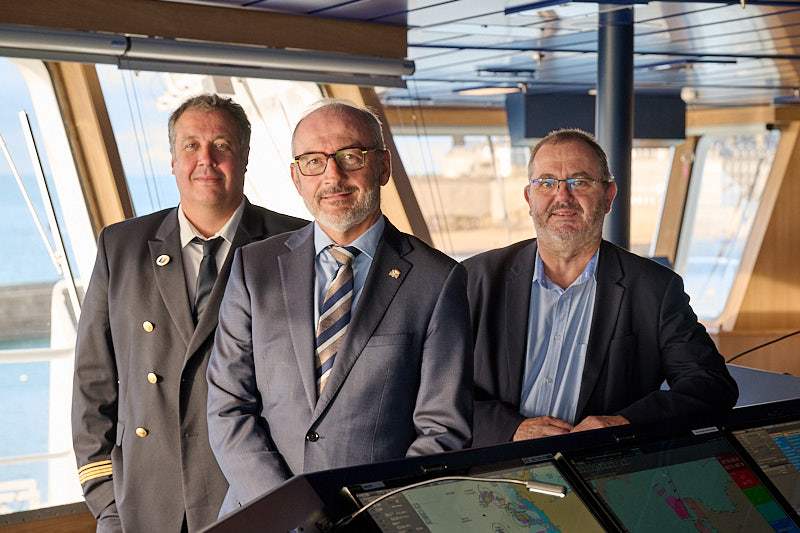
Captain Olivier Raimbeaux, Christophe Mathieu, CEO of Brittany Ferries, and Frédéric Pouget, Group Maritime Director, on the bridge of SAINT-MALO.
Five E-Flexers in Five Years
Brittany Ferries’ decision to charter five Stena E-Flexers stemmed from a mix of opportunity and necessity. “It all started with the idea to replace NORMANDIE by HONFLEUR,” said Mathieu.
“At the same time, we were expanding our routes between Spain and the UK,” Mathieu continued. “We needed a vessel to replace BAIE DE SEINE, which we had chartered from DFDS, and we were also strengthening our presence on the Iberian market.”
A conversation with Stena RoRo’s Per Westling opened the door to the E-Flexer series. “The concept made sense for us — a versatile, RoPax vessel with good garage capacity,” Mathieu explained. “We started with one, and Stena RoRo gave us freedom to design the interior to our liking.”
When the Brittany Ferries team visited China to see the first E-Flexer under construction, they quickly realised the project’s potential. “Before even receiving GALICIA, we were already in the process of ending the contract for HONFLEUR,” said Mathieu. “It was clear that the Chinese project was serious and progressing well, while FSG was struggling. We needed a reliable solution — and the E-Flexer was it.”
“CAP FINISTERE was consuming too much fuel,” he continued. “We wanted to move towards LNG. That’s when we decided to go for a second E-Flexer — and from there, the momentum continued.”
The third E-Flexer was added to support the Spain–Ireland route, and later, during the COVID years, attention turned to replacing BRETAGNE and NORMANDIE. “Initially we thought the E-Flexer wouldn’t fit,” Mathieu admitted, “but Stena RoRo offered shorter versions. SAINT-MALO is slightly longer than BRETAGNE but shorter than the three earlier E-Flexers. We also tailored her for more cabins and less freight — ideal for the Saint-Malo–Portsmouth line — and introduced batteries for hybrid operation.”
From Charters to Ownership
The five E-Flexers are currently chartered from Stena RoRo, with purchase options attached. Declaring those options will require substantial investment. “We’re working on it,” said Mathieu. “In the coming months, we’ll finalise our plans to finance the purchase of two, followed later by the remaining three. But ETS (Emissions Trading System) adds pressure on profitability — not just for us, but for everyone.”
Passing ETS costs to passengers isn’t straightforward. “You can explain that it’s an additional cost, but in the end, what matters to the traveller is the total price,” he said. “Our main competitor on Channel routes, Eurotunnel, is not subject to ETS, yet it holds over 50% of the cross-Channel passenger market. They don’t need to raise prices as we do.”
Partnerships, Not Subsidies
Mathieu also took the opportunity to clarify the company’s much-debated relationship with French regional authorities. “People sometimes believe that we are subsidised, but that’s not the case,” he said. “We have long-standing partnerships with the Regions of Brittany and Normandy, which are shareholders in public–private joint ventures — sociétés d’économie mixte. These entities own certain vessels or port-related assets, and they provide loan guarantees that help us secure financing with banks. But Brittany Ferries, as the operator, pays rent for the ships. There are no operating subsidies.”
During the pandemic, Brittany Ferries, like many other companies, benefited from the French state’s Prêt Garanti par l’État (PGE) — a state-backed loan scheme designed to support viable businesses. “The French government guaranteed the loans issued by the banks,” said Mathieu. “At the same time, the Regions of Brittany and Normandy each provided temporary financial support — €30 million and €35 million respectively — also in the form of repayable loans. That exceptional funding allowed us to survive during an unprecedented collapse in traffic. Since then, we have repaid both regional loans, and we’ve already reimbursed half of the PGE.”
He added: “Without that support, we simply wouldn’t be here today and this was approved by the EU Commission”.
On the Dieppe–Newhaven Case
Another topic that has drawn attention is Brittany Ferries’ complaint to the European Commission about the Dieppe–Newhaven ferry service operated by DFDS under contract with the French state. Some have perceived the move as directed against a competitor, but Mathieu rejected that interpretation. “It’s not about DFDS,” he said. “The issue is that this route receives around €25 million a year in public subsidies, which leads to artificially low fares and distorts competition. For us, in 2025 faced with decarbonisation challenge, it’s a matter of principle — ensuring a level playing field for all operators.”
He added that Brittany Ferries’ position is not confrontational but based on fairness. “When 40% of a service’s operating costs are covered by subsidies, that’s not sustainable market competition. We’ve invested heavily in decarbonisation and efficiency, and we operate without direct aid. We just want the same rules for everyone.”
The case is now under review by the European Commission, and Brittany Ferries is awaiting its decision.
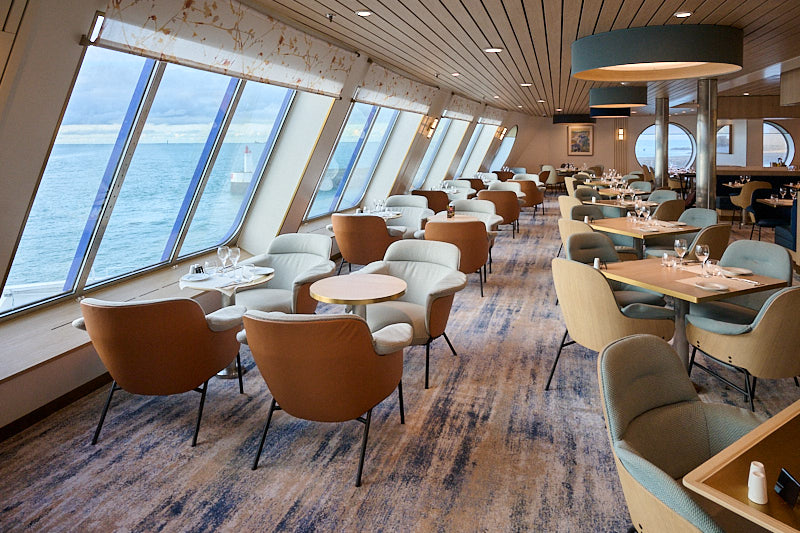
Restaurant Deck 7, forward
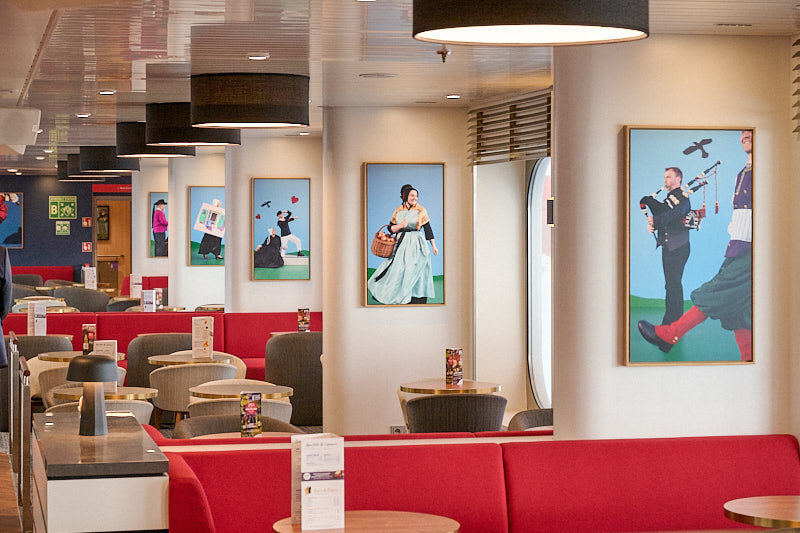
Cafeteria area with art panels referring to the Brittany culture
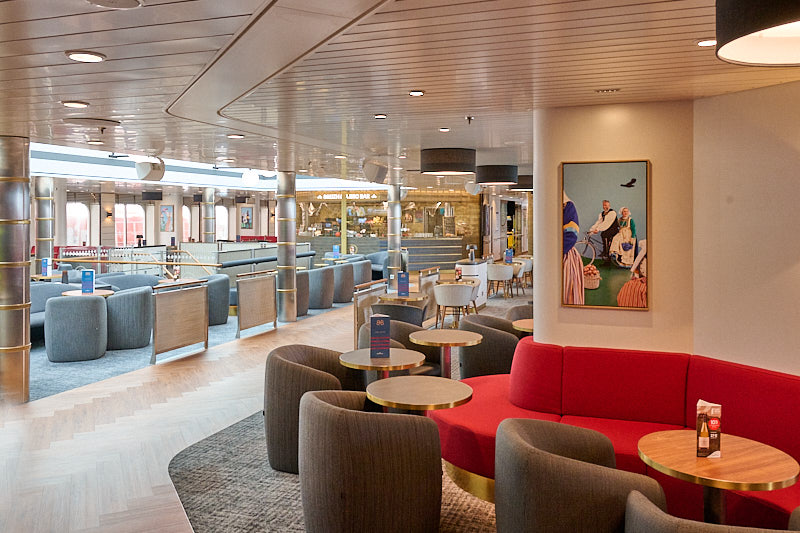
Central cafeteria area, with daylight coming via the glass ceiling
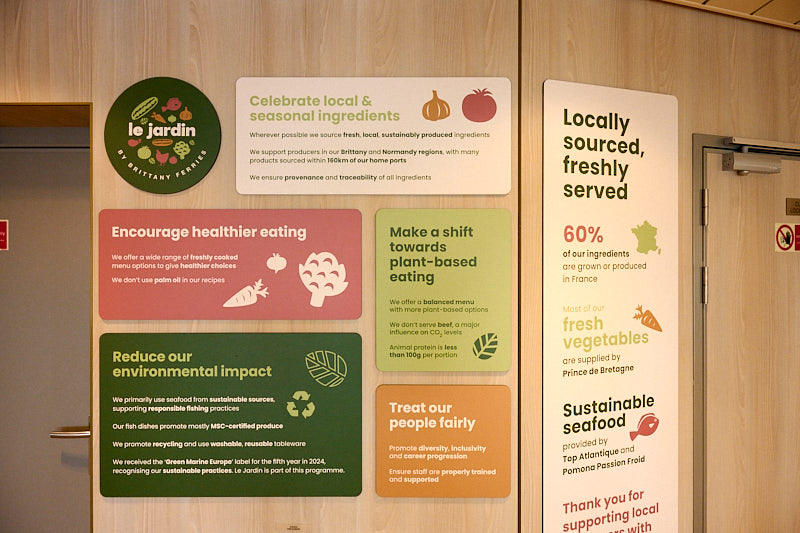
The ship has a healthy-food, organic restaurant, with locally-sourced ingredients

Pets are welcome, with dedicated cabins and a dog walking area
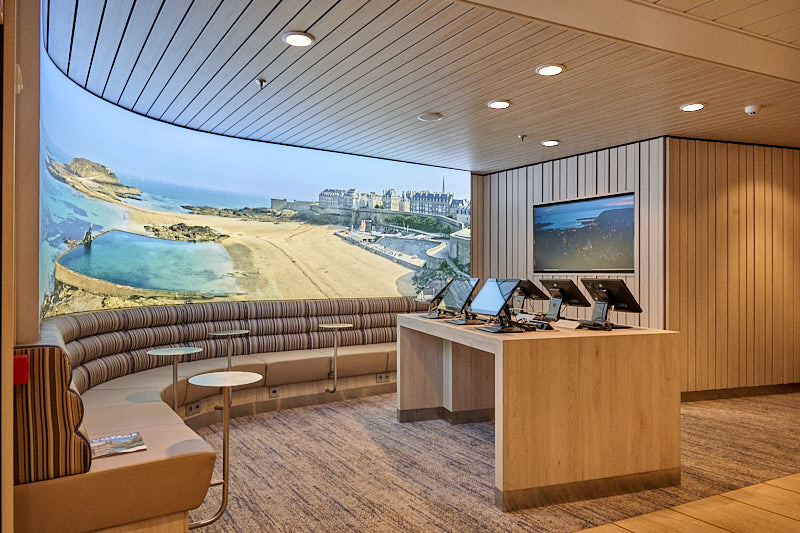
This panoramic picture of course shows the city of Saint-Malo
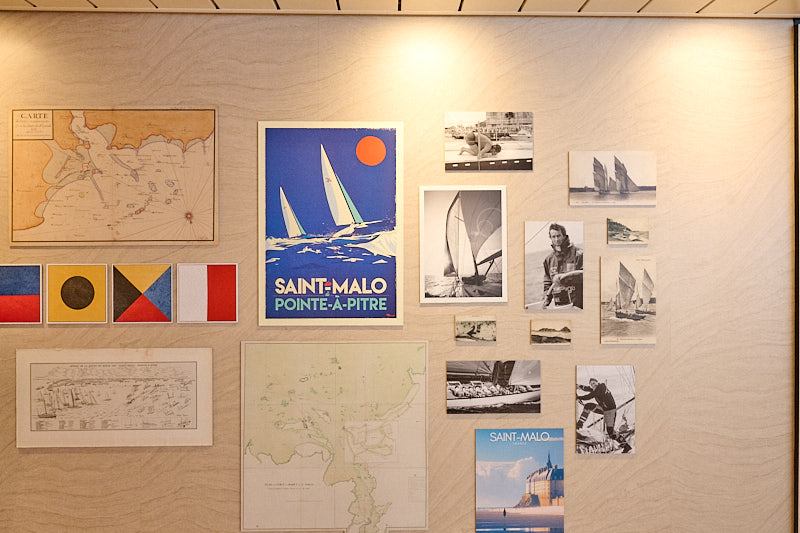
Mood boards explain the spirit of Saint-Malo and the Brittany region
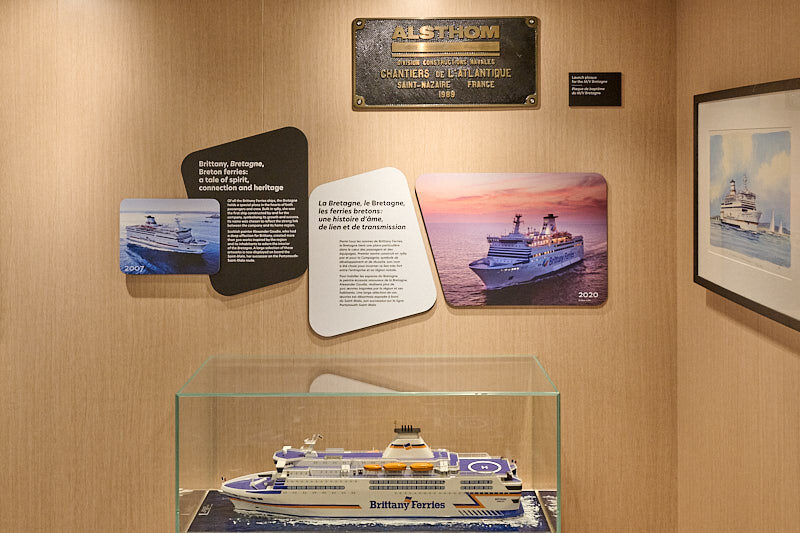
The ferry BRETAGNE has been loved so much that the company decided to make a little “museum”
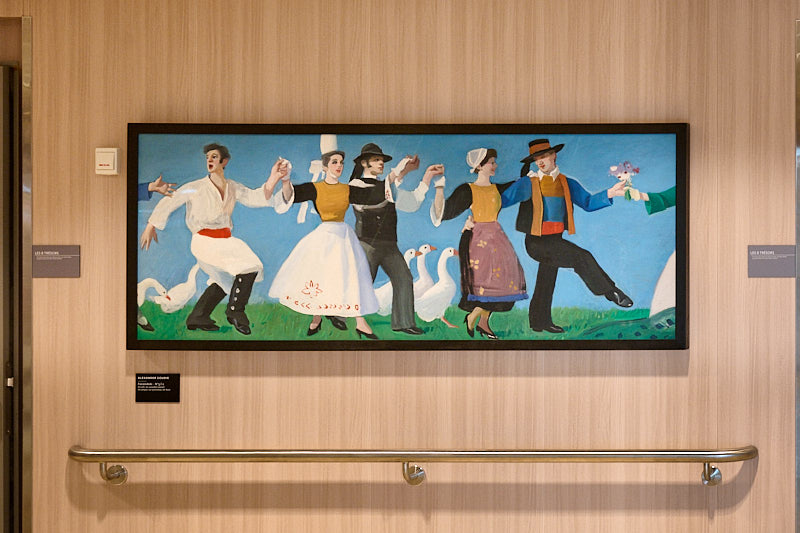
This painting from artist Alexander Goudie who decorated the ferry BRETAGNE has been brought onboard SAINT-MALO
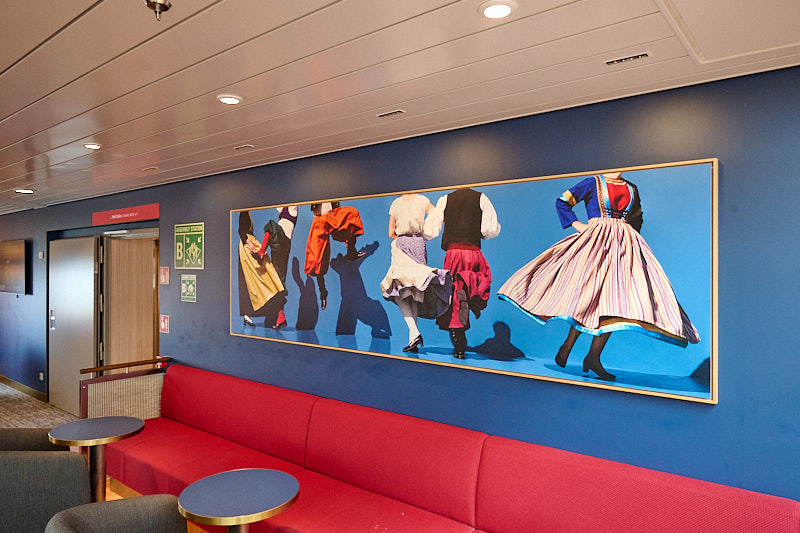
The painting from Alexander Goudie has been recreated, with people from Brittany Ferries as actors, or models.
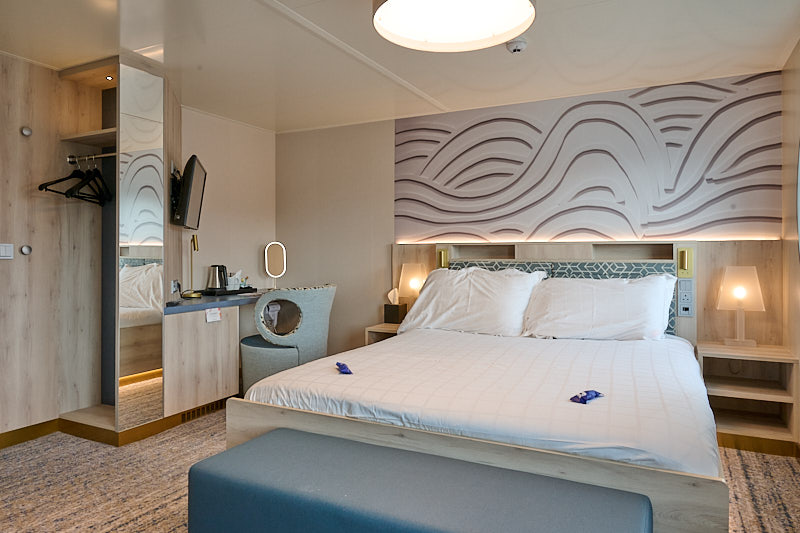
One of the beautiful cabins onboard. So many different sizes and classes!
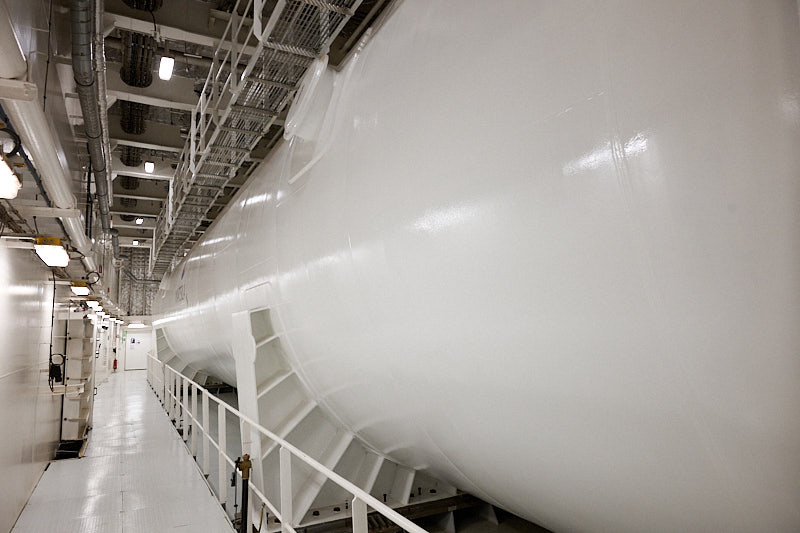
One of the two LNG tanks
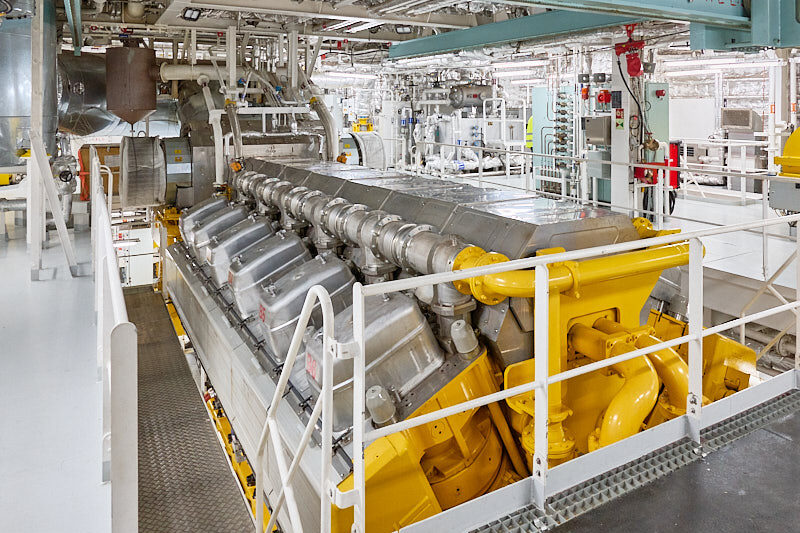
One of the Wärtsilä engines
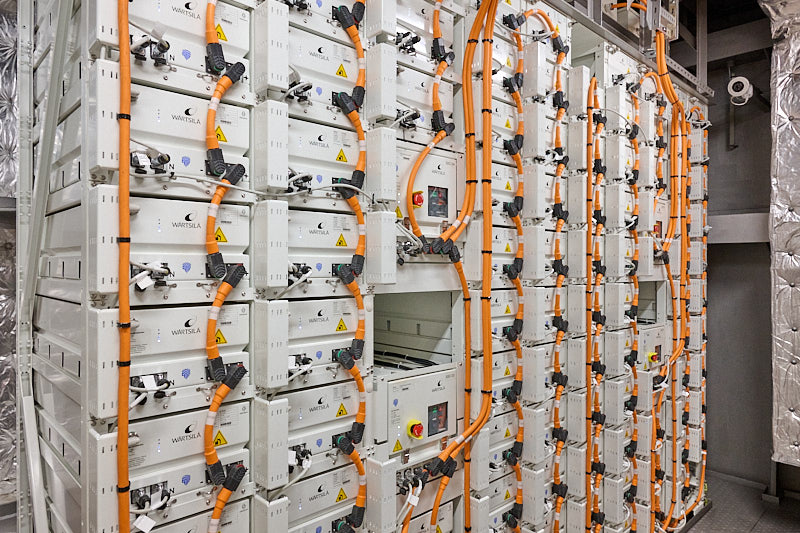
Battery packs
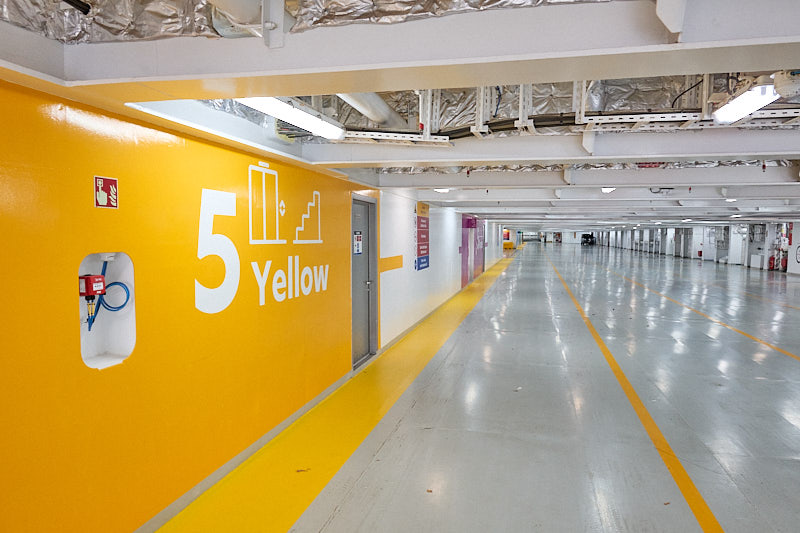
Garage deck
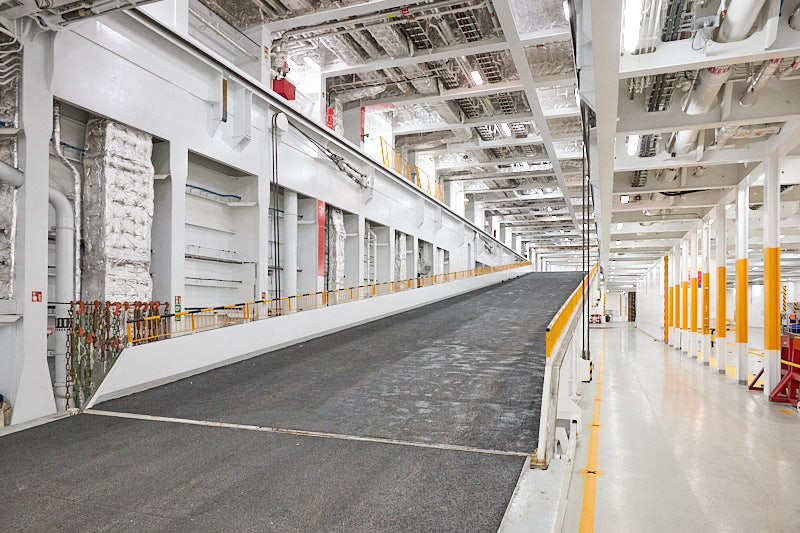
Ramp